I would take an 80's Tobias over an MTD. Just personal preference, but they're perfect.
Just goes to show you how much personal preference can vary so widely from person to person.


TalkBass has been independent since 1998. Add your voice.
Create a free account to reply to discussions, view embedded media, and browse with fewer display ads.
Join free Log in
Want zero display ads or expanded classifieds tools? Compare plans.
I would take an 80's Tobias over an MTD. Just personal preference, but they're perfect.
Just goes to show you how much personal preference can vary so widely from person to person.
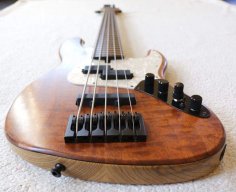


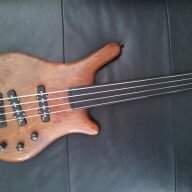
It looks like a Renegade body and neck with modified routes and pickups. I may be wrong, but I think the Renegade (which came with a Bart soapbar and a Bart singlecoil) was the only Gibson produced Tobias with a maple fingerboard. The Renegade also only had three controls, vol, bal and tone, though it did have an active Bart preamp inside. The Renegade was essentially a simplified Growler with a maple board. (The original Growler had a preamp system similar to a Warwick MasterMan, where each coil within the MM case had a separate vol, treb and bass control, as well as three position scoop switch...a ton of tones, but a lot of work to find what you want.)
Dojix,
The Toby Pro line and Toby Deluxe line were products sold through Gibson's musicyo.com site of the late 90's. Those instruments were produced without any input at all from Michael Tobias. They are a far cry from the actual Gibson Tobias line that were, for the most part, really superb instruments, and even further removed from the pre-Gibson owned original Tobias instruments.
It isn't a Renegade- you could not modify one to make it look like this due to the position and size of the bridge pickup. I've seen this model a couple times in a couple of times- I have played one that was black. I do not know what the story behind them is, but it was definitely a temporary model that existed in the early Gibson days.
They also always strangely had the black painted headstock, which the Gibson-era basses didn't seem to usually get until a bit later in the series.