• TalkBass has been independent since 1998. Add your voice.
    Create a free account to reply to discussions, view embedded media, and browse with fewer display ads.
    Join freeLog in
    Want zero display ads or expanded classifieds tools? Compare plans.

Tobias Experts

I have searched the forums and was not able to find an answer so here goes.

When comparing older Tobias models, 34" scale, to newer Tobias or MTD, 35" scale, which has the better B string as to sound, tension, overall satisfaction?

Assuming a decent setup as to string height, pickup alignment (Bartolini has an excellent blurb on pickup alignment, tilt, height, etc), and quality strings, is there any discernable difference?

Sort of strange that all MTD is now 35 inch scale versus the holy grail models that were 34 inch scale. Gibson manufacture notwithstanding, anyone have experience on both?I have had two different Fender 5 Stringers, one passive and one active, and have been less than impressed with the B string on those 34 inch scale instruments.

I have two Spector 5ers. One passive and one active, bolt on and neck thru. Those B strings just kill anything else I have tried. Is the 35 inch scale the reason for a better sounding B?

Have been wanting to try a Tobias and run into this question. I called Mike Tobias and talked to him on the phone about the new Z series and he was quite excited about them and gave names of touring players using them. They are able to accept Bartolini's as a drop in replacement if user desired. I didn't realize until later that the older models are 34 inch scale.

Please feel free to correct any incorrect statements made here as I have only started to delve into the Tobias/MTD lines.

Any Tobias experts with an opinion? Just wondering.
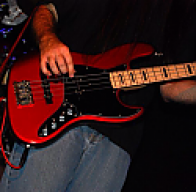
 
I own a Tobias and I've played MTD USA and the Z series, and all of them sound just fine. I think you'd be happy with either.

If the question is whether to buy a Z or a USA model, then that's a more personal question. In my situation, I was able to play both and went with the USA model because I'm fortunate enough to have had price not be a factor at the time.

If the question is to buy a MTD or a Tobias with a serial number at or lower than 2044, then that's a question of if you can find one... though I do know a guy in my town that's selling one right now.

You could also wait a bit, there's supposedly a Z series coming out that will have the USA electronics package installed from the factory.
 
  • Like
Reactions: scottm
The B string on my MTD 535 is amazing - tight and full without blooming lows or any mud. But I don't think 34" vs. 35" really makes a difference on the quality of a B string. There are many other elements that factor in the equation...I've played a ton of 34" basses with great B strings.
 
I own a Tobias and I've played MTD USA and the Z series, and all of them sound just fine. I think you'd be happy with either.

If the question is whether to buy a Z or a USA model, then that's a more personal question. In my situation, I was able to play both and went with the USA model because I'm fortunate enough to have had price not be a factor at the time.

If the question is to buy a MTD or a Tobias with a serial number at or lower than 2044, then that's a question of if you can find one... though I do know a guy in my town that's selling one right now.

You could also wait a bit, there's supposedly a Z series coming out that will have the USA electronics package installed from the factory.

Assume you are talking about the guy in Harvey that has one for sale? Very nice bass according to the pics on EBay. I stay in Harvey sometimes when there on business and have purposely not gone there because I know I would call him and get weak in the knees upon a personal visit.

We are actually looking to buy a six string for a friend upon his graduation from nursing school. He is shooting for the RN thing. He currently has a Washburn and some of us are wanting to chip in and get a nice bass. His wife stays home with the 2 year old to raise him, so as you can imagine, money is a little tight at their house. This guy is always helpful to other musicians and just the nicest guy you would ever want to be associated with.

We had been looking at the Z6 but had not heard there may be a new one looming on the horizon. We had located a Toby Pro but it is priced out of the market and rough on top of that.

We have some time to shop and look so am trying to get some differences defined before pulling the trigger. Pretty sure anything associated with Tobias would be acceptable as that is the only name I have ever heard him talk about.

BTW, do you know Paul Boudreaux, All Purpose Blues Band on Bourbon Street? He is responsible for getting me into this bad habit.

Thanks for the reply!
 
To the best of my knowledge, all Tobias basses are 34" scale, and always have been.

Evaluating the quality of any instrument from the serial number alone strikes me as idiotic. YMMV.

Serial numbers up to 2044 were made by Mike and his crew. Since we are comparing MTD to "holy grail" Tobiases (made by Mike,) it's appropriate to include that number.
 
BTW, do you know Paul Boudreaux, All Purpose Blues Band on Bourbon Street? He is responsible for getting me into this bad habit.

Thanks for the reply!

I don't know him personally, but I haven't been down on Bourbon in that scene for a while. I have a friend that sings down there 4 days a week, and I have to get my information from him!
 
Since we are comparing MTD to "holy grail" Tobiases (made by Mike,) it's appropriate to include that number.
But the OP says it's comparing older Tobias basses to newer Tobias basses, and 34" Tobias basses to 35" MTD basses. I have some experience with both newer Tobias 34" basses and MTD 35" basses. I find them both excellent.

YOU were the one who brought up the Magic Superstitious Serial Number, not the OP. The OP says he wants to try out a Tobias bass. Gibson makes these. They are excellent on the merits, and certainly deserve a tryout along with MTD, Spector, and whatever else mophead deems suitable to test.
 
  • Like
Reactions: hardtwister
But the OP says it's comparing older Tobias basses to newer Tobias basses, and 34" Tobias basses to 35" MTD basses. I have some experience with both newer Tobias 34" basses and MTD 35" basses. I find them both excellent.

YOU were the one who brought up the Magic Superstitious Serial Number, not the OP. The OP says he wants to try out a Tobias bass. Gibson makes these. They are excellent on the merits, and certainly deserve a tryout along with MTD, Spector, and whatever else mophead deems suitable to test.


Ok, then let me summarize what I've got to say on that subject.

I do not own a Gibson made Tobias, but I have seen/held/spent considerable time with a few four-string models after the buyout. They were more expensive and the quality on the units that I saw were below the level of Mike and his crew.

I can't say if the B-string on the new Tobias basses has any problems, but I can say that the ones on my PRE GIBSON Tobias, the MTD535/635's that I've played, and the Z series have all been just fine.

Therefore, based on my experience and if it were me: I'd buy a Z series before buying a Gibson Tobias instrument, just because I've had good experiences with those instruments and can formulate an opinion on them.
 
Therefore, based on my experience and if it were me: I'd buy a Z series before buying a Gibson Tobias instrument, just because I've had good experiences with those instruments and can formulate an opinion on them.
This seems fine as far as it goes. You've tried the Z basses, and they're OK. You haven't tried any new Tobias basses (and we all agree that line suffered badly for a while in the 90s), so you don't know. Naturally, you recommend what you've experienced and liked over what you haven't experienced one way or the other.

I'm in just the opposite position: I've tried quite a few new Tobias basses, and I also think they're fine. I haven't yet tried a MTD Z model; I can only repeat what you and others have said: They are also fine.

I have a 2005 model Killer B 5-string (in bubinga), without any B string issues, but I haven't tried out another Killer B for comparison. And I admit to some confusion about the "floppy B" claims - what exactly does this mean? We're typically talking about 34" from bridge saddle to nut, Maybe .125 to .130 gauge, standard pickups, rigid wood. What would cause (or cure) any flop? Why would such a string vibrate any differently from one bass to another, why would the same model pickups "hear" it differently? Granted the B string, like every other string, has a timbre all its own; any pitch played on any string will sound different from the same pitch played on the next string over. Could the "floppy B" be a function of pickup placement?
 
Magic Superstitious Serial Number

For the benefit of the OP, S/N 2044 represents the last Tobias bass handmade by Mike Tobias and his crew. Higher serial numbered basses were made in a Gibson factory by a corporation known for their questionable quality control and indifferent customer service. From a build quality standpoint, a pre-Gibson Tobias is as close to a sure thing as you're likely to find. Buying a Gibson Tobias is a crap shoot; you might get a gem, and you might get a trainwreck. I've played examples of each; nothing anecdotal about it. Caveat emptor. What's "superstitious" about that?

Back on topic; I'd say the B-strings on USA MTDs are slightly better than the 34" Tobias basses I've played, but it's really only noticeable if you compare them side-by-side.
 
I have a 2005 model Killer B 5-string (in bubinga), without any B string issues, but I haven't tried out another Killer B for comparison. And I admit to some confusion about the "floppy B" claims - what exactly does this mean? We're typically talking about 34" from bridge saddle to nut, Maybe .125 to .130 gauge, standard pickups, rigid wood. What would cause (or cure) any flop? Why would such a string vibrate any differently from one bass to another, why would the same model pickups "hear" it differently? Granted the B string, like every other string, has a timbre all its own; any pitch played on any string will sound different from the same pitch played on the next string over. Could the "floppy B" be a function of pickup placement?

Bad strings, bad setup, not rigid enough construction, not the right pitch at the headstock, poor choice of woods, wrong bridge, etc.

I wish I had an answer to why the ones I tried had such a wimpy low B, but the Killer B didn't quite live up to its' name. Perhaps comparing it to a Rob Allen MB2 or a Curbow isn't exactly a fair fight. Most of my favorite low Bs come from 35" scale basses or high end 34" scale basses. The low B seemed to really fart out with a very gentle touch. The E string seemed much more tolerant of abuse.

I wish it were a little better. The rest of the bass was great. I'm inclined to believe that it could be improved, but not gonna sink that kind of money into a bass when I already have stuff that kills.
 
From a build quality standpoint, a pre-Gibson Tobias is as close to a sure thing as you're likely to find. Buying a Gibson Tobias is a crap shoot; you might get a gem, and you might get a trainwreck. I've played examples of each; nothing anecdotal about it. Caveat emptor. What's "superstitious" about that?
My argument is, this is a matter of orientation and emphasis. What you've said is both correct and incomplete, I think. I have never heard of any bass put out by Gibson before Mike's association with them ended, that was anything but excellent.

The history of the line since that time is admittedly spotty. Some great basses, some terrible basses, lots of "OK but probably not worth the asking price" basses. Corporate Gibson kept changing tacks, first trying to preserve Mike's quality, then (seems to me, anyway) deciding to cash in on the reputation by producing cheap stuff for high prices, then moving some production overseas and making lower quality less expensive materials, then making the Command Decision to turn Tobias into a "boutique" line in a recently acquired piano factory. During this whole time, as you say, buying a Tobias was a crapshoot.

And the Arkansas facility itself had startup problems. I've heard rumors of high employee turnover, terrible quality control, minimum-wage people running CNC machines, and all whatnot. No idea if any of this is true; Gibson is hardly forthcoming with any useful information at all (I called their customer service, and the guy who answered had NO IDEA Gibson made Tobias basses). But over the last couple of years, I haven't seen any sub-par Tobias basses being produced; I wouldn't hesitate to order one from the factory (and in fact I did that, and got a really great bass).

So: What's supersititious about the holy 2044 is that it doesn't really TELL you anything whatsoever about the instrument itself. It's useful to recognize that smaller numbers are sure to have once been great, while higher numbers were *probably* once great but not guaranteed. But caveat emptor applies either way: you have no idea how a pre-2044 bass has been treated over the last 15 years. That's time for a lot of accidents, modifications, or neglect.

Current Gibson production, as far as I can tell, is worth the asking price. I spoke to a couple of Gibson's Valley Arts luthiers in Nashville, and their opinion was that the Tobias basses coming from the factory today are superior to those in Mike's day, BUT that there are occasional exceptions.

The implicit Great Divide, where up to 2044 means fabulous and 2045 and above means crap, is so misleading as to call for detailed explanations like this. It's become Bass Mythology. My advice: forget the serial number, examine the instrument with as much of an open mind as you can. I too have seen unplayably bad Tobias basses, and examples where they just didn't pay attention to details (though not in the last couple years). But looking ONLY at the serial number could easily mean missing a genuine work of art.

Also back on topic, my ear tells me that all else being equal, the extra inch to 35" does make a small improvement in the B string, but not enough to base a buying decision on.
 
Bad strings, bad setup, not rigid enough construction, not the right pitch at the headstock, poor choice of woods, wrong bridge, etc.
that pickup height sure makes a difference to me.
This leads me to wonder if part of the floppy B problem might be solved at the amp. My Killer B is professionally set up, has a D'Addario .130 B string, bubinga body with the standard maple and purpleheart neck, and the long style ABM bridge (I've seen that some have short bridges, for some reason.) I wonder if the "scoop button" control makes a difference?
 
This leads me to wonder if part of the floppy B problem might be solved at the amp. My Killer B is professionally set up, has a D'Addario .130 B string, bubinga body with the standard maple and purpleheart neck, and the long style ABM bridge (I've seen that some have short bridges, for some reason.) I wonder if the "scoop button" control makes a difference?

You could try my ol' trick...

Plug the bass into a mixer and PFL the channel. Play each string and write down the reading on the meter for the output volume.

If the bass side is louder than the treble side, you can raise the treble side of the pickup or lower the bass side. usually I have to lower the bass side.

Take new measurements to see if you're equalized yet. Oh, and don't forget - solo the pickup you're adjusting!
 
You could try my ol' trick...
Remember, I really LIKE the sound of the B string on my killer B, but I admit something similar was done to what you describe, as part of setup. And even so, I've a 9-band equalizer shape like the "frown face" that sounds best to me. Though of course that's a function also of cabs and listening room...