I checked the various threads to make sure this ground hasn't been plowed, so at the risk of getting my axx chewed, how much pull is there on the tail piece with the various strings, gut metal etc?
Fog
Fog

TalkBass has been independent since 1998. Add your voice.
Create a free account to reply to discussions, view embedded media, and browse with fewer display ads.
Join free Log in
Want zero display ads or expanded classifieds tools? Compare plans.




I checked the various threads to make sure this ground hasn't been plowed, so at the risk of getting my axx chewed, how much pull is there on the tail piece with the various strings, gut metal etc?
Fog


Jake, it's a long time since I did maths at school but I think the theory of vectors comes into play here. Part of the total tension of the strings is directed down into the bass by the strings bending over the bridge and part goes through to the tail wire. If my maths was better I could calculate each proportion because I could measure the angles of deflection. Do we have a math whizz who can help here?
DP

Ah... Well, that's beyond my meagre arithmetical skills! I think I see what you're saying about the 'diversion' of the tension down through the bridge.
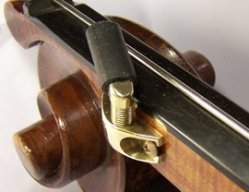
If there were a little pulley under each string as it crossed the bridge, then the tension on the playing portion of the string, and on the afterlength, would be equal. There's no pulley, but probably enough sliding that the tensions equalize themselves pretty well. So, the pull on the tailpiece is equal to the pull on the strings. Most string brands have tables of the tensions for their different varieties of strings.
Where vectors come into play is not in the tensions, but how all of the forces add up (to a net of zero) on the bridge, neck, etc.

Thanks Robobass, so 250-280 pounds isn't far wrong for being in the "ball park"!
Fog
...
Certainly adding the string tensions up then doubling it will be adequate for sizing a tailwire... but most people would look at the result and say 'That can't possibly be enough' and double the strength again.


I would say halving it, not doubling it. You're using two lengths of TP wire to hold the string tension, so I would say that any wire with a break strength of at least 150 pounds ought to do it. More can't hurt, of course.


