The first single truss road version as mine. Even the same color. Excellent basses!
My '91:
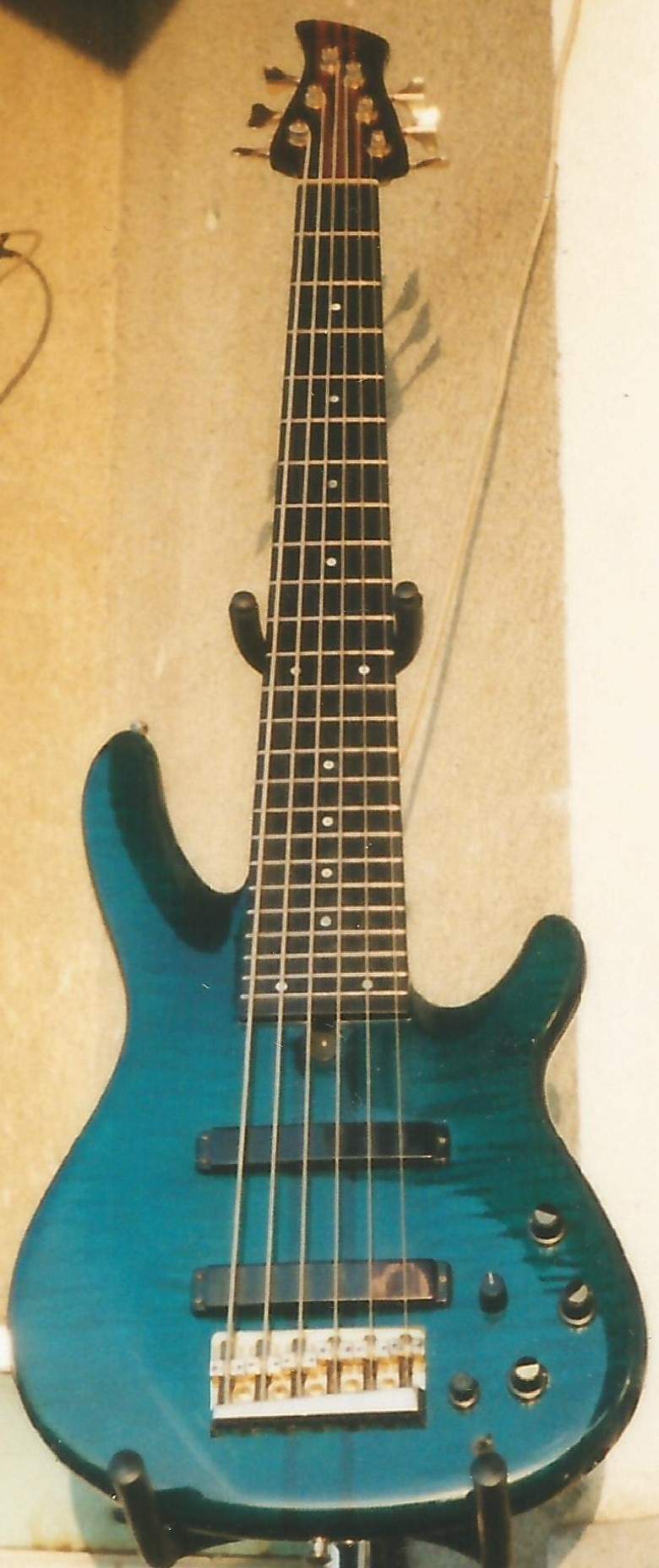
My '91:

TalkBass has been independent since 1998. Add your voice.
Create a free account to reply to discussions, view embedded media, and browse with fewer display ads.
Join free Log in
Want zero display ads or expanded classifieds tools? Compare plans.

The first single truss road version as mine. Even the same color. Excellent basses!
My '91:
View attachment 5027571

 Back to @Thumpin6string comment earlier, I believe this is the model/finish that Patitucci had on the cover of Bass Player mag long ago, which started my quest as a teenager to land one. Lots of lawn cutting money saved, with my parents ponying up the rest. I think that happened for me around 1992. @Dr. Cheese re: the question you asked @Flaked Beans I've been debating having mine re-fretted for many years. It's still 100% playable, but there's several past the 12th fret that could really use it. I tend to be pretty hard on things and am amazed that everything on this bass still works 100% I've got a small crack on the bass side of the headstock from a fall on stage at least 20 years ago, but that's about it. I've replaced the 1/4" jack a few times, but that's par for the course with any gigging bass.
View attachment 5027706
Snapped a pic this morning because why not
Looks like you put it to work! Have you had to have it refretted?
 )100% original, the frets were in top condition then ('06-'07) and the bass was absolutely flawless. Tried to buy it back several times but the guy said he'll never sell that bass. And he just got married and moved permanently to Seattle (from NY) with the bass (and his new wife
  ).
). )
)




Heavy though. I'm not usually that sensitive to bass weight, but I gigged with a TRB5 for four or six years and my left shoulder had a kink in it at the end of every night. It did sound good.


Heavy though. I'm not usually that sensitive to bass weight, but I gigged with a TRB5 for four or six years and my left shoulder had a kink in it at the end of every night. It did sound good.
Hi!The 1990 single truss rod TRB-6P in the rather blurry photo here was my main bass all through the 90's. I had to retire it around 2000 because of the neck stability problem - the last straw was flying out to do a one-off gig in a much warmer and drier climate. The neck upbowed so severely en route that it was fretting out above the 15th fret. I didn't have any tools with me so I had to suffer through the gig that way.
That bass became a "beta bass" with a number of different pickup and preamp combinations throughout its life. The best sounding pickups were Lane Poor medium impedance ones, but they had a hum problem that made them unusable. I sent them back to Lane, but that was right before his business melted down so I never got replacements (and had to file a dispute with my credit card company to get my money back). Without going through the whole pickup/preamp saga, what I ended up with that sounded really good was the stock pickups with a Demeter onboard preamp. As you can see in the pic the pickup routs are a little large - that's because I had EMG pickups in it at one point.
About 2 1/2 years I ago I acquired a nearly unused 1992 double truss rod TRB-6P, which was basically gifted to me. I posted about it at length in the TRB club thread, but here is a pic of it anyway. It now has the stock pickups and an Aguilar 3-band preamp, which is a pretty nice sounding combo - to my ears it's an upgrade over the stock preamp, though I do occasionally miss the piezo pickup for its unique character.
Oh, and just a correction re. John Patitucci's original Yamaha 6-string: it wasn't a stock TRB-6P, but a one-off that Yamaha made for him with different electronics than the ones that eventually were used in the production basses.
View attachment 5027941
View attachment 5027942
I never looked into specifically doing any repair to try to mitigate the neck stability problem, but given the through body design I think it would be difficult. Somebody could probably do it, but it would be major surgery. I'd guess it would involve removing the fingerboard, routing out space for any neck reinforcing rods you'd put in, putting it all back together and doing a lot of finish repair - probably a very expensive proposition. If the neck was a bolt-on I imagine it would be more possible.Hi!
I got my single truss TRB like yours in 2020 and it does have that neck issue.
Have you talked to anyone on addressing the neck movement issue? I wonder if inserting carbon fiber rods would help but I don't know how it will be approached.
Thanks!
On a whim I bought a TRB6 with the slap cut for a decent price only because I'm wary about bringing my neck thru TRB.I never looked into specifically doing any repair to try to mitigate the neck stability problem, but given the through body design I think it would be difficult. Somebody could probably do it, but it would be major surgery. I'd guess it would involve removing the fingerboard, routing out space for any neck reinforcing rods you'd put in, putting it all back together and doing a lot of finish repair - probably a very expensive proposition. If the neck was a bolt-on I imagine it would be more possible.
The later dual truss rod TRB-6P that I have now has a very stable neck, but the neck profile is noticeably bulkier. I've gradually gotten used to it, but I really liked the neck better on the single rod TRB.
An update to that earlier post: I ended up reinstalling the original Yamaha electronics. The Aguilar preamp was ok, but I missed the character of the original circuit. Also, lately I have been blending in the piezo pickup quite a bit, which I wasn't able to do with the Aguilar pre the way it was wired up.

My guess is this sort of mod would be cost prohibitive and risky. I don't think it is certain the fretboard could be removed intact. So attempting the mod could result in the requirement to building a new fretboard.I just got a reply from a tech/luthier here about my neck question and advised against the carbon fiber inserts. As long as I have no problems with adjusting the truss rod, I should be good according to him.
 .
.It was worse for me then when I still lived in my hometown, especially the situation in my room.My guess is this sort of mod would be cost prohibitive and risky. I don't think it is certain the fretboard could be removed intact. So attempting the mod could resulting in the requirement to building a new fretboard.
I think whether you are good to go depends on how extreme and frequent your local humidity swings are and how much the neck is moving around.
The neck problems with my bass were manageable until I moved to the midwest.
I bought the bass used with a repaired crack in the fretboard. The crack opens up when the humidity dips too far into the teens. I was having to do a lot of truss road adjustments just to keep the bass playable. The truss rod nut was becoming more and more difficult to turn.
The seasonal humidity changes in my house were originally varying from <10% to over <60%. I have spent quite a bit to moderate the humidity swings in my house. Now humidity usually stays between about 25% and 40%, but it may occasionally go higher or lower with extreme weather.
The bass is much happier. The neck still moves, but I don't think I have adjusted the truss rod for over a year. However, the bass doesn't leave my house. I don't think it would be wise to trust it for gigging. I expect the fretboard to eventually fail on this bass
I happen to know the whole history of the 1992 dual truss rod TRP-6P that I acquired in 2022 (because it belonged to a former employer and was kept in his family after he passed away), and it perfectly illustrates all of your points. I hadn't thought about the expansion/contraction problems being a result of using all the different woods, but that totally makes sense.Before I go on, I want to say that I am not an expert on this subject.
IMHO, the neck on my TRB6P is actually much stiffer than some of my more stable basses. Another recently active thread on this issue suggested that the problem is most likely due to the different woods in the neck. Basically the neck and fretboard have different rates of expansion. The difference is potentially magnified because the neck is finished, while the fretboard is unfinishedrosewoodI believe it's actually ebony. So the neck is protected from moisture exchange but the fretboard is not.
Some suggested oiling the fretboard might help. Ref: https://www.talkbass.com/threads/pr...nd-temperature-changes.1669270/#post-28984198
I tried bore oil on my bass and it didn't seem to help. The bore oil I choose was recommended by several clarinetists I worked with.
Before applying the oil I read up and articles suggested caution in regards to over oiling the fretboard, as it may cause the wood to become spongy and soft. I was pretty conservative with oiling the fretboard. I basically applied oil and rubbed the fretboard with my fingers. I let it set it set for awhile and then wiped it off. Not sure, but I may have done two applications on succeeding days. It might try again without wiping the oil off.
AFAIK the oil does not really moisturize the wood because it does not penetrate very deep. My understanding is the oil basically reduces how permeable the surface is, so it slows the rate of moisture exchange. The oil is sort of like a temporary finish.
I have to wonder if sealing the fretboard would significantly mitigate the problem. My first bass was a Rickenbacker 4001, which I still own. The neck is pretty floppy, but neck relief is pretty stable. AFAIK the fretboard is rosewood, but it's sealed.