• TalkBass has been independent since 1998. Add your voice.
    Create a free account to reply to discussions, view embedded media, and browse with fewer display ads.
    Join freeLog in
    Want zero display ads or expanded classifieds tools? Compare plans.

Tube power

Can anyone explain to me how tubes in the power section affect the sound? Or direct me to a link that does. I'm considering making the "swap" to all tube but still don't totally understand what power section tubes do to enhance the sound.
 
I think each amp has a different character. For me the distinguishing factor is the potential for a natural type of compression/saturation when you open things up a little and a unique flavor of OD/richness that is possible if you drive the power section hard.
 
With that being said does the peavey vb 2 seem like a decent option for the harmonics? I'm looking for a nice warm vintagy p bass grind. I'm liking what a sans amp does but wondered how much better having the real thing would be. I once played a '75 svt which gave the sound I was looking for but is wayy out of the budget, and I also like the idea of the peavey being Mia and some of the modern features. Typically I'm not a big peavey fan (solid state speaking) but are their tubes an exception?
 
As others have mentioned, a tube power section will, very generally speaking, have more compression and THD than a SS amp, as well as lower damping and a more limited frequency response on the low end compared to SS. There are a lot of different variables, so each power amp design will behave differently - factors such as tube type, PI configuration, plate and screen voltages, filtering, OT size and type, PT VA, feedback circuit, topology of your voltage rails, etc. etc. will all impact the end results.
 
JGR said:
As others have mentioned, a tube power section will, very generally speaking, have more compression and THD than a SS amp, as well as lower damping and a more limited frequency response on the low end compared to SS. There are a lot of different variables, so each power amp design will behave differently - factors such as tube type, PI configuration, plate and screen voltages, filtering, OT size and type, PT VA, feedback circuit, topology of your voltage rails, etc. etc. will all impact the end results.

So this would mean tubes would have a tighter low end as opposed to getting boomy?
 
So this would mean tubes would have a tighter low end as opposed to getting boomy?
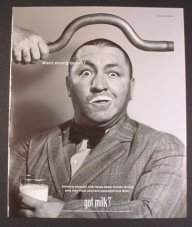
It means that tube watts are better watts, 'cause the tubes have power that's a booty-shakin' power and the booty-shakin' power won't quit.


In real life, they have a sound that people equate with "sounds good" that no amount of science can explain.......well...yes it can.....but it's a long read. It comes down to little things that strike the human psychogical relationship to the actual that can't really be completely defined or explained. It's as much art as it is real. Coming here from someone who plays both, and actually non-tube more often than tube, due to convenience, but if I had my druthers, and life-factors were taken out of the equation, and pure sound was the only factor, you can't beat a great tube design, man. Although a good SS design can beat a "medium" tube design any day. It isn't just the parts, it's how the designer/engineer incorporated those parts.
 
For example, I have a GK 800rb that will stomp the daylights out of some arbitrary tube design. There isn't a single tube in it anywhere. There are also really good tube designs that will make this amp sound a bit inferior.