• TalkBass has been independent since 1998. Add your voice.
    Create a free account to reply to discussions, view embedded media, and browse with fewer display ads.
    Join freeLog in
    Want zero display ads or expanded classifieds tools? Compare plans.

Tuning Peg replacement for Fender P bass

Which tuning pegs would you use?


  • Total voters
    7
  • Poll closed .
So I've been mulling over replacing the tuning machine heads on my P bass. The stock ones are old and can't keep the bass in tune after 30 mins of jamming. I have a 2010 MIM model and I've narrowed it down to these 3. Hipshot HB7, Schaller, or Gotoh FB30. The hipshots seem the most practical since they're a drop in replacement without having to drill new holes but they're the most expensive. I like the schaller and gotoh ones since they look like the classic 70's tuning pegs, though the gotoh tuning pegs look a lot longer than the schaller and hipshot ones. Any suggestions? Thanks
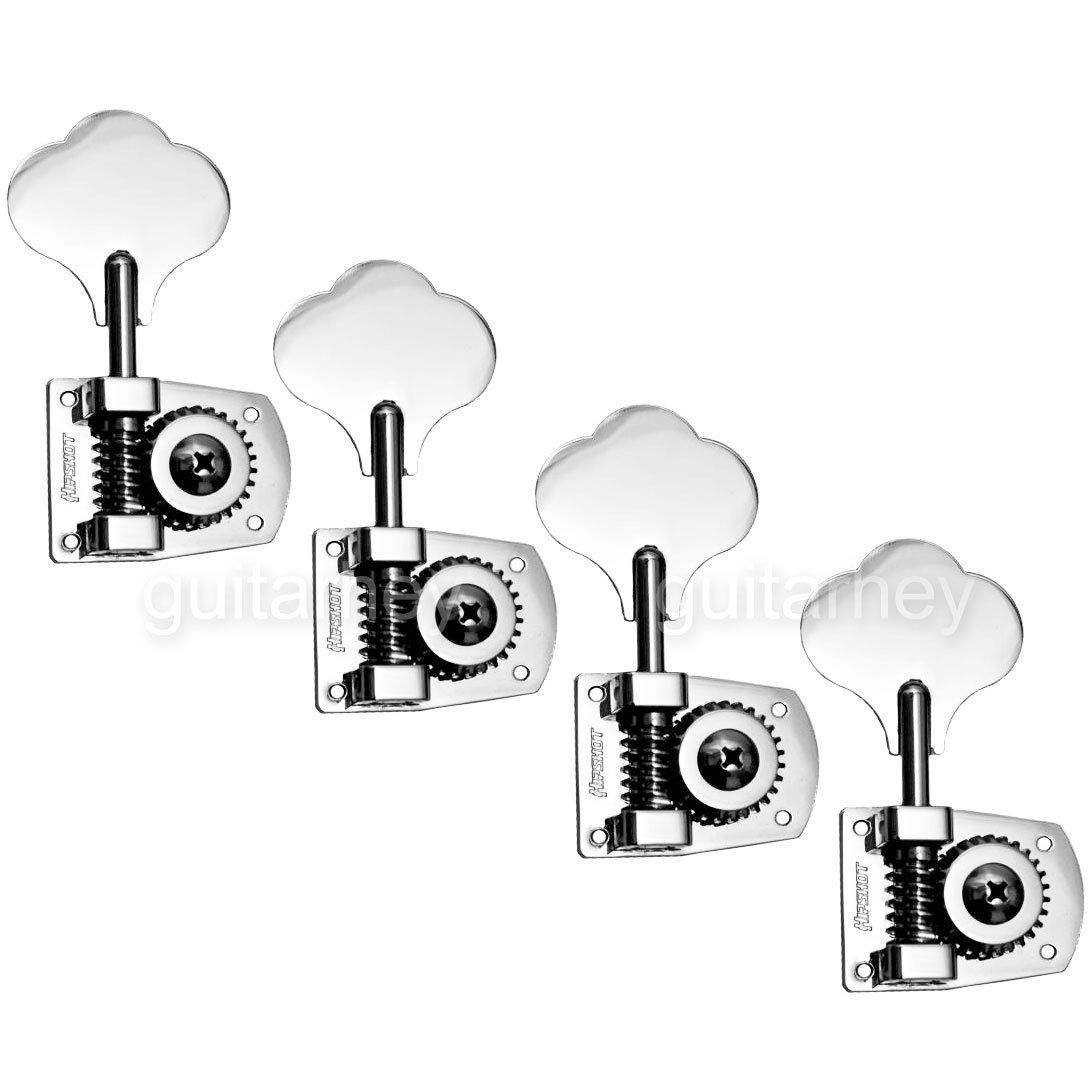
Hipshot.jpg
Schaller.jpg
Gotoh.jpg
 
  • Like
Reactions: bpmben
Your tuning issues are more likely to be an issue with the nut rather than the tuners. I'd suggest having a tech look at it first.
This.

Plus do you always tune UP to pitch, NEVER DOWN? You may already know this but, Tuning down to pitch is a recipe for going flat after a few minutes. You have to keep the whole system snug: the worm against the spur gear, the wraps around the post. Tuning down to pitch leaves slack in the system.

When tuning up, if you overshoot, take it back down below the note at least a half step and then bring it back up to pitch.

If you know this, and do this, ignore this post, just reiterating.
 
  • Like
Reactions: cpeterso
This.

Plus do you always tune UP to pitch, NEVER DOWN? You may already know this but, Tuning down to pitch is a recipe for going flat after a few minutes. You have to keep the whole system snug: the worm against the spur gear, the wraps around the post. Tuning down to pitch leaves slack in the system.

When tuning up, if you overshoot, take it back down below the note at least a half step and then bring it back up to pitch.

If you know this, and do this, ignore this post, just reiterating.
I always tune up to E, though I do play some songs in Eb or C# but it's not that often I have to tune down. Only when I'm singing a song my band tunes down because of my voice is in a lower octave.
 
Not what i mean man, I’m referring to before playing, after you take it out of the case. They ning up. If you overshoot the the note, say E, when tuning. NEVER drop back down to pitch. Drop below pitch say Eb and bring it back up to E. See?

Im not talking about detuning or drop tuning to alternate.

Just tuning the bass before playing.

Savvy?
 
Not what i mean man, I’m referring to before playing, after you take it out of the case. They ning up. If you overshoot the the note, say E, when tuning. NEVER drop back down to pitch. Drop below pitch say Eb and bring it back up to E. See?

Im not talking about detuning or drop tuning to alternate.

Just tuning the bass before playing.

Savvy?
Oh I see what you're saying. Never really thought that overshooting the tuning and bringing it back could have affect...I still want to replace the pegs though. They're really stiff and almost make a grinding noise when I tune.
 
  • Like
Reactions: emil_fh
There are huge quality differences in the common manufacture of tuning machines you typically see on Fenders. On some the base plate is bent over the tuning key shaft to hold the whole lot together. Cost effective for the manufacturer and gets the basic job done. That it's the cheapest way to make tuners.

Next on the ladder is the type where there is a separate "U" shaped piece that holds the tuner to the base plate. Significant improvement in terms of quality at a higher price point. In many cases though, the way that the "U" is fastened to the base plate leaves a slight protrusion on the side that contacts the headstock preventing the base plate from laying flat on the headstock. Fender fixed this problem many years ago by drilling little relief pockets into the headstock to compensate for the protrusions.

Next up the ladder are the ones that have a small machined block that holds the tuning key shaft. Usually this type also has a tension control built in to those blocks. These tend to be the highest priced option and often the heaviest, but the quality is far above the others, as is the cost.

You get what you pay for.

For drop-in replacement of MIM Fenders, Hipshot seems to have the only quality tuner that fits the bill.
 
There are huge quality differences in the common manufacture of tuning machines you typically see on Fenders. On some the base plate is bent over the tuning key shaft to hold the whole lot together. Cost effective for the manufacturer and gets the basic job done. That it's the cheapest way to make tuners.

Next on the ladder is the type where there is a separate "U" shaped piece that holds the tuner to the base plate. Significant improvement in terms of quality at a higher price point. In many cases though, the way that the "U" is fastened to the base plate leaves a slight protrusion on the side that contacts the headstock preventing the base plate from laying flat on the headstock. Fender fixed this problem many years ago by drilling little relief pockets into the headstock to compensate for the protrusions.

Next up the ladder are the ones that have a small machined block that holds the tuning key shaft. Usually this type also has a tension control built in to those blocks. These tend to be the highest priced option and often the heaviest, but the quality is far above the others, as is the cost.

You get what you pay for.

For drop-in replacement of MIM Fenders, Hipshot seems to have the only quality tuner that fits the bill.
I agree, thank you for your in depth analysis. A whole lot more to tuning gears than I realized. I'll go with the hipshots when I have the money. Luckily bass strings online sells the whole set for $90. The cheapest I've found them so far...and I can install them myself! Saves a trip to the guitar repair guy.
 
  • Like
Reactions: sissy kathy
Yes, those big open gear tuners can wear out, but that's really kinda rare. The ones on my '78 P-Bass, for example, are perfectly fine. You might, just for fun, check those big Phillips head screws that hold the gears on. They do get loose sometimes, and that can make staying in tune...difficult. ;)
 
Last edited:
  • Like
Reactions: cpeterso
I agree, thank you for your in depth analysis. A whole lot more to tuning gears than I realized. I'll go with the hipshots when I have the money. Luckily bass strings online sells the whole set for $90. The cheapest I've found them so far...and I can install them myself! Saves a trip to the guitar repair guy.
Just so you know - Hipshots are a bit hard to come by lately. I've had some on order for over 3 weeks now and there's still no firm delivery time. Checked with multiple vendors and same story all around.
 
Just so you know - Hipshots are a bit hard to come by lately. I've had some on order for over 3 weeks now and there's still no firm delivery time. Checked with multiple vendors and same story all around.
Really? I hope they haven’t gone the way of the Badass II bridge. Any reason why? Where did you order your set from? A few sellers on eBay have them though the only set I found were $120.
 
Yes, those big open gear tuners can wear out, but that's really kinda rare. The ones on my '78 P-Bass, for example, are perfectly fine. You might, just for fun, check those big Phillips head screws that hold the gears on. They do get loose sometimes, and that can make staying in tune...difficult. ;)
Just tightened them now, not that much adjustment needed. The MIM tuners have never been that great and the previous owner did something to them because the D tuner had a piece of plastic wedged underneath the head screw. This bass came with dirty rusted pots, so the previous owner was pretty careless with it.
 
Really? I hope they haven’t gone the way of the Badass II bridge. Any reason why? Where did you order your set from? A few sellers on eBay have them though the only set I found were $120.
Pretty well everywhere I checked were out of stock, including Hipshot. The word I got was that Hipshot is having difficulty keeping up with demand for their tuning machines. They don't seem to be having the same problem with their bridges though. Prices vary widely from as well - direct from Hipshot being one of the highest.
 
Just tightened them now, not that much adjustment needed. The MIM tuners have never been that great and the previous owner did something to them because the D tuner had a piece of plastic wedged underneath the head screw. This bass came with dirty rusted pots, so the previous owner was pretty careless with it.
The owner didn't do that; that piece of plastic is called a slip sheet and is part of the tuner. When it becomes apparent that the slip sheet is present, that's an indication your tuner needs some maintenance.

So what you do is remove the string. Then loosen that screw up so it is almost all the way out, rap the screw with the handle of the screwdriver; that will drive the capstan (post) out of the gear. Remove the post and the gear, but be careful, there is another piece under that gear. Once they are removed you'll see the rest of the slip sheet and another flat piece of metal under that. That flat piece of metal is a tension spring; ensure you keep it in correct orientation. You can put Mylar packing tape on the spring to replace the worn slip sheet, trim close, and reassemble the whole thing. The packing tape needs to be between the gear and the spring, but you can put the tape on both sides of the spring if you like. Spring orientation still matters though.
 
Last edited:
The owner didn't do that; that piece of plastic is called a slip sheet and is part of the tuner. When it becomes apparent that the slip sheet is present, that's an indication your tuner needs some maintenance.

So what you do is remove the string. Then loosen that screw up so it is almost all the way out, rap the screw with the handle of the screwdriver; that will drive the capstan (post) out of the gear. Remove the post and the gear, but be careful, there is another piece under that gear. Once they are removed you'll see the rest of the slip sheet and another flat piece of metal under that. That flat piece of metal is a tension spring; ensure you keep it in correct orientation. You can put Mylar packing tape on the spring to replace the worn slip sheet, trim close, and reassemble the whole thing. The packing tape needs to be between the gear and the spring, but you can put the tape on both sides of the spring if you like. Spring orientation still matters though.
I see, I’ve seen those on other tuning gears and they’re usually clear. I know the previous owner put it there because it was black piece of plastic that was not evenly cut. I think the original sheet broke and the previous owner put a replacement and half assed it. Also I ‘aint Doing all that. I don’t trust myself. You’re sure adamant that I keep the stock tuning gears lol.