• TalkBass has been independent since 1998. Add your voice.
    Create a free account to reply to discussions, view embedded media, and browse with fewer display ads.
    Join freeLog in
    Want zero display ads or expanded classifieds tools? Compare plans.

Twisted neck, improved ergonomics

In this video at 2:24, he specifically states, "...tendonitis, carpal tunnel...You can avoid that with proper technique..."
So, what's the point of a twisted neck?


Seems gimmicky to me. Flat necks have worked fine on violins, banjos, mandolins, ukuleles, cuatros, ouds, bouzoukis, sitars, balalaikas, basses, guitars, etc. for a few centuries. To each their own, but I'm just fine with traditional flat necks.
 
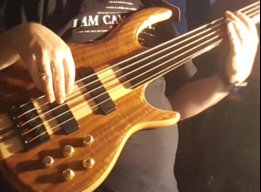
I have a Power Jazz Special that has a slight twist, down towards the G string. After adjusting the bridge to match, I can honestly say that it is extremely comfortable to play.
 
Don't look at the entire neck. At each string, that point on the fingerboard extended from nut to bridge is still the same - generally straight with just the optimum relief, for the string to vibrate properly. I'm saving my $$$ for Jerome Little to make me one some day.
 
In this video at 2:24, he specifically states, "...tendonitis, carpal tunnel...You can avoid that with proper technique..."
So, what's the point of a twisted neck?


Seems gimmicky to me. Flat necks have worked fine on violins, banjos, mandolins, ukuleles, cuatros, ouds, bouzoukis, sitars, balalaikas, basses, guitars, etc. for a few centuries. To each their own, but I'm just fine with traditional flat necks.


Actually, speaking as a violinist by training, violinists and violists fight major health problems in the spine, shoulders, back, jaw, neck, left elbow and both wrists.

The design is not anatomically healthy. .... at least not if you're doing it for the best sound.
 
  • Like
Reactions: Fat Steve
Not they haven't. For said centuries, string musicians have struggled with carpal tunnel and tendonitis, many careers were broken this way. ANythin we could do to improve playability would be great.
It's not exactly a novelty, Torzal has been around for 20+ years.
Seems gimmicky to me. Flat necks have worked fine on violins, banjos, mandolins, ukuleles, cuatros, ouds, bouzoukis, sitars, balalaikas, basses, guitars, etc. for a few centuries. To each their own, but I'm just fine with traditional flat necks.
 
And as Jerome Little is now doing: combine the helix with frets fanning forward, and you have the optimum relief to the elbow, wrist and fingers.

Funny, it is exactly opposite with double bass: being vertical, and able to pivot on is endpin, I have found double bass easier to play when adjusted properly for height, than electric bass, from an ergonomic point of view.
 
  • Like
Reactions: Fat Steve