
This is the way. This one has the Super Ferrite Ps that Matt Kustom made. Sounds great.View attachment 5280718
Nice! Fretless? Mirror PG? I love the look!

TalkBass has been independent since 1998. Add your voice.
Create a free account to reply to discussions, view embedded media, and browse with fewer display ads.
Join free Log in
Want zero display ads or expanded classifieds tools? Compare plans.
This is the way. This one has the Super Ferrite Ps that Matt Kustom made. Sounds great.View attachment 5280718
Well that escalated quickly!I'm just saying that a set screw with a point on it is a crappy way to tilt a neck up, especially on a 30 year old bass.
Can't understand how that idea ever got to production at Fenderr or G&L or anywhere.
If the body, neck and bridge are made right as three pieces that go together to make a system, there should be no need for a shim and definitely no need to be messing with extra moving parts needed to create a micro-tilt system. If anything needs to be done, a business card/plastic library card or a piece of veneer will work fine as a shim for getting things dialed in correctly again.
Micro-tilt is like heated seats and a sunroof in Texas.




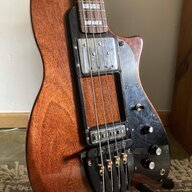
Yes. I saw the neck on craigslist for a while and the price dropped to a point where I couldn't resist. Got the body here on TB. Matt had done inline split coil Super Ferrites, so I asked him for a set of SF Ps.Nice! Fretless? Mirror PG? I love the look!
Beauty! I was considering reversing the slant at the bridge...
Thanks!
If you have copper shielding under the aluminum tray, then remove the aluminum tray, that copper product works better anyway.
You might as well put a shim in the neck heel now before you get everything back together.
Those massive T40 bridges are not known for being able to set the bridge action low.
It's one of the weird things Peavey spent a lot of money making, while a basic bridge works just fine, and weighs a fraction of that bridge.
Here is a link to good neck shims that will put it right under the two rear screws, which is a good way to go.
Cost $8 and will deliver to your house in one day.
https://www.amazon.com/Alnicov-Guitar-Thickness-Electric-Luthier/dp/B08PFQ3F5W

Yeah, I had the guitar version. Loudest output I have ever experienced from an instrument!
That would be really cool!Has anyone here built a bass with 2 slant pickups similar to the Elite precision? I'm thinking about it!
Sounds like the classic 'ski jump' often found on instruments with excessive use of the micro tilt. The fix is heating and straightening the neck, or pulling frets and planing the fingerboard down, or just filling/leveling the uppermost frets to allow clearance. I have often just filed the frets down, as having short frets is not an issue, as I won't be playing up there enough to wear them down anytime soon!I had not though about double shield being an issue, I will remove the alum tray.
Heel high was the problem to begin with, (fretting @19 made string hit all the higher frets) not sure I want to add a shim to the heel, I was trying to "drop" the heel? Action seemed decent until I ran into the fretting issue an dI have room to drop the bridges a bit more.

I'll open it up if you want to send. DM if you don't still have the addressI've got a dead one that I can send you.
Based on how little I raised the bridge to gain clearance of the issue and how much I tightened the screws, think it will resolve. I believe by having the micro adjuster backed out and letting the neck seat fully and flush into the body, it should get the neck heel "ramping" out of string line without resorting to overly high action.Sounds like the classic 'ski jump' often found on instruments with excessive use of the micro tilt. The fix is heating and straightening the neck, or pulling frets and planing the fingerboard down, or just filling/leveling the uppermost frets to allow clearance. I have often just filed the frets down, as having short frets is not an issue, as I won't be playing up there enough to wear them down anytime soon!
As 58Kites mentioned, the micro tilt is somewhat a bane of existence. Fully understandable why it was invented, it quickly aids a proper neck angle for the factory set up during a time of questionable QC and consistency of neck pockets and neck heels (looking at you, 70s Fender). However, when implemented at Musicman and G&L, with their tighter build tolerances, it was nearly moot and eventually dropped from production when CNC became the norm. Pretty much the same with Peavey, they built their stuff pretty well & consistently (CNC), and often the micro tilt is not necessary.
I use the micro tilt just to find the neck angle I like, then apply shims to hold the angle and support the neck/body joint better, backing off the set screw.
I keep seeing hate for the neck tilt. I have 3 basses with the tilt and have had zero issues with its use. Dumb luck?
I'm not suggesting that micro-tilt creates ski jump, I think that is a problem with neck/truss rod design/build issues and/or decades of neglect by bass owners.Same. And there are a lot of basses without nick tilt that have the ski jump. I've seen discussions, and I think it's clear no one really knows why it happens.
I didn't catch that when you described it, not paying close enough attention obviously.I had not though about double shield being an issue, I will remove the alum tray.
Heel high was the problem to begin with, (fretting @19 made string hit all the higher frets) not sure I want to add a shim to the heel, I was trying to "drop" the heel? Action seemed decent until I ran into the fretting issue an dI have room to drop the bridges a bit more.
I hope that is the case, I've had no ski jump issues with any of my Peavey basses.Based on how little I raised the bridge to gain clearance of the issue and how much I tightened the screws, think it will resolve. I believe by having the micro adjuster backed out and letting the neck seat fully and flush into the body, it should get the neck heel "ramping" out of string line without resorting to overly high action.
Thank you sir! This confirms my thoughts as the QP's are actually a better pickup than the Duncan Designed. I will definitely go with Neo's I think. I totally agree that a hotter output is better and gives you far more options with EQ.I'm making assumptions and guesses with regards to @Matt Kustom's Neo here, having never used his products I can only go by my experience using a similar set up.
The Peavey Zodiac Scorpio DE came with Duncan QPs as stock. I'd recorded a short clip in Audacity on mine, here's screenshot showing the levels.
View attachment 5280398
Did the same with another Zodiac DE, only I'd swapped out the QPs for a Neodymium PJ set. Same strings, pickup heights, recording levels etc, it's Audacity screenshot tells a different story.
View attachment 5280399
Now I'm posting these only to show the contrasting jump in output but I'm of the mindset it's far better and easier to tweak and turn down stronger signal than boost a weaker one
As an aside, I wish that Fender had decided to install threaded inserts in their neck heels, then it would have been the standard.
I don't really think running lag wood screws in and out of the heel fifty times in the lifetime of a bass is a great way to go, I know it works but still don't love it.



When 60's Fenders start being priced like they're disposable your statement will carry some weight.People forget that the pragmatic Leo Fender designed the screw-on neck so that defective necks could be easily replaced.
That’s right, people. They’re consumable. They’re disposable.
I’m always perplexed when I see people hand-wringing about how to rescue and/or preserve a vintage 196X Fender neck.
It’s disposable!! Go get a new one and move on with your life already!!
People forget that the pragmatic Leo Fender designed the screw-on neck so that defective necks could be easily replaced.
That’s right, people. They’re consumable. They’re disposable.
I’m always perplexed when I see people hand-wringing about how to rescue and/or preserve a vintage 196X Fender neck.
It’s disposable!! Go get a new one and move on with your life already!!
What I'm suggesting doesn't change the status of replaceability or disposability.People forget that the pragmatic Leo Fender designed the screw-on neck so that defective necks could be easily replaced.
That’s right, people. They’re consumable. They’re disposable.
I’m always perplexed when I see people hand-wringing about how to rescue and/or preserve a vintage 196X Fender neck.
It’s disposable!! Go get a new one and move on with your life already!!


