• TalkBass has been independent since 1998. Add your voice.
    Create a free account to reply to discussions, view embedded media, and browse with fewer display ads.
    Join freeLog in
    Want zero display ads or expanded classifieds tools? Compare plans.

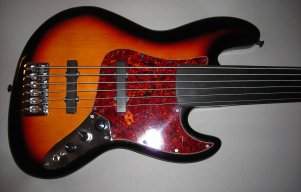
Unlined fretless?

In any case, make sure the intonation is correct on whatever you buy.

Totally agree with this one. My first fretless was a $300 used MIM jazz w/ lines. The neck and intonation were way off. It made it very difficult to play chords. And to get the correct Mwwwwawah sound, the neck needs a slight bow - not flat.

My second fretless - yes I like the first one that much - is an Alembic Elan w/o the lines on the fingerboard. It does have dots on the side at 3, 5, 7, 9, 12 ..... I only occasionally glance over when playing. Because we constantly change the songs we play at church, I'm looking at the music too much. This bass also needed adjustments - partially due to different strings. Also because I don't think it was played that much. One bridge piece was moved about 3/16-in to get the intonation right. Now it sounds awesome.

Now you have to figure what strings to get. I tried flats, half-wounds, and round-wounds. I much prefer the round-wounds. I really like the DR Highbeams in regular light gage.

Look up Gary Wills set up guide on You Tube. It's a great video that helps get the bass set up properly.

ENJOY!!! and welcome to the wonderful world of Fretless Bass!!! :hyper:

Steve

PS - you're going to be amazed at how many people never heard of a fretless bass.

 
Thanks for all the replies lads, some great advice given as always.

This issue has settled itself. I went to visit the guy who was selling the corvette this evening, 99% sure i was going to buy the bass. I tried it out and it sounded great even though it needs new strings and some adjustment to suit my likings. The fact that it didn't have fret markers didn't really throw me off hugely and I found I was able to replicate alot of things I would be able to play on a fretted bass.

Anyway, given that such a beautiful bass was on offer for such a great price, I just couldn't say no so I arrived home the proud owner of a warwick fretless. For better or for worse, it seems my adventures into the world of fretless bass will be of the unlined school.

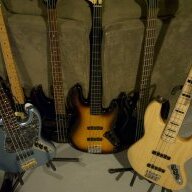
Some pics of the new arrival, sorry about the quality, they were taken with an ipod.

IMG_0074.jpg


So it's been a few years, how did you make out learning to play it? I have a similar dilemma in that I want to try a fretless, and there's one at a low price for sale locally, but it has no fret lines.

I do find it interesting to read how in most cases the lines get in he way, and that learning on a lined version was about as much work and time as the non-lined version. I'm not sure if I can trust my ears that much that I'd know I'm fully in tune and playing the note correctly.

Are there other techniques that can help with that?
 
Last edited:
So it's been a few years, how did you make out learning to play it? I have a similar dilemma in that I want to try a fretless, and there's one at a low price for sale locally, but it has no fret lines.

I do find it interesting to read how in most cases the lines get in he way, and that learning on a lined version was about as much work and time as the non-lined version. I'm not sure if I can trust my ears that much that I'd know I'm fully in tune and playing the note correctly.

Are there other techniques that can help with that?

I wouldn't be put off by no fret lines. In fact I recommend starting that way! I started fretless with my Carvin AC50 which I ordered with fretlines as "training wheels" to get started. In the end I regard it as a mistake to do that. Yes, it makes things a tad easier at the start and helps you from getting discouraged, BUT what you eventually find is that a blank fingerboard LOOKS so much cooler! And people in generally tend to think the lined fretless is a fretted bass (no matter how many fretless things you do) and even worse, when you are standing you can see only the edges of the lines anyway so why bother?

Well, the reason you bother with lines is that when practicing seated and learning they give you nice guidelines to get started. Especially important is to train yourself out of the tendency to play across the strings at an angle. With frets this makes little difference. Fretless it obviously does. But beyond that there isn't much advantage to fretlines at all. Even worse, is that some lined fretless basses have the side dots BETWEEN the fret positions which is something you DO NOT WANT on a fretless bass! With dots to be a guide to note positions you want them as close to the proper positions as you can get. Even so dots only get you in the ball park. Your ear has to do the rest. To get notes as close as possible to fretlines and dots it's always important to make sure your fretless bass is properly tuned and intonated at the bridge.

One way to practice playing intonation is to play into a cheap tuning meter (like my old Korg CA-1). Great exercise.

The bottom line is that difference in learning with lined and unlined is so minor that starting on an unlined is the way to go because then you don't have to wish it was unlined later when you finally are able to play it well. My main G&L axe is lined because I bought it used and the previous owner chose to have it lined, so lined isn't the end of the world or anything, but given a choice I prefer unlined for the look and the way it forces you to more rely on dots and ears than thinking the lines are exactly the right notes (they aren't).
 
Last edited:
I just got my (lined) fretless. It would be easy to black them out - easier than adding them if I wanted them and they weren't there.

I can choose to not look, but it's nice when I get confused and want to check. If you fall in love like I did, but got to a jam or recording session where they didn't want a fretless, the lines can cover you (people don't notice at a glace it's a fretless when the lines look like frets hehe). Yes you play right ON the line (unlike fretted) but again I would rather have and not need than need and not have...
 
Fret lines or no, it is your ear (and muscle memory) that is going to be your best learning tool. In addition to tons of practice, I will always check out my Polytune to see if I'm positioning my finger correctly. I'm usually very close and a very slight roll of the finger either forwards or backwards will bring it to pitch. Any tuner will work. Plus, even if you were to find yourself on a pitch black stage, adjust your volume pedal and play a note to find the correct position if you can't determine where you're at on the neck. Again, practice and muscle memory should prevent that but it's a nice safety net just in case.
Img4303_FEATURED.jpg
 
I prefer a plain Ebony board
Being my first plain board I did have Scott install large white dots and branded the gaps

I very much agree! On the SX-6 I converted to fretless with ebony board (avatar) i installed extra large white dots and they really worked out great! Worst is my Alembic fretless 6er with small brass markers. Not bad at first, but then the brass gets dark and you can't see squat on a dark stage. I just had to sand them again and coat them to keep them bright. I really love an ebony board too, though my old $100 SX with the rosewood board and alder body is no slouch!
 
I bought a Squier VM P that has the fret lines. I'm only aspiring at fretless, but I have to say I was thrown way off by the lines, and later also found that the line inserts are not truly flush to the level of the ebonal board. I am more accustomed to ear playing and glimpsing at side dots on a no-line fingerboard. It seems that the lines expect you to play a finger-width behind the line to intonate. Not bonding with the neck so I'll convert it by swapping a CV neck to make another fretted P - you can't have too many backup Precisions.
 
Enjoy your new bass! Best way to learn is trial by fire. Show up at a gig with it -- peer pressure works wonders for intonation. I bought a brand new fretless P when I was in high school (1971?! omg...) because a) I saw an ad in Downbeat magazine b) John Paul Jones played one on some songs, and c) it looked cool. After a few weeks of slip-sliding around, I got the hang of it and was playing it in tune.
IMG_1171[1].JPG
She's taken her share of abuse over the years -- excessive SBN exposure (sweat, beer and nicotine) and survived the implant of a Dimarzio jazz pickup in the 80s. (At least I removed the brass bridge.) It wore a fretted neck during its most active period so the neck is still in nice shape.

Interesting how sunlight darkened the headstock and faded the red out of the sunburst, but has had no effect on that radioactive 70s clownburst guard.

Tip: use "drops" to open string notes to calibrate your hand position.
 
  • Like
Reactions: jamro217
So, this is a 3 year old thread, resurrected because the lines / no lines discussion continues to be important.

My $0.019:
We all play differently, and I really would prefer people posting would keep this in mind. Lines on a fretless are NOT "training wheels." Referring to them in that manner is offensive (sometimes intentionally); and can be misleading for uninformed players. Let's get this part straight; NO ONE you will play for will actually care or be impressed one way or the other whether you have lines or not. They WILL be impressed one way or the other by your intonation, or lack thereof. The "no lines" preference gets used a little too often on TB in a "mine's bigger than yours" kind of interchange. Don't get confused by that.

That said, utility of lines depends a lot on the fingering approach you will have learned on the fretted fingerboard. If you have become accustomed to targeting the dots in between the frets, then the lined fretless will drive you insane, because you will tend to stop the string in the wrong place. If you are targeting the stops on a fretted bass right behind the frets, then the lines will feel much more natural. I've seen accomplished players in both camps, and it just depends on the player. You still have to use your ears either way. Intonation depends on your ears.

From a positional perspective, in the lower register, you can't usually see the fingerboard very easily; and so, your reference ends up being whatever you can see on the fingerboard edge. Line ends or dots are equally useful in that area, and the lines in the board have minimal value. Large shifts into the upper register are another matter. If you want to do those accurately, then you need a visual reference. Muscle memory does not cut it, IME. Lines work, but, you can also use other target marks on the board surface. Trying to reference board edge marks across the board is a lot harder; but, there are cats like Steve Bailey who do it very well. Takes a LOT of work.

I would personally never take a fretless out on a completely dark performance stage with no references whatsoever. That is just asking for trouble. YMMV.
 
Last edited:
  • Like
Reactions: Jamvan and grrg63
I vote for UNLINED. My Fender Jaco signature Jazz has lines so I stained the board which pretty much covered them up. Yeah it is starting to wear off already so I will re-stain soon. The lines are sometimes off and they confuse more than help. It does have side dots and I do like that but some versions of this bass has the side dots between the "frets" or lines which REALLY confuses.
 
my tech advised me to put side dots on using correction fluid - it is completely reversible, but can help massively on unlined fretless basses
Or hobby modelling pinstriping tape (like used on model cars and RC stuff). That's what use, works for me. I take a piece of masking tape, slap it on the side of a fretted bass of the same scale, mark the spots, transfer to the unlined fretless (positioning the masking tape a bit further from the top of the fingerboard) and then just put the tape on. Hardest part of it is handling the little pieces of tape and getting them cut to the same length. :)
 
  • Like
Reactions: jamro217
Muscle memory will get you in the ballpark. Unlike a doublebass the neck of a bass guitar is virtually featureless. If I told you to close your eyes, put your hand at your side, then put it on the 6th fret every time within 2 cents, how likely are you and the average user going to be able to do this 10 times?
If one wants "features" to locate positions, that's easy enough to do as well. Again, tape works for me...
 
Or hobby modelling pinstriping tape (like used on model cars and RC stuff). That's what use, works for me. I take a piece of masking tape, slap it on the side of a fretted bass of the same scale, mark the spots, transfer to the unlined fretless (positioning the masking tape a bit further from the top of the fingerboard) and then just put the tape on. Hardest part of it is handling the little pieces of tape and getting them cut to the same length. :)

I did this with elec tape at one time; what a PITA. Found my tuner and a sharpie was a no muss/fuss process and done in a fraction of the time.
 

Latest posts