• TalkBass has been independent since 1998. Add your voice.
    Create a free account to reply to discussions, view embedded media, and browse with fewer display ads.
    Join freeLog in
    Want zero display ads or expanded classifieds tools? Compare plans.

UPDATE: Solid state amp 2-prong to 3-prong conversion

Mrd34d

Guest
Aug 28, 2015
83
20
Windsor
I have an old Japanese made bass head that has a 2 prong plug. I was looking at converting it to a 3 prong for grounding.

It's a fairly simple amp with treble, bass, gain (volume), 3 inputs (low/high/bright), power switch and light.

I've been reading around the last couple of hours, and starting reading about a "Death cap"?

If I were to go ahead and swap the plug on my own (after doing more research), would I have to worry about something like this?

Or would it be as simple as replacing the two existing wires with the ones from the new cord, and attaching the ground to the chassis?

Would it just be to the chassis, or would it be to the chassis where it meets the transformer?
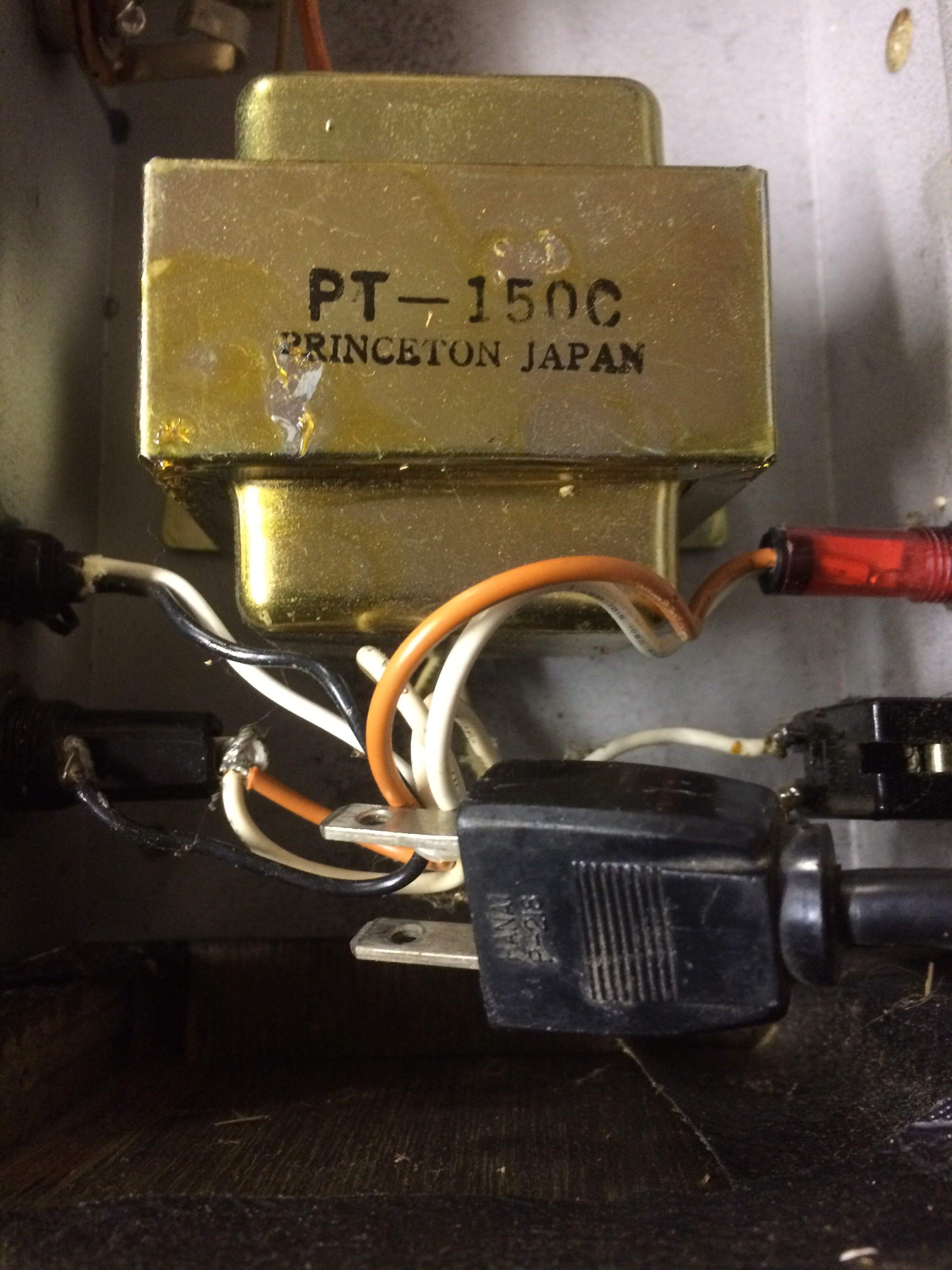
image.jpg
image.jpg
 
Last edited:
The earth prong is here to protect you and the amp. The idea is simple, any accessible metal part is to be grounded.
So yeah connecting to the chassis is the right thing to do but there may be more to it. Often on old designs there are separate grounds for each circuit. You want to bring these to earth too, which can sometimes prevent the amp from working properly. Do it step by step it's not hard.
 
  • Like
Reactions: Mrd34d
The earth prong is here to protect you and the amp. The idea is simple, any accessible metal part is to be grounded.
So yeah connecting to the chassis is the right thing to do but there may be more to it. Often on old designs there are separate grounds for each circuit. You want to bring these to earth too, which can sometimes prevent the amp from working properly. Do it step by step it's not hard.
That makes sense. Thanks for the heads up
 
I've been reading around the last couple of hours, and starting reading about a "Death cap"?
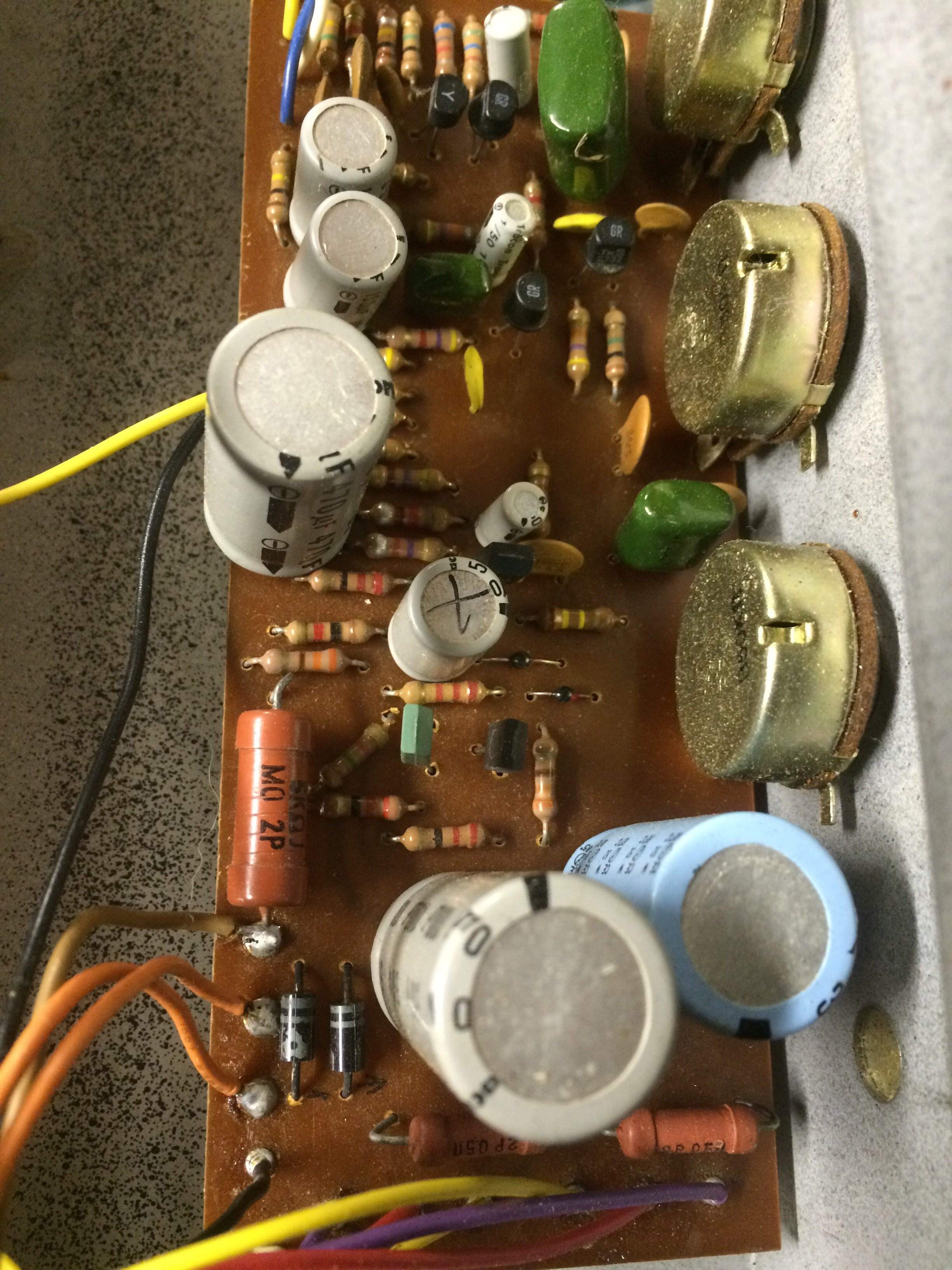
The things that look like big D batteries are capacitors. They are essentially batteries. They can kill you if you discharge them, generally the bigger the badder.

Be careful at very least. For what you are doing there isn't a need to touch them or anything but be careful not to short them with anything you're holding.
 
The things that look like big D batteries are capacitors. They are essentially batteries. They can kill you if you discharge them, generally the bigger the badder.

Be careful at very least. For what you are doing there isn't a need to touch them or anything but be careful not to short them with anything you're holding.


Ya I know what caps in general are. But a lot of places were seemingly talking about one in particular with a specific value. It seemed to focus more on old fender tube amps.
 
yeah that's not a good thing. and that's a pretty small cap also.

If you were worried about that failing though, replace it while you're in there.

These caps aren't to be replaced. A grounded power lead needs to be added and the death cap removed.

They are a dangerous time bomb waiting to happen. You don't want to leave the amp in your will to your kids, or sell it to somebody and have it fail 20 years down the track and kill somebody.'

Also look out for 3 prong leads with the ground prong removed.
 
  • Like
Reactions: Bob Lee (QSC)
There is an awful lot of faulty information here in this thread.

The so-called "death cap" actually is still in wide use, and preferred for low-noise applications. However, this cap MUST be a Class XY cap (as B-string wrote). IEC connectors actually can come pre-wired with them installed, perfectly safe, as intended for critical applications.

Also, do NOT arbitrarily try to tie grounds together inside the amp. Amps may have many grounds, sitting at a particular potential as designed by the amp's designer. Chassis ground is one thing, but these virtual grounds are totally different, and not to be connected--you may introduce hum (at best) and at worst, damage the amp (by inducing HF oscillation, for one example). Don't randomly try to re-engineer the amp.
 
The earth prong is here to protect you and the amp. The idea is simple, any accessible metal part is to be grounded.
So yeah connecting to the chassis is the right thing to do but there may be more to it. Often on old designs there are separate grounds for each circuit. You want to bring these to earth too, which can sometimes prevent the amp from working properly. Do it step by step it's not hard.

Not all circuit grounds are meant to be earth ( chais) grounds.
 

Latest posts