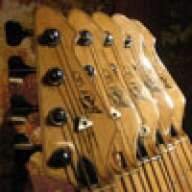
I really doubt anyone will care what kind of bass you use as long as you play it well and it sounds good.

TalkBass has been independent since 1998. Add your voice.
Create a free account to reply to discussions, view embedded media, and browse with fewer display ads.
Join free Log in
Want zero display ads or expanded classifieds tools? Compare plans.
. . . and this somehow proves that Americans and Brits share a common concept of what a punk band is ???Well, according to the book "Please Kill Me" (Legs McNeil) - 'mericans brought punk to the UK and it mutated into what punk was known for...

. . . and this somehow proves that Americans and Brits share a common concept of what a punk band is ???

That's anywhere. I don't ever want a bass I'd have to leave at home, what's the point in that?Yeah but then there is the whole thing of deflecting a flying beer bottle, or it sprouting legs and walking off.
C/S,
Rev J

. . . and this somehow proves that Americans and Brits share a common concept of what a punk band is ???

As a person who played a bass that was found in a bathtub in an abandoned house for about three years in the late '70s and early '80s, I don't have a whole lot of concerns about what anybody thinks is or isn't punk. Or if it ever really existed in any real sense. It was just a time of doing stuff and seeing what happened. Nothing mattered except attitude, experimenting, and pure endurance in the face of whatever craziness just happened. And doing what you do with what you got to do it with.
Don't forget the bruises and blood. I was at a Dead Kennedys show in about 1982 or 1983 in New York and was amazed at how battered most of the audience looked. It shouldn't have been a surprise, but maybe the lighting was better than most shows.This is a good synopsis of the roots of US punk.
Don't forget the bruises and blood. I was at a Dead Kennedys show in about 1982 or 1983 in New York and was amazed at how battered most of the audience looked. It shouldn't have been a surprise, but maybe the lighting was better than most shows.
I wasn't thinking about the random, usually self-inflicted violence when I wrote that, but it certainly applied.As you wrote: "and pure endurance in the face of whatever craziness just happened"
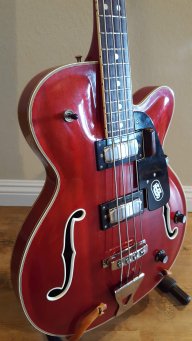
Damn that's a bass right there.I was just at the Grammy Museum in LA to see an exhibit celebrating 40 years of X. John Doe started on a J, put switched to a P. View attachment 2834998 View attachment 2834999
That's anywhere. I don't ever want a bass I'd have to leave at home, what's the point in that?

Well, according to the book "Please Kill Me" (Legs McNeil) - 'mericans brought punk to the UK and it mutated into what punk was known for...
I didn't read the book.I was attempting to point-out that the author of this book subtitled "the uncensored oral history of punk" has an opinion that certain US bands gave birth to "punk" and after playing in the UK the germ was planted and it spawned what became punk there. Not saying I agree with his opinion or taking sides - in fact I feel it's like someone taking credit for inventing R&R or the Blues, which would be laughable. At best it's an interesting read illustrating one persons point of view of that time that I'm sure has provoked much debate on either side of the 'pond'.
In a nutshell what I took away from his overview was that punk in the US was originally more born from "garage rock" and punk in the UK was more socio-political. So 2 different versions that started/grew for reasons illustrated by the authors time-line/point of view.

I didn't read the book.
To me, the birth of it (attitude wise, and founding fathers if you like) has always been bands like The MC5, The Stooges, The Velvets, The New York Dolls and Television, so I guess the opinion in the book, and laid out so well by yourself, is indeed shared by me.
Then Malcolm McLaren managed The New York Dolls, met Television through that situation, and wanted to manage them too, but they told him to 'go and do one'. He did indeed then 'go and do one' back to London, but he took the spikey hair and the ripped tee shirts held together by safety pins with him, which most definitely came from Richard Hell.
Then The Sex Pistols happened, with some of that influence, but by no means all of it, and I don't see them fitting into the 'socio-political' thing either personally - to me that came after with bands like The Clash etc.
This sort of thing could be discussed forever though really I suppose.
Anyway, I've just got home from work to discover I have no tinned chickpeas (I need some to stretch a curry out) so I've gotta go back out into the cold, and go to the store and get some
Don't forget the bruises and blood. I was at a Dead Kennedys show in about 1982 or 1983 in New York and was amazed at how battered most of the audience looked. It shouldn't have been a surprise, but maybe the lighting was better than most shows.
Hard to say really. Steve Jones was (and still is) a big Journey fan, Johnny Rotten was into Captain Beefheart, Glen Matlock liked The Beatles, and I'm not sure about Paul Cooke, but I'm sure he must have liked something ever so nice..What I mean by socio-political was that at that time in the UK (Margret Thatcher etc) the working class was feeling like their world was very bleak. (no jobs, no hope) So (according to the books timeline) the young people there saw/heard this 'punk' music from the US with all it's attitude and aggressiveness and it inspired their own version channeling that bleak feeling into a potent fierceness. In the book the author said when he went back to the UK a couple years after their first visit - he was taken back by how violent and intense the UK punk scene was. Yes, the Clash and The Specials etc later brought political lyrics to the mix, but the bleak/combative political atmosphere affecting society was already in full swing and fueling that early punk movement in the UK.