• TalkBass has been independent since 1998. Add your voice.
    Create a free account to reply to discussions, view embedded media, and browse with fewer display ads.
    Join freeLog in
    Want zero display ads or expanded classifieds tools? Compare plans.

Vintage versus reissue

I prefer vintage(sort of) but not collectors Item,something that got the vibe but is a player and you can get it for not much more than a similar new model(used).Dont know why but I get attached to those kind of insruments and have no urge to flip them.

I got a Fender 1982 RI57 P bass with swaped pickups and stellartone installed,so I payed around 200$ more than a modern RI would cost,worth it,the bass is amazing.
Same thing with 1979 musicman that has bartolini pups and preamp.
 
  • Like
Reactions: JB1962
[QUOTE="JB1962, post: 23362782, member: 319975”]...having said that, I would still love to have a real 1996 Fender Jazz Bass hanging on my wall some day! In the meantime, I'm perfectly happy with my reissue/clone basses!
Did you mean 1966? 1996 seems pretty doable for most budgets[/QUOTE]

Yes, 1966. My mistake. Good catch!
 
What do you think? It seems like, similar to cars, your best deal is something lightly used, a couple or few years old.

I wanted a Guild starfire bass a few years ago, and found the original 60s ones were really steep. Local music store had a rather broken down 1967 for over $2000 despite broken and reglued headstock. Ended up with a mint 2017 for $1100. And it sounds like the originals in terms of tonal color etc. Great.

Lately was looking at reverb.com for basses from my favorite years 1966 through 1975. Revolver through Wish You Were Here. You can get an EB-0 for not too crazy circa $1000. But then I find you can get a great looking Gibson SG bass a few years old for like $800.

Well.

I guess I'd rather have a cheaper bass that's in better condition, like the original but maybe with some modern improvements (e.g. Fender truss rods) than the original thing. Despite my belief in the power of groovy mojo and vibes.

I look at my basses as tools and not as collectable items ...

So my criteria is does the tool function the way I want it to

For a collector an old unmodified bass is best, for me a newer modified bass fits the bill.
 
In this case, OP is referring to a vintage Guild Starfire II bass, versus a reissue Guild Starfire (Newark St. Model?) There are significant differences in the electronics, especially depending upon what pickups are in the older one. I have both a 1967, and a 2017 Guild Starfire, they are not the same. The reissue is very, very good. The modern Guild Bisonics are positively fantastic. You won't get me to criticize them beyond this statement... they simply are not the depth or range of the 1960's Hagstrom Bisonics. I've A/B'd them to hell and gone... no amount of anything, including an Alembic Superfilter equals them out. They sound great though. I'm not knocking them at all. Guild, or whoever, did a nice job getting in the ballpark. They definitely have that unmistakeable sound. If you get it, and you like it, you won't be disappointed. They do not sound like Westerly or DeArmond Rowe pickups wrapped in Bisonic surrounds. (I like those too, when properly applied... actually have a DeArmond Starfire II with a set of Westerly pickups... but that's another thread)

1998 DeArmond Starfire II.jpeg


As far as the build goes, I have no complaints about the reissue Starfire at all. Shoot... I love it. It's remarkable how close they are in feel to have been made 50 years and half a world apart. I kinda' like that Guild went as far as they did to make as true of a reissue model... makes it that much more fun having the 50 year interval there just to remind me.

Guild Starfires.jpeg

Starfires in the Practice Room...

1967 SF-II.jpeg

1967...

2017 SF-II.jpeg

...and 2017.


Bottom line though, comparing an original Guild Starfire II with Hagstrom Bisonics to a Newark St. reissue and trying to quanitfy a price differential based on a vintage guitar market... really isn't a fair fight.

*one caveat: FWIW, my '67 is what I would consider a player grade bass. It has had some professionally done mods (Alembic-type brass bridge, tailpiece, nut) that could easily be undone, and have the original bridge put back on. The electronics are 100% original, right down to the fully operational suck-switch. (which Guild wisely left offa' the reissues...)
 
While there is the occasional gem, most are just old and often tired and routinely over-priced to me when I look at the vintage market. I live a few miles away from Gruhn's and Carter Vintage, I go in occasionally and marvel at the old warhorses (and their prices) and think I could do better for me with new pieces. But that's me.

IF I just had to have something along those lines, a re-issue is just fine, everything's brand new and far more useable for me.

To me, bass guitars have evolved in far more ways than electric guitars, and while it's fine to have a Jazz, a Starfire, pick any of the old standbys, the axes today are far more capable than those 'old faithfuls', and I'd be hard-pressed to reject all the modern improvements since those days. And if you think about it, in a way, Fender has been building 're-issues' ever since the late 60's when Mr. Fender stepped away after the sale to CBS.
 
  • Like
Reactions: EdO.
I agree with imfn16 in post #16. All basses are individuals. There are great instruments from all eras as well as dogs. The problems with the vintage market are: 1.) Collectors (especially those who don't play) taking instruments off the market. That causes the prices of those instruments left to rise. In some cases they are out of reach. 2.) The really great instruments rarely get sold. Chances are if you have a fantastic vintage instrument you won't part with it, unless you need the money for an operation. Citing these two factors, the best chance of getting an affordable instrument that delivers the sonic goods is hunting down a slightly used reissue. Used means cheaper than new. The chances of getting a good reissue is better than finding a good vintage one because the owner: 1.) may not like the model in general. 2.) may have gotten another bass and is flipping this one 3.) tuna casserole. In short, reissues aren't as rare, sought after or astronomically priced as vintage instruments are and therefore, the good ones still show up on the market more often and at reasonable prices. The only downside is that if you were ever fortunate enough to own a great vintage instrument you may be disappointed with a new one. Forty years is a long time to wait for an instrument to age to perfection like a fine wine. For some of us it's impossible. With any serviceable bass and decent knowledge of how to EQ your rig you should be satisfied with the results.
 
  • Like
Reactions: EdO. and ajkula66
By the way, Fender only did 3 different neck geometries, not 4, A, B or C profiles

There was a "D" as well, for a total of four. These, however, refer to nut width and not the neck shape which was either C, V, or U.

So the "grand total" is 12 different neck geometries, at least in theory.

Invalid Link Removed
 
I agree with the attraction of vintage being in the feel. Bodies with 100% nitro finish and well worn in necks that play effortlessly.

I have found the best way to replicate this is with a MJT body combined with a relic neck from USACG, Musikraft, or the like. I like that combination far better than the actual reissues I own. FMIC often doesn’t even follow original spec on their reissues.....go figure.

Putting your own together can give you the opportunity to follow original spec to the letter, provide you with that vintage feel (and look) while leaving more money in the bank.

Biiiiiiiiiiiiiiiiig +1 :thumbsup:

As stated by another TB'er many years ago, *ALL* basses are parts basses.

Both of my P basses and both of my J basses were assembled by me using the exact high-end components that I wanted to use (neck, tuners, body, bridge, pickups, wiring harness, etc.). Every component is top-shelf quality. I've had brand new $3000 Fender custom shop basses before, and the four Fender basses I have now are, IMO, easily better than the custom shops, because the basses I have now have the specific high end components that I want. And each of the four Fender basses I have now ended up costing me around $1500 in components. My time spent assembling each bass was an absolute joy. Since I have no interest in resale value, this choice of mine to assemble my own basses from top-quality components has turned out to be one of the best decisions I have ever made since I began playing bass in 1972. :)

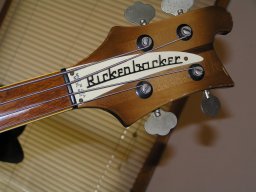
The fifth bass that I own is the only factory-assembled bass that I have (my 2016 Ric 4003S).
 
Last edited:
  • Like
Reactions: squarepeg
It depends. Sometimes with the vintage, you are paying for a rare and wonderful instrument. Sometimes you are just paying for something because it is old.

Also, not all re-issues are special. Sometimes it is just a cosmetic fix on a stock cheap instrument.

Agree. Many "re-issues" fall far short. For an example of a few that were well done, the early 90's MIJ Fender '51 P-bass was and still is the most authentic RI of Fenders 1st bass. Don't know its current asking price, probably more than what it originally sold for, but still light-years more affordable than an original '51. Gibson never made an authentic RI of the iconic gen 1 '63-'65 T-bird - until recently when Epiphone made one which by most reports is a fine instrument worth of being considered a RI. (and affordable too) The JMJ Mustang hit the mark also. Then there's the bass RI that never was - the Fender Jaguar bass, their best concept into reality.

But having said that there are some off-center gems out there that are 50+ yrs old and affordable, and some have been revisited. But with a bit of TLC - the originals can be special instruments. You just have to know what to look for and spend some time bringing it into focus.
 
Last edited:
  • Like
Reactions: Rezdog
So Anyway, agree with the car analogy. I'll let someone else pay for the initial off-the-lot depreciation.
If you've been playing long enough, there's probably a 'vintage' era that you go through. Maybe it's a tone or mojo search, maybe you're looking for something your first hero played or something you wanted but couldn't afford when you were younger. I once owned two Fliptops at the same time... and they seldom left my music room.
There was a video interview with Hartley Peavey that I found interesting. HP said an instrument company should make improvements over the years. Construction, electronics, etc. are expected to improve over time with innovation.
So I'm with the OP. If I wanted to replace my Ric or get a Gibson EBO, I'd buy a newer one.
 
Biiiiiiiiiiiiiiiiig +1 :thumbsup:

As stated by another TB'er many years ago, *ALL* basses are parts basses.

Both of my P basses and both of my J basses were assembled by me using the exact high-end components that I wanted to use (neck, tuners, body, bridge, pickups, wiring harness, etc.). Every component is top-shelf quality. I've had brand new $3000 Fender custom shop basses before, and the four Fender basses I have now are, IMO, easily better than the custom shops, because the basses I have now have the specific high end components that I want. And each of the four Fender basses I have now ended up costing me around $1500 in components. My time spent assembling each bass was an absolute joy. Since I have no interest in resale value, this choice of mine to assemble my own basses from top-quality components has turned out to be one of the best decisions I have ever made since I began playing bass in 1972. :)

The fifth bass that I own is the only factory-assembled bass that I have (my 2016 Rick 4003S).

Another great TB quote is “Fender has been making Fender copies since 1965”.

I own over 30 basses: Fender, MusicMan, Spector, Nash, Peavey, Ibanez, G&L (USAs, MIJs, reissues, vintage, new).

My best players (save for just a couple) are the ones I assembled myself.
 
  • Like
Reactions: SactoBass
The option of "player grade vintage" works for some people, including myself.

The caveat here is that one has to maintain a pretty good knowledge of what they're looking at and decide whether it meets their own needs/preferences on a case-by-case basis.

Not to mention that there are quite a few interesting instruments out there that were never re-issued. Ovation Magnum comes to mind.
 
There's reissues and then there is Custom Shop. Never played a CS, but what's the review of those of you who own/played a CS Jazz/Pbass 60's ? I have played some vintage 60's P's and J's at guitar shows. I will say they have a different " feel to them ", but as far as tone, pretty much what I expected: J's sound like J's, P's sound like P's.
 
hi Doug :)

Despite my belief in the power of groovy mojo and vibes.

:D … and magic fairy dust!!! :hyper::hyper::hyper:

I am a vintage fan! (Not a collector! But I like old basses)

Old instruments come with a story.

Date stamps that tell you that the bass was made the year you were born.

Your favorite bassplayer played the same bass on your favorite album, etc., etc.

Vintage instruments are a part of R&R history. This makes them collectible.

I guess I'd rather have a cheaper bass that's in better condition, like the original but maybe with some modern improvements (e.g. Fender truss rods) than the original thing.

Prices for vintage instruments can be crazy. Just like prices for for old coins or stamps.

You can' t buy a drink or send someone a postcard! :D

As a bassplayer I will always buy the best instrument.

The bass I bond with. The bass that starts to rock when I touch it without a fight.

New, used, vintage… (I have it all)

your best deal is something lightly used, a couple or few years old.

The best deal is subjective! :D It depends on you!

e.g. You like Jack Bruce? A used German made Warwick Thump is a great deal!

You can get them for less than 50% of the new ones.

You really like Jack Bruce? :D Well… His used Warwick Thump will cost you "a bit" more! :D

You can get an EB-0 for not too crazy circa $1000. But then I find you can get a great looking Gibson SG bass a few years old for like $800.

The difference of $200 is "huge", "small" or "nothing"!!!

It depends!

Is that old bass $200 better? Maybe yes, maybe not!

Maybe it' s only $150 better :D

Maybe it is not better.

Maybe the newer (used) one is better. :D

Maybe you don' t have the $200 :( (or $X0000 when it comes to "rare and vintage"; $200 = Nothing!!!)


To buy or not to buy, that' s the question!

Whether 'tis bass is right or not… :D

The slings and arrows of outrageous fortune.

Or to buy the cheapo copie…


I don' t feel like Hamlet! :laugh: (the "used" market is great, we have the choice!!!)


greetings

Wise(b)ass
 
I have a vintage 500/1 and a reissue. Both are awesome, but I prefer the reissue. This might be because the vintage needs some work, as the neck pickup produces a very week signal. I'm reluctant to change it, though, since I have the reissue. My conclusion: I think quality varies and one cannot legitimately generalize about which is better.
 

Latest posts