Just wondering if a luthier who specializes in the sale, repairs, restoration of violins would be equally skilled at working on double basses. More specifically, should I seek out a luthier who specializes in double bass (or should I feel comfortable having a 'violin' luthier work on my bass? Thanks.

Enjoy the benefits of a premium membership!
Upgrade Account
-
TalkBass has been independent since 1998. Add your voice.
Create a free account to reply to discussions, view embedded media, and browse with fewer display ads.
Join free Log in
Want zero display ads or expanded classifieds tools? Compare plans.
You are using an out of date browser. It may not display this or other websites correctly.
You should upgrade or use an alternative browser.
You should upgrade or use an alternative browser.
Double Bass Violin or bass luthier
- Thread starter Lenbytown
- Start date
More options
Who Replied?
More specifically, should I seek out a luthier who specializes in double bass?
Yes, absolutely.
Depends on what you need. When I have work done I go to a bass specialist like:
Aaron Reiley
Mark Sonksen
Michelle Fiore
Bill Merchant
Others that I'd recommend:
Cincinnati Bass Cellar
KC Strings
David Gage
Scott Henri
Aaron Reiley
Mark Sonksen
Michelle Fiore
Bill Merchant
Others that I'd recommend:
Cincinnati Bass Cellar
KC Strings
David Gage
Scott Henri
Yes, it really depends on what you need done. If it's major, I'd take it to Heinl's in Toronto or Mario Lamarre in Montreal.
You could always check out Peter Mach, he's in your area.
When I was living in Ottawa I had some good work done by James Smith in Picton.
You could always check out Peter Mach, he's in your area.
When I was living in Ottawa I had some good work done by James Smith in Picton.
I take my Bass to David Doyle at the Soundpost. He knows what he's doing, and he's also a dude. He might request a call ahead just to make sure he has room in his shop ( a little small) but he does great work, very professional.

- Sep 14, 2009
- 903
- 665
- 57
- Disclosures
- Endorsing Artist: GullanskyLab pickups
A serious violin luthier must have the knowledge to work on all stringed instruments (violin, viola, cello and double bass).
Anyway, there are luthiers who are specialized in double basses, and they can set your instruments better (especially for jazz settings).
My luthier is also a double bass player, and when I take my bass to him for annual setup/checkup (it's an old, quite "roadworn" bass) I'm sure he can give me the best work.
Always search for the best, your bass will be grateful...
Anyway, there are luthiers who are specialized in double basses, and they can set your instruments better (especially for jazz settings).
My luthier is also a double bass player, and when I take my bass to him for annual setup/checkup (it's an old, quite "roadworn" bass) I'm sure he can give me the best work.
Always search for the best, your bass will be grateful...
Yes, it really depends on what you need done. If it's major, I'd take it to Heinl's in Toronto or Mario Lamarre in Montreal.
You could always check out Peter Mach, he's in your area.
When I was living in Ottawa I had some good work done by James Smith in Picton.
Peter Mach does good work. His son is a bassist, I used to gig with him... I think he went into luthier work with his dad.

Many people have multiple skill sets. Over half of my current work is on double basses, yet I've also built several hundred guitars and mandolins. I've got the same reference books as the violin guys use, and I certainly have a good understanding of the mechanics, but I'm not a violin player or builder; so I take the family violin to someone else to do the work who is a good player and technician. In my book, it makes a big difference.
Your bass is not a big fiddle or a funny looking guitar, so why would you it to those folks? Would you bring your Marshall half stack to a dobro or dulcimer shop???
j.
www.condino.com
www.kaybassrepair.com
Your bass is not a big fiddle or a funny looking guitar, so why would you it to those folks? Would you bring your Marshall half stack to a dobro or dulcimer shop???
j.
www.condino.com
www.kaybassrepair.com
It's more of a big fiddle than a big guitar, though, isn't it? Some violin shops are happy to work on basses and do a great job, others hate working on basses but don't like turning people away. Make sure it is the kind that likes working on basses.
It's more of a big fiddle than a big guitar, though, isn't it? Some violin shops are happy to work on basses and do a great job, others hate working on basses but don't like turning people away. Make sure it is the kind that likes working on basses.
+1
John
There are a couple of string shops in my area, but the one I would take my bass to is the one I bought it from, Monaco's Violin Shop (www.monacosviolinshop.com). Mark Monaco is a second generation luthier and many of the local artists have dealt with both him and his father. He does absolutely brilliant work.
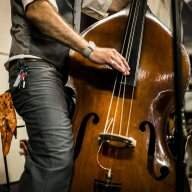
Aaron Reiley in Hudsonville
is one of the best in the US!!!!
Cannot say enough good about him and his quality of work
Invalid Link Removed
is one of the best in the US!!!!
Cannot say enough good about him and his quality of work
Invalid Link Removed
Peter Mach is a great guy, close to Ottawa, and although he has not done any work on my instrument, I have heard great things about his work. His shoulder rests are fantastic, and I used one for a while in my dark days as a violinist.
Steve and Troy (and the rest of the team) at Heinl's are great and really know basses well. Steve makes great basses, Troy has made at least three and is a bassist himself, and they really know their stuff.
Mario Lamarre's work is amazing. http://www.lamario.ca/index.php?lang=en His instruments have won gold medals, certificates of tone, ISB "convention favourite" etc. and apparently his extensions (integrated into one of his [DEL]pieces of art[/DEL] basses, or new additions to older instruments) are fantastic too.
There are some other good bass guys around, Ludi Pollack and Quentin Playfair in Toronto come to mind. I would do lutherie in Ontario/Quebec a disservice if I tried to name them all.
You should definitely seek out someone who specializes in or has a representation for doing good work on double basses. The above names are my short list from personal experience and the recommendations of players I trust with instruments in great condition. As much as any well trained luthier should be willing and able, basses are often outside their comfort zone. Depending on who they have studied with and where, basses are often completely overlooked. The Violin Making School of America specifies seven violins and a cello, The New World School of Violin Making specify three violins, a viola, two instruments of choice, (bass not mentioned) and an exam instrument, the Chicago School of Violin Making specifies two violins, a viola, three instruments of choice with cello being optional, (bass not mentioned) and the North Bennet requires 5 violins, a viola, and a an instrument of your choice, with a bass currently featured on the website. Obviously a lot of makers don't go to "schools" but study privately with masters as apprentices, but the idea that basses are optional is fairly common place.
I would venture that there is a reason why many of the well know bass makers (contemporary and pedigree) focus solely on basses. Bow makers (especially German bow) occasionally fit this mold as well. From a repair point of view, they aren't a huge divergence from violin bows though. Depending on the style of your bass (flat backs come to mind, but there are other differences as well) it really isn't a "big" violin, but a combination of a big viol and violin, with a few oddities in the mix. It really is a different beast. A lot of the restorations I have seen are re-repairing things that were "fixed" ages ago, and I would not wish that fate on even the worst ply BSO.
Steve and Troy (and the rest of the team) at Heinl's are great and really know basses well. Steve makes great basses, Troy has made at least three and is a bassist himself, and they really know their stuff.
Mario Lamarre's work is amazing. http://www.lamario.ca/index.php?lang=en His instruments have won gold medals, certificates of tone, ISB "convention favourite" etc. and apparently his extensions (integrated into one of his [DEL]pieces of art[/DEL] basses, or new additions to older instruments) are fantastic too.
There are some other good bass guys around, Ludi Pollack and Quentin Playfair in Toronto come to mind. I would do lutherie in Ontario/Quebec a disservice if I tried to name them all.
You should definitely seek out someone who specializes in or has a representation for doing good work on double basses. The above names are my short list from personal experience and the recommendations of players I trust with instruments in great condition. As much as any well trained luthier should be willing and able, basses are often outside their comfort zone. Depending on who they have studied with and where, basses are often completely overlooked. The Violin Making School of America specifies seven violins and a cello, The New World School of Violin Making specify three violins, a viola, two instruments of choice, (bass not mentioned) and an exam instrument, the Chicago School of Violin Making specifies two violins, a viola, three instruments of choice with cello being optional, (bass not mentioned) and the North Bennet requires 5 violins, a viola, and a an instrument of your choice, with a bass currently featured on the website. Obviously a lot of makers don't go to "schools" but study privately with masters as apprentices, but the idea that basses are optional is fairly common place.
I would venture that there is a reason why many of the well know bass makers (contemporary and pedigree) focus solely on basses. Bow makers (especially German bow) occasionally fit this mold as well. From a repair point of view, they aren't a huge divergence from violin bows though. Depending on the style of your bass (flat backs come to mind, but there are other differences as well) it really isn't a "big" violin, but a combination of a big viol and violin, with a few oddities in the mix. It really is a different beast. A lot of the restorations I have seen are re-repairing things that were "fixed" ages ago, and I would not wish that fate on even the worst ply BSO.
Latest posts
-

-
 Adding J pup to P bass, should I go 60’s or 70’s spacing?
- Latest: Gianni "Orlandez" Orlati
-
-

