• TalkBass has been independent since 1998. Add your voice.
    Create a free account to reply to discussions, view embedded media, and browse with fewer display ads.
    Join freeLog in
    Want zero display ads or expanded classifieds tools? Compare plans.

Double Bass Want to sound like (insert name here) ? Read this! (DB forum thread)

This is not as black and white as it seems. I would not suggest to ignore improvements to your equipment. There is a vast difference in tone and playability between my $5000 plywood bass and my $25000 150 year old carved bass. The difference is so profound that over several years experience in playing the instrument I'm sure my playing has improved in ways that would not have been available to me without such a great instrument.

I still sound remarkably like me on both instruments, however the better instrument sounds more like me these days, maybe because I play it more, but more likely I think because it allows me to do things the other cannot do.

The balancing act is to seek out tools that help me perform at my best; tools of higher and higher refinement that allow me to grow past the limitations of lesser refined tools. That notion is balanced against my tendency to buy stuff in an attempt to make myself better rather than practice and perform to make myself better.

Practice makes me a better musician. Practicing on good equipment gives me opportunities to be better still. Without the practice, you just have a pile of expensive stuff you can't play very well.

This is along the lines of where I'm comming from. The tools you use won't help you really sound or play like someone you are not, but they most definitly can help you sound like you. The "just a tool' analogy only goes so far but makes a good point. I do find that sometimes it can be a good way to trick myself into working on somethings and practicing more while I'm all excited about some minor gear change that nobody else notices.
 
I am lucky enough to have inherited a good upper mid grade carved bass. Once I had it properly set up, I have vastly improved my playing, and do not have intentions of sounding like anyone else, I just want to learn my way around the instrument, so I can do what I do with some resemblance of fluidity and authority. I don't have the spare cash or time to do all the experimenting with strings, etc., So I took the route of listening to you fine players, and even the luthier, and had Spiros installed. They still need to tame down, but I am loving the sound of this instrument and set up, even with my lack of experience. Practice and time spent with the instrument are the only things that will make it better. I sound nothing like the family member I inherited it from, but they are the one that pushed me to learn how to 'really play', and those principles and foundations have stuck with me. It comes from you and not so much the tools. I remember seeing someone's signature 'You got your wood, you got your string, what else do yu need?'. Wise words.
 
Eddy Merckx once said: it's not the bike, it's the man on the bike...

I got these wise words from a teacher...
He said to me: "You have a very nice sound", I replied "I have a very nice sounding bass", to which he quoted Eddy Merckx :-)

A listener once told Chet Atkins how great his guitar sounded.

Putting the guitar down, Chet looked the man in the eye and asked simply, "how does it sound now"? :eyebrow:

Musical instruments are merely the tools we use to create. We need to carefully choose and adapt our tools to facilitate that creation but always remember that we create the music.
 
Back in the 80's or 90's, I forget when, Ron Carter's bass was in a bass shop in NYC. The owner of the shop told me one of his other customers tried Ron's bass. All the customer said afterward was "It's him." There is nothing amazing about Ron's bass. It is a Juzek set up really well, but it isn't an old Italian or some other uber valuable bass. It's Ron.

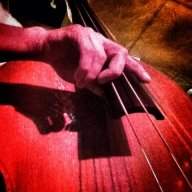
We have a completely tactile instrument. So how we touch it, the timing between the left hand and right hand, how hard we hold down the strings, where on the string we pluck or bow, 2 fingers or 1, all define the sound. The feel comes from how we articulate.

I played with the late drummer Dennis Chambers (who played with Cecil Taylor, Paul Chambers, etc) on a tour with Dakota Staton. Dennis once asked Mr. PC how he got that sound of his. Paul said it's all in the left hand.

For me, my articulation is much better if I have been bowing some bebop to warm up.

I have always admired Ron Carter's sound, feel and musicianship. He has been the model of a jazz bassist that I most try to emulate. I also try to emulate Mr PC who was Ron's influence. What I noticed is that my ear leads me to the sound automatically. But it took years of practice and analysis of Ron's playing to get there.

When I was young and sat in on other basses I used to worry about intonation and it being a different bass. But one day I found myself playing without a thought about it. That bass had a sound I wanted that I could get and it allowed me to express myself just the way I wanted.

So I think you need an instrument that can get the sound you want, or a sound that works, and your ear will take care of the rest.
 
This is not as black and white as it seems. I would not suggest to ignore improvements to your equipment. There is a vast difference in tone and playability between my $5000 plywood bass and my $25000 150 year old carved bass. The difference is so profound that over several years experience in playing the instrument I'm sure my playing has improved in ways that would not have been available to me without such a great instrument.

I still sound remarkably like me on both instruments, however the better instrument sounds more like me these days, maybe because I play it more, but more likely I think because it allows me to do things the other cannot do.

The balancing act is to seek out tools that help me perform at my best; tools of higher and higher refinement that allow me to grow past the limitations of lesser refined tools. That notion is balanced against my tendency to buy stuff in an attempt to make myself better rather than practice and perform to make myself better.

Practice makes me a better musician. Practicing on good equipment gives me opportunities to be better still. Without the practice, you just have a pile of expensive stuff you can't play very well.

No truer words have ever been spoken through falser teeth. :smug:

In all truth, Toad, you have nailed it again. When I grow up, I wanna be like you, but I can't 'cause I'm already ME!

I live in the bluegrass bass world. I'd love to nail upright bass stuff like I've listened to from the early Ray Charles recordings, but it's not within me. Oh, I could study it, maybe begin to understand it, but in the realm of North Carolina where I live, my musical outlets will be of the bluegrass vein and I do love the music.

Other bluegrass bass players have commented to me about how good they think I sound, when they've had an opportunity to listen. I have my own doubts about MY sound, but evidently, they're hearing something in my playing that impresses them, to some degree.

Someone earlier in this thread mentioned that our individual "sounds" are attributed to how we pull the string, what type of string we're comfortable with, WHERE we pull the strings, etc., etc. I think that's what makes me sound like me and you sound like you, more so than what type of bass we're playing. When I do get to play on a nice carved bass, I still sound like me, but maybe with a bit deeper or possibly louder tone.

Ultimately, our sound is in our muscles and our hands.

Cool thread and great idea for someone to make Toad's observation into a sticky.
 
I just visited the CalArts jazz program and while I was there, David Roitstein told me a really cool story about Charlie Haden. During a class in the early days of the program, Charlie was trying to explain how some sort of phrase worked. He didn't bring his bass with him that day and realized that the two double bass players weren't in that day. There was an electric bassist in the room, so Charlie grabbed his bass, stuck it on the ground and started to play it. He was able to get his sound out of that bass.
 
This is all sage advice ..BUT..
This thread is misleading (on purpose)

It's not about wanting to sound exactly like (insert hero)
It's about admiring the tone or sustain or harmonics of a certain player and wanting to go for that sound.

It is useful when shopping for new strings to sort of have an idea of what they sound like on other players.
The larger the list the more you can judge the sound on different instruments and amps , rooms etc.

I was hoping this thread would have a thorough list of the strings used by top players.

That would be useful

I am sorry but this thread is not useful.

I would really appreciate it if one of the seasoned users would post the one concise thread (there must be one) that has a list of the strings used by the top players
 
Uncle toad is absolutely right of course. Legend has it that Bird played a toy Alto Saxophone for a very short time, and hardly anyone noticed a difference.

If anything, I wish I had a decent plywood Bass. Because no one wants their precious old carved German or French Bass damaged while playing in your typical club or a bar somewhere. And other than myself, I doubt anyone would hear a difference.
 
Yawn, no offense but what the fruck is this page and a half of nonsense about? The guy (and me and prolly a bunch of other people) want to know what strings different players use. Why is any thread these days always about getting stern lectures about how you should think and why you shouldn't ask interesting questions?
Start your own thread and then all you guys who want to lecture each other all the time can go there.

I know what a bunch of players used once: spirocores on the bottom with various things on top: Charlie with Golden spirals on top, Dave with spiros on top, bunch of major cats with weichs all around Ron with those black strings,etc, but if someone with brain space and time wanted to make a list of what the major players including the new cats are playing (on their own basses) that would be interesting. Definitely an interesting and legit thread on these pages. It would be informative provide perspective, create interest, might provoke a change of thinking. All good.

I just don't understand what provokes these pages and pages of the same damn lectures. We all know the sound is in your hands for gods sake, but strings sound and feel different, and figuring that out is endlessly entertaining. To me. But not the lectures.
 
Last edited:
Yawn, no offense but what the fruck is this page and a half of nonsense about? The guy (and me and prolly a bunch of other people) want to know what strings different players use. Why is any thread these days always about getting stern lectures about how you should think and why you shouldn't ask interesting questions?
Start your own thread and then all you guys who want to lecture each other all the time can go there.

I know what a bunch of players used once: spirocores on the bottom with various things on top: Charlie with Golden spirals on top, Dave with spiros on top, bunch of major cats with weichs all around Ron with those black strings,etc, but if someone with brain space and time wanted to make a list of what the major players including the new cats are playing (on their own basses) that would be interesting. Definitely an interesting and legit thread on these pages. It would be informative provide perspective, create interest, might provoke a change of thinking. All good.

I just don't understand what provokes these pages and pages of the same damn lectures. We all know the sound is in your hands for gods sake, but strings sound and feel different, and figuring that out is endlessly entertaining. To me. But not the lectures.
Flat,
Pardon my autism, but I can’t tell if this is parody or not. You revived a 5 year old thread to lecture folks about … lecturing folks?