What do you define as reason here? Is it collective,or just your own dictative opinion(s)?
I didn't dictate anything at all. I stated my opinions just as you did yours. Others can decide what is reasonable.

TalkBass has been independent since 1998. Add your voice.
Create a free account to reply to discussions, view embedded media, and browse with fewer display ads.
Join free Log in
Want zero display ads or expanded classifieds tools? Compare plans.
What do you define as reason here? Is it collective,or just your own dictative opinion(s)?
I thought we were discussing whether or not a double bass opens up after it is played for a short period of time.
Jim
Again, what is the line of reasoning that DRUB says should prevail here? Lets get that straight.
Others can decide what is reasonable.
has anyone thought it may be our ears warming up to the sound of the bass and our surroundings?
I think we should all agree on
"yes, it is possible there are short term physical changes to an instrument brought about by a "playing-in" or "warm-up" process, but as yet there is no conclusive scientific explanation for it."
to put the original question to bed, and then have a group hug and retire to our corners to discuss mumbo jumbo, or science, or whatever we feel like, without dissing the opposition.
Even our resident expert - who is now wisely staying well clear of the discussion - said that the reasons why were a mystery to him. I interpret that as meaning he has no empirical evidence to support his observation. But I believe his observation nonetheless, and although there probably IS a scientific explanation for everything, I for one am not expecting a conclusive answer any time soon, nor am I seeking one, nor would I automatically believe it if another expert (of which there are many, Nagyvary among others) came up with a scientific explanation.
If a fractal sum can generate a convincing tree (or at least, an image of one) I can believe that somewhere there probably is a mathematical formula for Chopin's preludes as well, but I'm not so sure I need to know this to be able to play them and to enjoy them.
And I am for the moment happy to discuss creative theories of why and wherefore of art and luthiery, even in the absence of science. Its interesting and fun to hear the range of experiences people are having.
But ... I would be happy to be disabused of these notions by the presentation of empirical evidence!
AZNBassist, has your question been answered yet?
Then we got onto what would be the explanation.
It seems, from your posts, that you are skeptical as to the reality of the effect, and you seek an explanation to validate the claim.
On this point we differ. I respect your position, but hope you will try it on your bass - because if you hear it yourself, you may also not require a scientific explanation. [What I am specifically suggesting is that you bow open Es and As, and also tri-tone double stops with the Open E and Bb.]
So, hypothetically, if you came back next week and said "I've tried this, and I believe that there is some opening-up effect." I still doubt that we could come up with a conclusive explanation for the effect. We might come up with some interesting theories, but we would have no way of verifying/refuting them. [Unless you have access to resources that I am unaware of.]
What does seem more plausible, potentially, is performing some kind of designed experiment to isolate potential factors: Player, bow, and possibly strings, from the wooden instrument itself. Firstly, could the instrument be recorded with a microphone and the waveforms analyzed to look for differences in the pre-warmed and warmed-up states? And, if so, then could the factors be isolated to determine what is causing the effect, or aspects of the effect? Even doing this level of experimentation is likely out of the realm of feasibility from a group of online yackers.
Anyway, I hope you are not put-off by other people's reluctance to accept your viewpoint. The discussion is interesting, although unlikely to bear fruit in this forum. You have been consistently, thoughtful, respectful, and polite, and that is most important in having this type of dialogue. I hope I have been so to you as well.
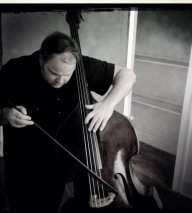
For the record, here is a summary of what I believe has gone on in terms of my opinions. The warm-up effect was mentioned. I said I thought it had more to do with the player than the bass. At the time, folks had mentioned changes in the wood. I did not and still do not believe that alterations in the wood are responsible. Then, the potential bow/rosin and string explanations were offered. After each, I remarked that those explanations made a great deal of sense to me. In other words, I accepted those as potential explanations having to do with changes in the physical aspects of the instrument, perhaps, in addition to changes within the player. I was especially impressed by Arnold's report that instruments are often "warmed-up" by someone other than the primary player. Somewhere along the way, argumentative folks mis-represented my thoughts and it snowballed after that.
Do you own a carved bass?
if you do you know the wood is constantly changing due to weather, vibration and other things. Wood is organic material. All this stuff has to do with the same reasons new instruments don't sound as good as those that have been played on for a few years.
Unless you are playing touch-bass with an amp then most of the sound we make comes from the vibrating top so the wood has at least two states: still and vibrating.
One of the ways I have had to test this theory is when the bass has been through extreme climate changes.
I use a lot of upper harmonics and they just were not there when I drove from Oakland, Ca to Denver in winter one year. it took about 30min of these warm-ups for them to speak clearly.
 Seems the circle is continuing.
If you really want to know the answer, two world class experts on the subject reside in and have shops in Ann Arbor MI. They are Joseph Curtin and Greg Alf. When they were partners, they made exact copies of many of the finest classic Cremona maker's instruments. It is to their credit and reputation that the owners of these instruments (many valued at over $1 million) let them borrow the instrument so they could make copies that are nearly perfect replicas. I've had the opportunity to hear them speak at several violin makers conventions including the CAS/MVA joint meeting held in Dearborn in 1996.I think it's a safe assumption their materials and labor wouldn't approach $1M. Probably not $100, either, of course, but likely towards that end of the spectrum.
What are we talking about again?
You are speaking of much larger variations. Your own words were "extreme climate changes." Yes, it makes sense that after those, the wood must again reach equilibrium. You are confusing matters of degree. The issue was whether a bass sitting at equilibrium which is then played to "warm it up" is changed as a result of changes in the wood.
I sort of thought this discussion had reached equilibrium.
- Yes but it happens to smaller degree each time I play. Most experienced players will tell you the same thing. If you do certain things to really vibrate the top it will play better after you do. End of story. I experience it every time I play and I can assure you it is not imaginary.
If you really want to know the answer, two world class experts on the subject reside in and have shops in Ann Arbor MI. They are Joseph Curtin and Greg Alf. When they were partners, they made exact copies of many of the finest classic Cremona maker's instruments. It is to their credit and reputation that the owners of these instruments (many valued at over $1 million) let them borrow the instrument so they could make copies that are nearly perfect replicas. I've had the opportunity to hear them speak at several violin makers conventions including the CAS/MVA joint meeting held in Dearborn in 1996.
Anyway, I hope you are not put-off by other people's reluctance to accept your viewpoint. The discussion is interesting, although unlikely to bear fruit in this forum. You have been consistently, thoughtful, respectful, and polite, and that is most important in having this type of dialogue. I hope I have been so to you as well.Jim
I didn't say, "good," but how about "experienced?"
The originals were not present, so I have no personal knowledge.This is quite interesting. How did the copies sound compared to the originals?