
yes.Unless you were actually there in those types of bands, using that type of equipment, playing that sort of style and therefore know exactly how it sounded live.

TalkBass has been independent since 1998. Add your voice.
Create a free account to reply to discussions, view embedded media, and browse with fewer display ads.
Join free Log in
Want zero display ads or expanded classifieds tools? Compare plans.
yes.Unless you were actually there in those types of bands, using that type of equipment, playing that sort of style and therefore know exactly how it sounded live.

I was born in the 50's and grew up listening to and playing many of what we now call "the vintage/classic sounds". The gear, the technology, the whole package is what created those sounds IMO. What I find most amusing as we all look back is that, at that time, people were fascinated with moving beyond the sounds we now worship as the holy grail.Unless you were actually there in those types of bands, using that type of equipment, playing that sort of style and therefore know exactly how it sounded live.
Maybe those born well after that era and its sound faded into music history only have some erroneous impression gleaned from the admitted limitations of the recording technology of that era. But not everybody. And those of us who did experience and still remember it aren't all completely senile just yet despite all the jokes about how "if you do remember - you weren't there."

Drivers in the 1960s were low wattage...why do you suppose an SVT cabinet had 8 of them to handle 300 watts? 25 to 50 watts power handling per driver with a few "high end" speakers like JBLs and Altecs rated for around 100 watts. When ceramic magnets replaced alnico, we started seeing drivers like the EV SROs that could take 200 watts. By 1980 drivers handling 400 watts were commonplace.
Go to Eminence's website and you will find they make no bass drivers today that handle less than 100 watts and for a 15" nothing that handles less than 300 watts. It's actually hard to find low wattage bass drivers.
The high frequencies were reduced in a lot of older speakers. That's why bright switches are found in many old amps....guitar players couldn't get enough treble! Many bass drivers rolled off at 3-4 Khz. If you look at the (already 1980s era) EVM-15B and EVM-15L, the L model has an extra octave of response...up in the 6-7Khz range. You can easily hear the L is much brighter sounding than the B (I prefer the B myself).
I was born in the 50's and grew up listening to and playing many of what we now call "the vintage/classic sounds". The gear, the technology, the whole package is what created those sounds IMO. What I find most amusing as we all look back is that, at that time, people were fascinated with moving beyond the sounds we now worship as the holy grail.
High fidelity, stereo, quadraphonic (a crude analog to today's surround sound), etc. were all the newer and better ideas that pushed us to where we are today. Whether it was live or recorded music, people (including musicians and sound engineers) were always looking for a bigger, better experience, both electronically and chemically.


Were they like the EV 15Bs?I do miss the SROs. Lousy specs by today's standards. But I still like how they sound. Too bad they could sometimes blow when you least expected them to. I had one go on me during a show one night. Fortunately my other JBL equipped cab kept on chugging on.
I don't know too many people who had an SRO provisioned cab that didn't have at least one SRO die on them at one time or another.

Were they like the EV 15Bs?
Agreed.Not forgetting tape saturation as another source of 'character'...

I'm really not on an quest, I dig the sound I have for the most part really am I'm cool with that. It would be cool to get some of those sounds but I'm not dying here lol. I really had to idea as to the significance of all the other factors mentioned here. Alot of guys have contributed some great insite into how things really are different.the bass gear was the least important!
^
^
^
true enough
^
true enough
100%
wolfkeller , after reading the thread: seems like you want an amp/speaker setup to do something an amp/speaker setup never did in the first place = you'd like companies to make gear to recreate the sound you hear when you listen to analog recordings. i'm with the posters who are suggesting you go back to your own gear and figure out how to get what you are hearing in your head out of your setup.
to the extent that you consider the sounds of those recordings 'superior', good luck with your quest!
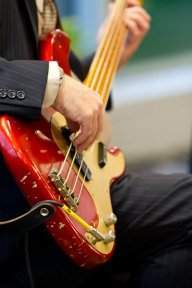

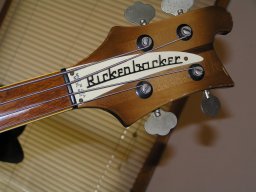
The bass tone in Heartbreaker is through a rotary speaker, IIRC.It's funny, it all started because Zeppelins heartbreaker came on and I thought, "I'd really like to be able to get, not always use that tone.". I thought, I don't hear anyone with that kind of sound. I haven't come across any "modern" pedals, ect that could deliver a sound like that.
Who would know? Still, could be something to get that, or other sounds more accurately IMO.The bass tone in Heartbreaker is through a rotary speaker, IIRC.
Used to be a posted clip of the isolated bass track. I looked for it, but it's since been taken down for copyright infringement. It definitely sounded like one of those rotating speakers, though.Who would know? Still, could be something to get that, or other sounds more accurately IMO.

Quoted for truth.
I love the Stones; I heard Sympathy for the Devil on the radio a few days ago. I never realized it, but Keith's tone during the guitar solo is frankly...well, I'll say it...God awful. It's shrill in the worst possibly way and completely thin.
I think that's a bit of an unfair example, especially if you compare it to his other leads. Never talked to the man, but I am willing to bet Keith selected that shrill tone specifically to suit the subject matter of the song. The percussion isn't typical Charlie Watt either but it makes the song.


