• TalkBass has been independent since 1998. Add your voice.
    Create a free account to reply to discussions, view embedded media, and browse with fewer display ads.
    Join freeLog in
    Want zero display ads or expanded classifieds tools? Compare plans.

What a difference strings make!

I imagine most of you have gone through billions of dollars in strings. I know I have. Every time I think I've found the perfect set, the next set seems to be better. I started out using Rotosounds Swing bass 77, swearing by them, but was eventually disappointed by their short life-span, and the fact that they are never on sale. Intermittently, I went through GHS, Dunlop, and Hartke strings (I tried the Hartke nickel wounds - 3 sets for $24). Was not blown away by any of those. I did a 180 and decided to try flatwound strings. GHS, Fender, Rotosound flats did not particularly impress me although I did like the feel of the Fender flats over the others. The Rotosound flats sounded superb (as Rotosounds do), but they didn't feel like flatwounds. They still had that roundwound sticky feel to them.

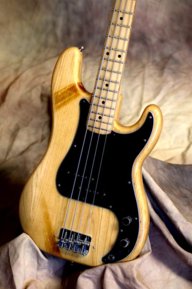
Finally, I found the perfect bass strings - D'Addario Chromes 45 - 100 and 40 -95 and the latter are now on my P bass and I'm happy.

But wait, there's more....

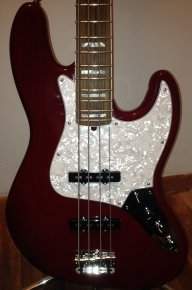
I bought a Jazz bass about 2 months ago and it had some generic roundwound strings on it that wasn't hitting on anything (probably the Fender ones), so I pulled them off and put flatwounds on it. I thought I was happy until 2 hours ago when I decided after reading all the hype and ballyhoo over DR High Beams to buy a set (it's payday so what the hell, right?). I gotta tell you, I love these DR High Beams! They are as sweet as I've read reviews on. I mean, serious WOW factor here. Made me wonder, what the heck I was thinking putting flats on a Jazz bass, right? The D'Addario flats are staying on the P bass because they are floppy and sweet on it, but the Jazz bass now sounds like a Jazz bass should.

So there you have it. The best strings are D'Addario Chromes, 45 - 100 or 40 -95 for P basses, and DR High Beams 45 - 105 for Jazz basses (I wish the DR's came in 45 - 100 though).

Hope this helps.

Glad you found your perfect one.
DR Hi-Beam is a very good, it was the last string of my choice then (on my P-Bass tho LOL) just before I found the one that is perfect for me.(I even still had one new unopened set of my last bought of DR Hi-Beam for years until last month when my friend took it for his bass).

For me:
This is the end of my long journey.

(Seems for me that it's a 'controversial' strings in TB, IDC...IMHO It's not that hard to play (and my hands are small) nor that it's troublesome for bass' neck nor it's beautiful sound is replaceable by other strings, like what many people in TB said or illustrated it).
I love it's sounds and gauges of each. And I don't only use it for it's 'classic thump' on 'oldies' kind of music job (but also for 'modern' music...welll, I even play 'modern' R&B & Rap music & kind of Live PA electronic music too. It's perfect to 'compete' with today's 'synth' bass sounds needed in many session. Work well with effect too). I'm satisfied.
YMMV.

DTB.FLAT_.0760M-351x356.jpg
 
Last edited:
IMHO It's not that hard to play (and my hands are small)

well, it doesn't depend on hands size, IMHO.

I've used them and loved, on my Classic 50's P bass, for over a month of intense use (playing with a Blues Brothers tribute, so they were the perfect match), and after I became used to their size and tension (I also kept the neck straight and the action at it's lowest), they felt great.

the problem came in when I started to play in another band where I needed medium or light rounds, and if I didn't play the Jamersons for a couple of days, embracing that bass felt like the first day ever playing an instrument...

if I had only that bass, and only bands where hi-gauge thumpy flats do the job, I'd totally use them! their sound is awsome, and as far as I know, they sound "different" from the other LaBella flats.
 
  • Like
Reactions: bluesdogblues
well, it doesn't depend on hands size, IMHO.

I've used them and loved, on my Classic 50's P bass, for over a month of intense use (playing with a Blues Brothers tribute, so they were the perfect match), and after I became used to their size and tension (I also kept the neck straight and the action at it's lowest), they felt great.

the problem came in when I started to play in another band where I needed medium or light rounds, and if I didn't play the Jamersons for a couple of days, embracing that bass felt like the first day ever playing an instrument...

if I had only that bass, and only bands where hi-gauge thumpy flats do the job, I'd totally use them! their sound is awsome, and as far as I know, they sound "different" from the other LaBella flats.
Ahahaha yes I know what you feel.

Fortunately I mainly only have one bass to work, and if any, my other basses always strunged with same LaBella. I decide to stop using anything but them, perhaps some of it is because the reason you wrote.

In the end I think I can use the combination (of the string and my bass) suitable not only for spesific -predicted, old school- genre for the strings, but all other, including modern demand as I wrote above.
Well, actually modern music/modern bass sound is not always about 'zing'/trebly/round string charasteristically sounded.
I found it the opposite,.. big fat low sound of bass (just listen to many of 'synth' bass type of sound in many modern records today),..which my combination works well.

YMMV tho.

and once again, to the OP, like I said before, DR Hi Beam is very good strings too, and in the end, strings choice is very subjective issue.
 
Well, actually modern music/modern bass sound is not always about 'zing'/trebly/round string charasteristically sounded.

yes, that's sure :)

but the difference from rounds to flats is not only in the "zing" or "treble". its even a matter of sustain, clarity of the notes, harmonic response and the different sound they make when slammed on the frets (I'm a "lowest-action" guy even with 30-90 strings :P I like to be able to slam the strings on the frets, creating that "slap" sound, with any effort or strenght).

most of them are just "nuances", shades of sound, but in certain context they are necessary.

for example, I really like the flatwound sound in electronic music, because it gives the big fundamental supply on the bottom end, and matches with synths and electronic sounds.
for example, in an album like the Lorde's one (Pure Heroine) the bass sound is smooth (and not a bass :P ) and is closer to a flatwound bass sound.

I've used a Yamaha BB415 strung with Thomastik JF345 (flats) in a hard/grunge band, and it was awsome! they wanted me to play with a Gibson Ripper (78 model) strung with rounds, but I couldn't stand the sound of that bass...
I took may Yamaha (wich I sold, being an idiot...), my Fulltone Fulldrive II MOSFET and hell yeah, the Ripper was forgotten :P I choose to use it on a couple of songs because it's sound matched the songs, but 2/13 of an album :P

my needs for a roundwound sound are related to pop music, in particular for italian pop. except for a bunch of songs from the 60's, the others have roundwond bass sounds, not harsh or metallic sounds, just "rounds", that with flats are not the same.

if it wasn't for that, I'd totally stick to Jamerson's flat :P
 
  • Like
Reactions: bluesdogblues
yes, that's sure :)

but the difference from rounds to flats is not only in the "zing" or "treble". its even a matter of sustain, clarity of the notes, harmonic response and the different sound they make when slammed on the frets (I'm a "lowest-action" guy even with 30-90 strings :p I like to be able to slam the strings on the frets, creating that "slap" sound, with any effort or strenght).

most of them are just "nuances", shades of sound, but in certain context they are necessary.

for example, I really like the flatwound sound in electronic music, because it gives the big fundamental supply on the bottom end, and matches with synths and electronic sounds.
for example, in an album like the Lorde's one (Pure Heroine) the bass sound is smooth (and not a bass :p ) and is closer to a flatwound bass sound.

I've used a Yamaha BB415 strung with Thomastik JF345 (flats) in a hard/grunge band, and it was awsome! they wanted me to play with a Gibson Ripper (78 model) strung with rounds, but I couldn't stand the sound of that bass...
I took may Yamaha (wich I sold, being an idiot...), my Fulltone Fulldrive II MOSFET and hell yeah, the Ripper was forgotten :p I choose to use it on a couple of songs because it's sound matched the songs, but 2/13 of an album :p

my needs for a roundwound sound are related to pop music, in particular for italian pop. except for a bunch of songs from the 60's, the others have roundwond bass sounds, not harsh or metallic sounds, just "rounds", that with flats are not the same.

if it wasn't for that, I'd totally stick to Jamerson's flat :p
Yeah you're on point.
Funny thing to me is: I was a round wound strings player, at that time I couldn't stand any flat wound strings I tried (before I met the DTF 760M). For all of their aspects. Now I am a flat wound player. I feel the opposite LOL.
 
Funny thing to me is: I was a round wound strings player,

eheh, me too! I started playing only using rounds, in particular looking for that "piano tone", and being influenced by 80's new-wave and post-punk music. then I tried Chromes on a fretless bass, and it was pure love.

I've tried many other flats, looking for different shades of tone, and ended up with Thomastik JF344 as my strings of choice, because they are somewhat in the middle between modern sounding flats and old school flats.
woody tone, but still clear, nice sustain but not too much (and with foam at the bridge, there's the thump), low tension and balance, but big tone (due to the nickel alloy used for the wrapping).

for many years I've used anything but Thomastik :D once I retried rounds, but during the reharsal every member of the band asked me "why you have this poopy sound today?" :banghead:

lesson learned.

in fact, I hope to find in the Thomastik Jazz Rounds the "best of both worlds" I'm looking for, so a roundwound sound without the harsh highs and finger noise, but without the flatwound vibe.

hope I'll get it :D
 
  • Like
Reactions: bluesdogblues
eheh, me too! I started playing only using rounds, in particular looking for that "piano tone", and being influenced by 80's new-wave and post-punk music. then I tried Chromes on a fretless bass, and it was pure love.

I've tried many other flats, looking for different shades of tone, and ended up with Thomastik JF344 as my strings of choice, because they are somewhat in the middle between modern sounding flats and old school flats.
woody tone, but still clear, nice sustain but not too much (and with foam at the bridge, there's the thump), low tension and balance, but big tone (due to the nickel alloy used for the wrapping).

for many years I've used anything but Thomastik :D once I retried rounds, but during the reharsal every member of the band asked me "why you have this ****** sound today?" :banghead:

lesson learned.

in fact, I hope to find in the Thomastik Jazz Rounds the "best of both worlds" I'm looking for, so a roundwound sound without the harsh highs and finger noise, but without the flatwound vibe.

hope I'll get it :D
Yeah...What a difference strings make..

The other flat wounds which got me interested when I tried it was Lakland Joe Osborn. Nice, actually, but no thanks. (TI Flats I tried were nice too).
Lucky for me, because the JO is getting rarer or even out of production.
 
I would really love to try the TI's but I absolutely love the Chromes on my Warwick fretless 5 'er. I just can't justify changing the tone when I love it the way it is.
For my Warwick and Cirrus fretted basses, I go with nothing but Elixir's. I tried pretty much everything mentioned and a few more but the Elixir strings give me the tone I want and last a LOT longer than any string I have ever used .
For me, it's simple:
Warwick + Elixir's + Aguilar = :D:D:D
 
Wow! I literally just bought these strings as my first pair of flatwounds yesterday! So happy with them on my Epiphone Jack Casady. I originally was going to go with the TI's, but because they did not have any in the store at the time I saved myself a lot of money and got the Medium D'Addario Chromes that are almost just as good. I also like the fact that they are stiff.
 
I imagine most of you have gone through billions of dollars in strings. I know I have. Every time I think I've found the perfect set, the next set seems to be better. I started out using Rotosounds Swing bass 77, swearing by them, but was eventually disappointed by their short life-span, and the fact that they are never on sale. Intermittently, I went through GHS, Dunlop, and Hartke strings (I tried the Hartke nickel wounds - 3 sets for $24). Was not blown away by any of those. I did a 180 and decided to try flatwound strings. GHS, Fender, Rotosound flats did not particularly impress me although I did like the feel of the Fender flats over the others. The Rotosound flats sounded superb (as Rotosounds do), but they didn't feel like flatwounds. They still had that roundwound sticky feel to them.

Finally, I found the perfect bass strings - D'Addario Chromes 45 - 100 and 40 -95 and the latter are now on my P bass and I'm happy.

But wait, there's more....

I bought a Jazz bass about 2 months ago and it had some generic roundwound strings on it that wasn't hitting on anything (probably the Fender ones), so I pulled them off and put flatwounds on it. I thought I was happy until 2 hours ago when I decided after reading all the hype and ballyhoo over DR High Beams to buy a set (it's payday so what the hell, right?). I gotta tell you, I love these DR High Beams! They are as sweet as I've read reviews on. I mean, serious WOW factor here. Made me wonder, what the heck I was thinking putting flats on a Jazz bass, right? The D'Addario flats are staying on the P bass because they are floppy and sweet on it, but the Jazz bass now sounds like a Jazz bass should.

So there you have it. The best strings are D'Addario Chromes, 45 - 100 or 40 -95 for P basses, and DR High Beams 45 - 105 for Jazz basses (I wish the DR's came in 45 - 100 though).

Hope this helps.
Whenever I break a string, I get the set that's on sale, assuming the gauge is in range. The exception is flatwounds for my accoustic-electic and tapewound for my fretless fiver.
 
I'm really digging these High Beams but when they die (as some of you have mentioned will probably happen soon), I have a set of Thomastik-Infeld EB344 Bass Guitar Strings: Power Bass 4 String Magnecore in the cart. The reviews on these are good and they are "only" $63.00. I consider myself a pretty thrifty guy, but too many positive responses have been made about Thomastik strings for me not to at least give them a whirl.
 
Wow! I literally just bought these strings as my first pair of flatwounds yesterday! So happy with them on my Epiphone Jack Casady. I originally was going to go with the TI's, but because they did not have any in the store at the time I saved myself a lot of money and got the Medium D'Addario Chromes that are almost just as good. I also like the fact that they are stiff.

Yeah man, the Chromes on my P bass are truly honest. I'm channeling Jamerson.
 
  • Like
Reactions: AdamK
I love DR, I have spent a lot of time and money on strings and have found DR to be the best, for me anyway....black beauties, highbeams, DDTs they were all great for what I wanted...different strings for different things.....but......to each his own, play what you love.
 
Hi-jacking the thread a bit here. I'm gravitating toward tapewoundss in a big way, which limits my selection as far as variations in gauge, but I really wish string makers would reassess their sets across the instrument. How about .040 - .100 or .045 - .105? A few gauge their sets this way but most don't. The lower-pitched strings, which have less tension anyway, get the reduced gauge in the set; while the upper ones, particularly that D, which always seems to have the most tension in the set, get the higher increment gauge.

Nowadays, on flats and rounds, I look at the across-the-set gauging before any other considerations when purchasing.