
Greg Clinkingbeard
Commercial User
You have a lot of options within a reasonable driving distance. Go play everything you can.

TalkBass has been independent since 1998. Add your voice.
Create a free account to reply to discussions, view embedded media, and browse with fewer display ads.
Join free Log in
Want zero display ads or expanded classifieds tools? Compare plans.
You have a lot of options within a reasonable driving distance. Go play everything you can.

5 strings with high Cs are fairly niche, and if you’re looking to upgrade to a professional-level instrument take your time, play a ton of basses, and find the instrument that speaks to you. In the US I wouldn’t be explicitly looking for a 5 string (with a low B) since good ones are hard to find and they really need a longer string length (43” or even longer) than what’s standard here to sound their best. A bass having an extension or not is also not a deal-breaker since you can always have one added after you’ve purchased the instrument.Hi, Im looking for a little help with upgrading my bass.
Currently I have a Pietro Lombardi 4-string double bass, 3/4 size. It’s in pretty good shape besides the 3 small cracks on the rib (already fixed) and some small scratches and I’m looking for a big upgrade. But I don’t think it’s anything big enough to take down the price I think… correct me if I’m wrong tho.
A couple things I kinda need on the bass tho;
- I switch a lot from arco to pizz so if there’s a bass out then that’s good for both that’d be great.
- either an extension or a 5 string with a low B. I’m honestly really scared of getting an extension just because they're expensive and hard to fix but if there’s a 5 string (high C) with an extension on the E… I’m going to go for that
- so I don’t know a lot about basses fully build wise but from experience I really like curved bridges. (where the string meets the bridge I mean) it’s just a lot easier to play. Idk if I can switch bridges tho, like idk how that works.
The top thing would be a low B or the extension because a lot of the music that I play requires low D. That’s really all I need on it, nothing special I guess. I’m looking at the Stonington Model 5-String Double Bass with Extension right now as my top choice but I’m very open to other basses.
but the main thing I’m asking is;
- where’s a good place to buy?
- 5 string (low B) or extension?
- should I avoid certain bass manufacturers?
- since it’s a lot more expensive bass, should I buy a hard case?
but yea there’s my questions and such. Thanks for reading,
Sincerely,
6stringUpright
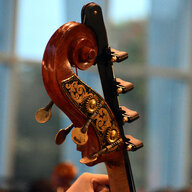
Would it be more expensive then a pre existing model or would it be pretty similar?Have Upton build you what you want.
I keep hearing they they are removable. How? Don’t you have to drill a hole in the scroll?I would personally choose an extension over a 5-string. I've never played a 5-string in a shop that had the projection of a 4-string with an extension. My understanding is that the 5th strings can put too much tension on the top table for a bass to resonate fully. (There's a reason Baroque soloists played 3-string basses!) But I am sure they are out there given the many European orchestras that use them. I say find a 4-string you love the sound of and drop the extra few grand for a sweet extension. People always want to ask about the extension too, so that's extra fun. Extensions are removable so you will always be able to sell your 4 string to a purist later if you so decide.
The thing about curved bridges is about where the strings meet the bridge. In the past my basses have had not enough curve and it’s just a bit harder to switch strings without some other string feedback.The European orchestras whose players use 5 string basses generally own the basses. They tend to be old, purpose-built and big, with mensures starting at 43". If you just want a low D, get a D extension with an E closer and you're good to go.
I don't understand your comment about "curved bridges".
I've never heard a bass with high C that I liked the sound of except for some classical soloists using high (ADGC) solo tuning, and I didn't care much for it even then.
How does it work? Do I need a different set of strings and if not, will it stretch them and wear them down faster?Easy: For less $150 try the HipShot DB Bass FreeRange XTender

Precision d-dropitude at the flip of a lever, maestro.

Thanks for the reply, to answer your question, I don’t have an actually don’t have a budget. The bass I buy is going to be the bass I’m playing for the rest of my life so I’m willing to spend a pretty penny. Where would I try out basses? I’m in Illinois.I assume you are a younger player. You have a lot of varied ideas. 4 string, 5 string both possible with an extension, and a hard case. I suggest you play as many basses as possible. Play your collogues instruments. Go to shops. Often I think people have very intellectual ideas but just need to play a variety of basses. I've played probably one of the biggest basses ever and it had a small sound. I've played small basses with huge sounds. The last few basses I really liked were 5 strings and I wasn't looking for one. So my point is play as many as you can. You have to find the right instrument. It’s like finding a life partner. Does your partner need to have blue eyes? Well you are omitting a lot of people if that's the case. Lastly what is your budget? Yes you may not want to publicly say but it has to be taken in consideration. Looks at luthiers sites and get an idea of prices. If you think about getting a new bass made you must play basses of the maker prior to it, at least in my opinion.
That is exactly what I mean, instead of a bass luthier could I possibly just take some sand paper to it and do it myself…The hole in the scroll is simply for the string to pass through. The extension itself is held in place by the E/C string. I assume that by "feedback" you find yourself hitting two strings at once with the bow during string crossing. The bridge issue is easily dealt with by a bass luthier. The Fred Zimmermann book on bow technique is also a good idea.
Awesome, thanks!Several places in Chicago will have a wide range of instruments to try, someone will have the Hipshot. Even if you are some distance, make the trip and squeeze them all into one day, call first.
Sonksen Strings
A440
Chicago Bass Works
Hm, theres some confusion on my end about the violin octet. I noticed It has a different tuning, assuming that I can change it, is it pretty much a bass body wise or is it totally different?I play a 5 string bass and I love it. Tomoya Aomori was the original owner, and has YouTube videos from circa 2013 playing the bass. He tuned in 5ths, but I tune in 4ths. It's a Shen copy of a bass built by Robert Spear, a student of Carleen Hutchins. Spear's Singing Woods Violins website is down, so I don't know if he is still making instruments, but I highly recommend investigating Hutchins "violin octet" instruments.
In town, I use a soft case, but the bass has a detachable neck and a hard case for flight. Just got back from a week in Vienna, and the case worked great.

First, there is no such thing as a standard bass body: violin/gamba corners, flat/round back, etc. But these are extra unusual: less deep and more wide. The idea is the whole family is the same shape, different size. This is based on Carleen Hutchins’s research in acoustics. She wrote a few articles for Scientific American on the topic, though I haven’t read them. I just know the bass sounds good and is loud.Hm, theres some confusion on my end about the violin octet. I noticed It has a different tuning, assuming that I can change it, is it pretty much a bass body wise or is it totally different?

Before your post, I had never heard of a 5 string with an extension. Sure sounds like a lot of bass! More that I will ever be able to use.
Chicago classical bassist Eric Snoza has a Kolstein set up like that.

try the HipShot DB Bass FreeRange XTender
Precision d-dropitude at the flip of a lever
Lifting the lever allows the string-anchor to slide forward.How does it work?
Nope.Do I need a different set of strings
Not in any way that I observed.and if not, will it stretch them and wear them down faster?
Said with all the love in the world, Aaron Robertson is an evil man.I think I can help. Went shopping for my first-ever DB last weekend, learned some stuff.
Robertson & Sons (Albuquerque, NM) quoted me "about $3300" for adding a C extension to a 4-string bass, last week.
Might be cheaper to find a different DB that already has the extension, vs. add an extension to an existing bass (since OP was planning to upgrade basses anyway).
I was not considering a C-extension for my first bass - I'd stick with standard 4-string. The C extension was merely one of many things I discussed with the salesman/bass guy (one of the Roberstons). Context was "this is useful for orchestral players, but not cheap, so only get one if you need it."
(FWIW, very cool shop and absolutely wonderful experience, I felt privileged to take up some of Mr. Robertson's time. Stop in if you can, if you're ever in Albuquerque.)
With regard to a hardshell case: I would avoid one unless you are legit going to travel with your DB, a lot. It looks like a "cheap" one is around $1000 (yikes!) where a really robust, airline-proof one will run at least $3000. Double yikes.


