• TalkBass has been independent since 1998. Add your voice.
    Create a free account to reply to discussions, view embedded media, and browse with fewer display ads.
    Join freeLog in
    Want zero display ads or expanded classifieds tools? Compare plans.

What CIJ Fender is this?

I hear you on what appeals to you but why Fender Japan can't make a decent pup or active electronics?

im no luthier..totally smart enough to swap some pups though. if it wasnt for the export fees and such at the original offer prices it would be a no brainer to buy em for what they are and dump quality electronics in em. but to pay $1200 for a $700 doallar bass that needs another $200 into it to make it 100% as i want it isnt my idea of a good deal. if they had one duty free day a year and i could cop these basses at local consumer cost i would go bananas and horde these and make some amazing winners for my stable
 
im no luthier..totally smart enough to swap some pups though. if it wasnt for the export fees and such at the original offer prices it would be a no brainer to buy em for what they are and dump quality electronics in em. but to pay $1200 for a $700 doallar bass that needs another $200 into it to make it 100% as i want it isnt my idea of a good deal. if they had one duty free day a year and i could cop these basses at local consumer cost i would go bananas and horde these and make some amazing winners for my stable
You make my point exactly! The Geddy bass which does have good pups and electronics was $600 new and now $1200 bucks new. Now those basses abroad come with less than stella pups and electronics for more there then the Geddy was originally new here. Now you import the bass add 200-300 hundred worth of up grade and hope you like the way the bass is gonna sound, but if you don't you can't even get half you money back selling it! Remember just because you change pups that is not a promise the bass will sound better, it definitely will sound different! When you get to a certain level in your playing and musical career you just want something that you can plug in and play, forget about something that you have to make sounds like what you want!
 
I prefer Fenders in this order: MIJ/CIJ > MIM > USA > Squier

Based on price, playability, etc, I feel that the MIJ and CIJ instruments are far more worth it than their American counterparts.

I own a CIJ P-Bass and prefer it easily over the others.

+1 Totally agree. I've played quite a few high priced USAs that were complete crap all around too.
 
You make my point exactly! The Geddy bass which does have good pups and electronics was $600 new and now $1200 bucks new. Now those basses abroad come with less than stella pups and electronics for more there then the Geddy was originally new here. Now you import the bass add 200-300 hundred worth of up grade and hope you like the way the bass is gonna sound, but if you don't you can't even get half you money back selling it! Remember just because you change pups that is not a promise the bass will sound better, it definitely will sound different! When you get to a certain level in your playing and musical career you just want something that you can plug in and play, forget about something that you have to make sounds like what you want!


totally. fender Japan kills everything in asthetics, but importing kills them. id just like to see even the US tap into the Japanese color palate and bring offerings like the walnut stained jazz or something than an (insert f-bomb here) blizzard pearl. japanese arent afraid of colors like LPB and shell pink and wood stains. its a damn shame fender US is so vanilla.

as for electronics i really love my pj bart combo in my fender (replaced my stock lace sensors) it nails my sound and as long as im sting in the same general range of wood im a happy camper with my combo and would prefer to do almost any fender this way... but i wholeheartedly agree if i dont HAVE to mod it id really rather not. i just want the best of both world, japanese looks, american guts (and if i could mexican price :D )
 
Hi guys i just bought a fender 62' reissue p-bass (CIJ) 3 COLOR SUNBURST
the serial number on the heel of the neck is: Q020258

below is the link to fender japan:

Invalid Link Removed

they make two models of the 62' p-bass re-issue which LOOK exactly identical:

PB62: body is basswood, pickup is PB vintage
PB62US: body is alder, pickup is PB US-vintage

as both models look exactly the same, how can i tell which model is the one i own, and i want to date my instrument as well.

I would appreciate if anybody can help me figure out these details.
Thank you.

and by the way that awesome brown j-bass that's appearing on the top of the thread is listed on fender japan website that i've just listed above as well with all the details.
 
I hear you on what appeals to you but why Fender Japan can't make a decent pup or active electronics?

I'd be VERY surprised if Fender Japan couldn't make a decent pup or active electronics, just as I'd be very surprised if I were to discover that the bridge pup location on the CIJ '75RI was Fender Japan's decision, or that the combination of a four-bolt plate and bullet truss rod on the MIM 70s Jazz was Baja's decision. What I figure is that Corona tells Japan and Mexico what they can and cannot do, with the ultimate goal being the artificial image maintenance of the American Standard model.
 
I'd be VERY surprised if Fender Japan couldn't make a decent pup or active electronics, just as I'd be very surprised if I were to discover that the bridge pup location on the CIJ '75RI was Fender Japan's decision, or that the combination of a four-bolt plate and bullet truss rod on the MIM 70s Jazz was Baja's decision. What I figure is that Corona tells Japan and Mexico what they can and cannot do, with the ultimate goal being the artificial image maintenance of the American Standard model.
Fender Japan like Fender Mexico is still Fender. Fender makes instruments in different countries to take advantage of 1) that countries resources 2) local laws governing painting. Fender MIM is basically Fender sending over parts to be painted and assembled with some parts being made there. Fender USA uses premium parts, cuts of woods for bodies (painted MIM bodies can be up to five pieces) as well as better electronics and premium hardware. Fender Japan gets to use woods available to them other then whats available here like basewood. Basewood doesn't really sound that bad just cheaper to use, even cheaper than the poplar MIM bodies were made of. Most ash bodies I played that were MIJ/CIJ were very solid feeling but a tad on the heavy side. As far as Fender Japan making a better pup that does not mean it will sound better than an MIA pup! That wheel has already been invented! I think Fender Japan is more interested in a visually stunning instrument that sounds decent as apposed to a decent looking instrument that sounds good! If you want a pinkish blue jazz bass with a maple neck then Fender Japan is your guy. If you want something that will sounds great out the box, sits right in the pocket of the mix and will allow you to be the star and not the bass, MIA Fenders are the ticket! :D
 
I think Fender Japan is more interested in a visually stunning instrument that sounds decent as apposed to a decent looking instrument that sounds good! If you want a pinkish blue jazz bass with a maple neck then Fender Japan is your guy. If you want something that will sounds great out the box, sits right in the pocket of the mix and will allow you to be the star and not the bass, MIA Fenders are the ticket! :D


While I don't disagree, IMHO, this reasoning can be applied to "plug and play" players and who have the money to buy the more expensive MIA. But interestingly majority of players are "tweakers", they just prefer to mod their instruments based on their preferences especially pickup replacement. Granting that MIJ pickup and electronics are just decent but not totally as good sounding as MIA pickup, it can easily be replaced by aftermarket pickup and still much cheaper than MIA. And you've got a visually stunning instrument with killer tone from American-made pickup.:D
I believe that this is one major reason why Fender USA prohibits the sale of new MIJ to USA, majority of players will instead buy MIJ than MIA. Its a simple political economics. As seen here in TB, many players order from Ishibashi, a testament of how good MIJs are.
In fact some members here verified that after coming here in Japan and played various MIJ basses, they said MIJs equalled or even surpassed MIA (well that was their opinion, not mine).
 
[Invalid or Expired Link Removed]

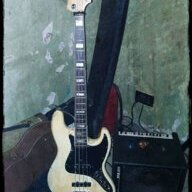
That is just.. smokin hot.
 

Attachments

  • 3263898014.jpg
    3263898014.jpg
    22.7 KB · Views: 39
Fender Japan like Fender Mexico is still Fender. Fender makes instruments in different countries to take advantage of 1) that countries resources 2) local laws governing painting. Fender MIM is basically Fender sending over parts to be painted and assembled with some parts being made there. Fender USA uses premium parts, cuts of woods for bodies (painted MIM bodies can be up to five pieces) as well as better electronics and premium hardware. Fender Japan gets to use woods available to them other then whats available here like basewood. Basewood doesn't really sound that bad just cheaper to use, even cheaper than the poplar MIM bodies were made of. Most ash bodies I played that were MIJ/CIJ were very solid feeling but a tad on the heavy side. As far as Fender Japan making a better pup that does not mean it will sound better than an MIA pup! That wheel has already been invented! I think Fender Japan is more interested in a visually stunning instrument that sounds decent as apposed to a decent looking instrument that sounds good! If you want a pinkish blue jazz bass with a maple neck then Fender Japan is your guy. If you want something that will sounds great out the box, sits right in the pocket of the mix and will allow you to be the star and not the bass, MIA Fenders are the ticket! :D

Uh... I'm not quite sure why you quoted me. Nothing you've said here addresses anything in my post. But read below anyhow.

While I don't disagree, IMHO, this reasoning can be applied to "plug and play" players and who have the money to buy the more expensive MIA. But interestingly majority of players are "tweakers", they just prefer to mod their instruments based on their preferences especially pickup replacement. Granting that MIJ pickup and electronics are just decent but not totally as good sounding as MIA pickup, it can easily be replaced by aftermarket pickup and still much cheaper than MIA. And you've got a visually stunning instrument with killer tone from American-made pickup.:D
I believe that this is one major reason why Fender USA prohibits the sale of new MIJ to USA, majority of players will instead buy MIJ than MIA. Its a simple political economics. As seen here in TB, many players order from Ishibashi, a testament of how good MIJs are.
In fact some members here verified that after coming here in Japan and played various MIJ basses, they said MIJs equalled or even surpassed MIA (well that was their opinion, not mine).

Thanks.

This is part of what I'm getting at, pyrohr. There's no reason why a culture which pays so much attention to detail in its art and technology would miss that pickup placement (MIJ '75RI). I think Corona told Japan to put the put in the 60s position- essentially crippling Japan and Mexico's designs (Example: the four-bolt neck plate with bullet truss rod on the MIM 70s Jazz bass. ??????) from within so they would be able to sell more of their MIA instruments to people who don't buy into the whole "Leo slowly picked thru wood, carefully tapping each plank..." noise but who do want their specs right.

On your tone statement: Folks on TB can talk all day about the tonal properties of slabs of wood bolted to narrow planks of wood and then covered in auto paint, but you'll have to have that convo with someone other than me. And I've owned and played enough MIA stuff to say that.

Do you really think Mexicans didn't learn how to reverse wind a Jazz pickup until 1997? Much more likely that they were told to deliberately assemble noisy basses that could not even be easily upgraded because the damn routs were the same size. Going out of one's way to deny specs to offshore builders (instead of making the flagship product so good that the difference is clear even with the same hardware, measurements and electronics) is bogus. It's one of the reasons I try to buy Warmoth and Allparts stuff as often as possible rather than buy complete Fender products (yeah, I know FMIC's getting a cut anyhow).
 
While I don't disagree, IMHO, this reasoning can be applied to "plug and play" players and who have the money to buy the more expensive MIA. But interestingly majority of players are "tweakers", they just prefer to mod their instruments based on their preferences especially pickup replacement. Granting that MIJ pickup and electronics are just decent but not totally as good sounding as MIA pickup, it can easily be replaced by aftermarket pickup and still much cheaper than MIA. And you've got a visually stunning instrument with killer tone from American-made pickup.:D
I believe that this is one major reason why Fender USA prohibits the sale of new MIJ to USA, majority of players will instead buy MIJ than MIA. Its a simple political economics. As seen here in TB, many players order from Ishibashi, a testament of how good MIJs are.
In fact some members here verified that after coming here in Japan and played various MIJ basses, they said MIJs equalled or even surpassed MIA (well that was their opinion, not mine).

You say the majority of players are tweekers? I think you are so wrong! Maybe in your circle they are! That's like saying all people who by those little Japanese cars are tweekers! think fast and the furious! Yeah there will be those who want to hot rod there instrument but the majority buy thinking that will be the last stop and their instrument will need nothing. Fast forward into ownership and they realize their instrument is lacking, sounds bland or just does not measure up to The MIA basses that they hear. Then starts the journey for a better pup and electronics! Much like the Honda civics with the fat tires and loud exhaust it's all about performance! I know lots of people who dislike Fender Japan for this reason. Majority professional players I know want instruments that come ready to play, they don't want something they have to experiment with as each experiment produces a different sound! Once you are a part of a situation you need to be mindfull of the mix, You want to sound good and don't want to stick out to over shadow the artist, this is why Fender basses are so requested in the recording studio! The MIA basses will give you the best, cleanest and most natural sound in that environment.
 
You say the majority of players are tweekers? I think you are so wrong! Maybe in your circle they are!

Ok that is your opinion. But come think of it, how come these American companies like Dimarzio, Seymour D, EMG, Schaller, Wilkinson etc. are still in business? Because players BUY their products to replace parts of their instruments they don't like. I still think majority of players do mod their instruments.

The MIA basses will give you the best, cleanest and most natural sound in that environment.

I presume you were only referring to MIA Fender right? Not Sadowsky, Musicman etc. If that is the case my friend, before you belittle MIJ Fender, let me remind you that it was actually a Japanese guy who literally saved Fender USA from extinction:eek: If not for this Japanese, Fender USA is already history. And no more MIA Fender basses that will give you the best, cleanest and most natural sound.

This is the end of my post and happy bassing:bassist:

Read on...... From Fender Facebook

Fender Hall of Fame to Induct Jamerson, Yamano

Tuesday, August 4, 2009 at 8:48am

At its annual Hall of Fame ceremony on Aug. 7, 2009, Fender will induct legendary Motown bassist James Jamerson and former Yamano Music Co. Ltd. CEO Masamitsu “Mike” Yamano.

In very different ways, both are towering figures in Fender history.

Jamerson (1936-1983) transformed the role of electric bass in popular music. He was the top session bassist for Detroit’s Motown Records from the late 1950s to the early 1970s, and his impeccable and infectious bass guitar work underpinned more hit records than that of perhaps any other bassist in history. His influence on bassists of all eras and styles is incalculable, and he is universally regarded as one of the instrument’s finest players.

His unerring musical instincts—brought to life on a 1962 Fender Precision Bass® guitar—were called upon time and again for what would prove to be timelessly enduring classics by the Miracles, the Temptations, Marvin Gaye, Stevie Wonder, Martha and the Vandellas, the Four Tops, the Supremes and many other artists. Although he received little public recognition or credit during his lifetime for his towering contribution to popular music, the countless hits fueled by Jamerson’s propulsive and musically adventurous bass work remain beloved by millions worldwide as each generation discovers and rediscovers the magic of Motown’s 1960s golden age.

Yamano played a major role in rescuing Fender in the mid-1980s, when the company was struggling for its very existence. In 1985, as president of Tokyo-based musical instrument distributor and retailer Yamano Music Co. Ltd., he provided crucial early support to Fender’s re-emergence. As a major investor, board member and close friend, he extended an invaluable helping hand as Bill Schultz led a small group of investors in acquiring and rebuilding Fender after years of decline under CBS.

That year and soon thereafter, Yamano’s financial generosity, expert guidance and longstanding friendship literally helped save Fender. He was instrumental in the creation and administration of highly successful joint venture Fender Japan, a key element in the emergence of the modern Fender corporation.

The music company bearing the Yamano family name was founded in Japan in 1892, and has represented Fender there since 1963. Masamitsu Yamano, born in Tokyo in 1934, joined in 1960 and later served as its third president, thus working for Yamano Music during Fender’s original heyday and presiding over it during Fender’s modern-era resurgence.