Jaquo III X
lol Yeah that guy, I think there were a few others IIRC

TalkBass has been independent since 1998. Add your voice.
Create a free account to reply to discussions, view embedded media, and browse with fewer display ads.
Join free Log in
Want zero display ads or expanded classifieds tools? Compare plans.
Jaquo III X
Yup, just one more thing for the TB “hall monitors” to bicker over.

If we run out, we’ll make up more stuff nobody cares about to argue over.It would be a sad day if we ran out of bickering fodder.

No we won't.If we run out, we’ll make up more stuff nobody cares about to argue over.

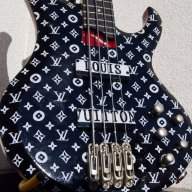
Yes we will.No we won't.

Why would anyone need that? This C# is lower than expected human hearing threshold and F# is really close to that too (not that there're many people capable of hearing 20 Hz, let alone systems that can reproduce it. And yes, I know, I know – overtones. But that's still much too low to overtones not becoming mud.

Oliver North did not feel posh when he was questioned about the contras."Contrabass" was just Anthony Jackson, being "different".
All he had was a 6 string bass, but "Contrabass" sounds posher.
Well, in all fairness he did pretty much event the "real" 6 string bass, that wasn't a Bass VI."Contrabass" was just Anthony Jackson, being "different".
All he had was a 6 string bass, but "Contrabass" sounds posher.
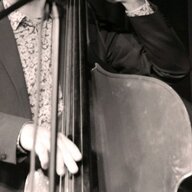
The double bass is just a sixth below the cello, I know we love our bass power, but let's not exaggerate it ^^double-bass an octave and a half below the cello.


Oh, good catch.I think all that's required is the six strings tuned B-C, as @crazycloud stated. The AJ signature you posted only has 24 frets, and at least one Presentation was 34" scale.
I think all that's required is the six strings tuned B-C, as @crazycloud stated. The AJ signature you posted only has 24 frets, and at least one Presentation was 34" scale.
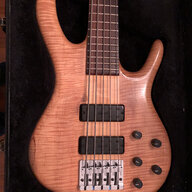
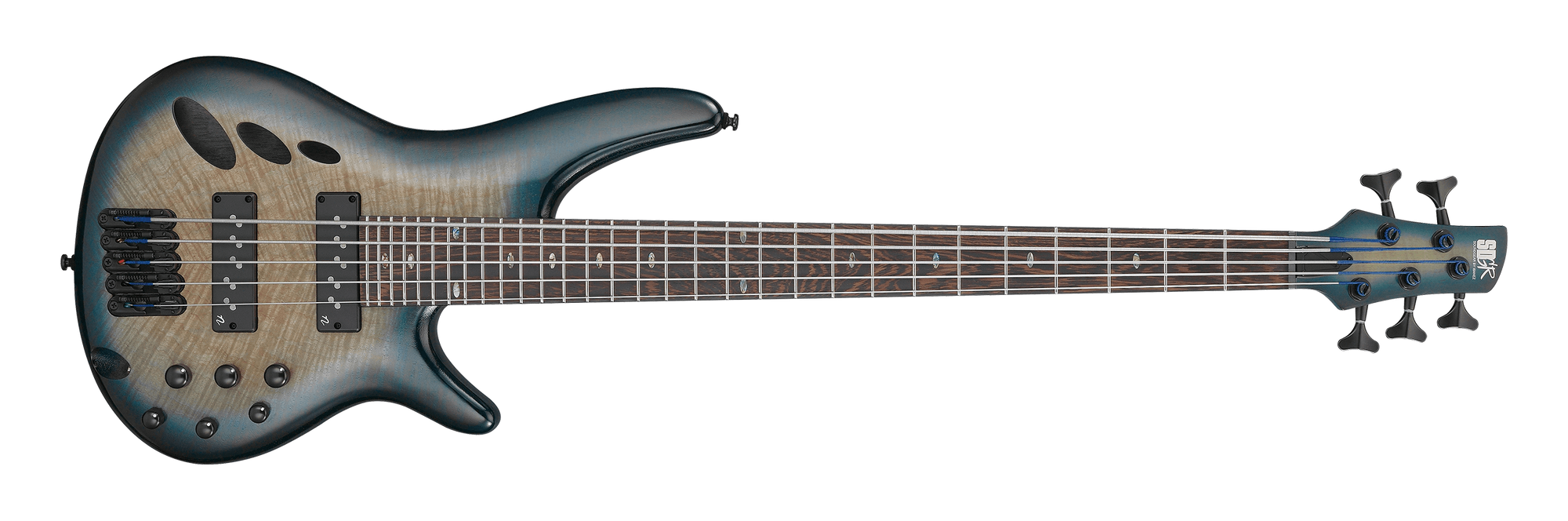
The Ibanez SRD905 has only 5 strings but it's got 30 frets, so it has the same range as a 6-string with 24 frets. Does this make it a contrabass guitar?Oh, good catch.

I would like one of those.The Ibanez SRD905 has only 5 strings but it's got 30 frets, so it has the same range as a 6-string with 24 frets. Does this make it a contrabass guitar?
(I'm curious about how people think about the term "contrab

Contrabass saxophone in Eb, an octave below a baritone saxophone.
And you thought finding room for an SVT fridge in your car was difficult
Saxophones are transposing instruments, mainly in Bb and Eb. The typical order is soprano in Bb, alto in Eb, tenor in Bb, baritone in Eb, bass in Bb, contrabass in Eb. Each Eb sax is a fourth below the Bb sax above it in pitch, and from one Eb sax to another is an octave, just as from one Bb sax to another is an octave.
The double bass/string bass/upright bass/bass viol/contrabass/ugly girlfriend
violin G D A E
viola C G D A
tenor violin G D A E
cello C G D A
bass E A D G
octobass E A D G (an octave below DB)
The EADG tuning of course was carried over to the bass guitar.
P.S. Apparently there was a bass violin that existed in the 16th and 17th centuries prior to the adoption of the cello. It was tuned like a cello but had a larger body.
There are also acoustic piccolo basses, Ron Carter plays one.
View attachment 7353702
Considering all of the people who have recently departed, still having Ron Carter not only alive, but still gigging, is a wonderful blessing.
I have tickets to see him in December. Might be the last time...