• TalkBass has been independent since 1998. Add your voice.
    Create a free account to reply to discussions, view embedded media, and browse with fewer display ads.
    Join freeLog in
    Want zero display ads or expanded classifieds tools? Compare plans.

What did you learn today?

You all may find this interesting

From the Babysitter the Honey Mooners


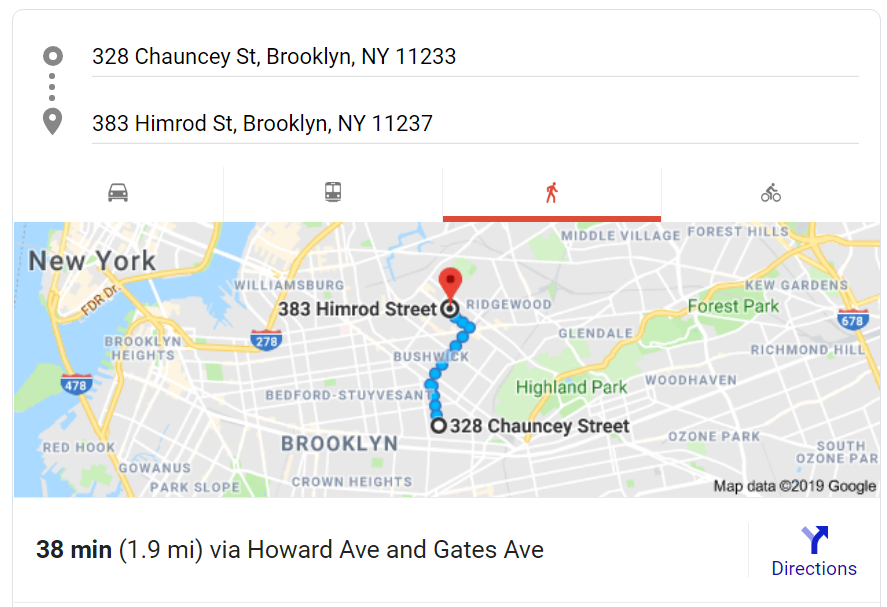
The lady tells Alice that the babysitting job is "only three blocks from here" and the address is 383 Himrod St. The Kramden's live on 328 Chauncey St. in Brooklyn and 383 Himrod St. is actually two miles from there.

upload_2019-1-22_12-48-9.png
 
  • Like
Reactions: PWRL
Alzheimer's may have met its match.

Invalid Link Removed

Alzheimer’s disease, which attacks an individual’s memory, is the most common form of dementia – the umbrella term for the hundreds of different conditions that affect the brain.

In a paper published in Science Advances, private pharmaceutical company Cortexyme details the role of Porphyromonas gingivalis – a common bacterium linked to chronic gum disease – in driving Alzheimer’s disease pathology.

After finding the bacterium in the brains of Alzheimer’s patients, the international team of researchers found the brains of mice whom they infected with the pathogen had rapid colonization and increased production of amyloid beta, a component associated with Alzheimer’s.
 
Venezuela's awash with black gold. Reserves, reported in 2014, are understood to be the largest on the planet, at 297 billion barrels (4.72×10¹⁰ m3). Fancy that! — Oil reserves in Venezuela - Wikipedia. Then there's the Orinoco tar sands, comparable to Canada's — estimated to be somewhere between 100 billion barrels (16×109 m3) and 513 billion barrels (8.16×10¹⁰ m3).
 
Last edited:
We’re discovering just how incompatable gluten is for humans.

“There is now, however, a huge dataset firmly establishing the likelihood that wheat intolerance, or better yet, wheat toxicity, is a universal, human species-specific problem, occurring only in differing degrees, and mostly sub-clinically, at least through the optic of conventional screenings and technologies.

One must also account for the "invisible thorn," which is wheat lectin – known more technically as Wheat Germ Agglutinin (WGA) -- and which can cause a broad range of adverse health effects, even while being undetected through conventional screenings.”

Invalid Link Removed
 
Ahab the good oil for ye, today. But first … a song.


Invalid Link Removed.

Most
significant? Doubt it. My name ain't there. Still, it is one whale of a tale.
… "We know that North American whalers, for a 30- or 40-year period, covered the entirety of the world's oceans looking for whales, but we have very little evidence of them actually making landfall, so they're an important find."

The names and dates were carved into the rock by men sailing on two different whale boats, several years apart.


Historical records reveal identities


The first, the Connecticut, set off from the coastal city of New London in August, 1842 with a crew of 26 men and sailed from the north-west coast of the United States to what was then known as the New Holland whaling ground.


Members of the crew carved the words "Jacob Anderson", "Crocker", "New London", and "in the Ship Connecticut of New London", on a high, rocky ridge overlooking the water, along with the dates of their travel.

Professor Paterson scoured the historical records to identify the men, including the captain, and wrote his findings in the international journal Antiquity.

"The historical records show that on Connecticut's departure, Captain Crocker was 33 years old, while Jacob Anderson was described as an 18-year-old seaman from New London of 'black complexion' — almost certainly an African-American sailor," he wrote.

The second lot of carvings were found on the nearby West Lewis Island and include the words "J.Leek, Ship Delta, 1849". …
 
Last edited:
  • Like
Reactions: S-Bigbottom
TIL that dozens-of-thousands of Chinese and Japanese, and Korean laborers worked on the first effort to create the
Canál de Panamá.
That was in the 1880s & ‘90s, under the direction of French engineers and designers.

Today, one in five Panamanians can claim Asian heritage.
 
Last edited:
  • Like
Reactions: RedVee and PillO