
Enjoy the benefits of a premium membership!
Upgrade Account
-
TalkBass has been independent since 1998. Add your voice.
Create a free account to reply to discussions, view embedded media, and browse with fewer display ads.
Join free Log in
Want zero display ads or expanded classifieds tools? Compare plans.
You are using an out of date browser. It may not display this or other websites correctly.
You should upgrade or use an alternative browser.
You should upgrade or use an alternative browser.
what do you consider a "boutique bass"?
- Thread starter henilk2007
- Start date
More options
Who Replied?
I make a distinction somewhere with boutique...for me, a boutique bass is something that involves non-traditional woods and/or techniques, or non-traditional specs, with a focus on aesthetics. So anything resembling a cookie cutter slab body made by a certain mass producer of iconic bass brands would be exempt.
But that's just me....or maybe others feel the same way?
I can go with that.

I thought i knew what boutique was but according to guitar center an ibanez s8 is a boutique instrument. Im not so sure about that. The rg2228 kinda. But the s8?
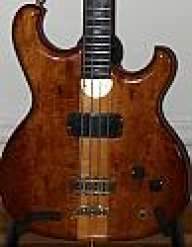
I would say the support from the company is a big part of the equation too. You see that with companies like Fodera, FBass, Warwick, Sadowsky, Valenti, and Roscoe who all have company reps on this very forum.
I thought i knew what boutique was but according to guitar center an ibanez s8 is a boutique instrument. Im not so sure about that. The rg2228 kinda. But the s8?
I am proud to say I had to Google what the Ibanez S8 is.

DiabolusInMusic
Functionless Art is Merely Tolerated Vandalism
The Carvin custom shop isn't boutique???
I haven't played all boutique manufacturers offerings, but every one I have played is leaps and bounds ahead of carvin in terms of quality. Don't get wrong, I love my Carvin but it doesn't hold a candle to a Roscoe, Dingwall, Elrick, Lakland, so on and so forth.
I don't think something that isn't an absolute world class player can be considered boutique either, otherwise SX and Wishbass could fall into that category.
I am proud to say I had to Google what the Ibanez S8 is.
Haha its a newer model. But its made in indonisia and is pretty mass produced. I would call it more a niche instrument than a boutique instrument
Great discussion guys. I agree with most of these opinions. When I think of boutique basses, it brings to mind $$$$ combined with superb craftsmanship and sound. I also envision a bass that looks like a work of art. Beautiful, highly figured woods, etc.

Boutique means made to order, but for me a 'boutique bass' means one that is built without regard to good taste and decency.
So something with too many strings and/or a hideously figured top. Something so over-specified that it becomes notable more for its vulgarity than its musicality.
Very nouveau riche.
I'll agree with this. My Modulus certainly had a 'boutiquely' priced retail tag, but it isn't a boutique bass despite it being able to compete with boutique offerings.
I haven't played all boutique manufacturers offerings, but every one I have played is leaps and bounds ahead of carvin in terms of quality. Don't get wrong, I love my Carvin but it doesn't hold a candle to a Roscoe, Dingwall, Elrick, Lakland, so on and so forth.
I don't think something that isn't an absolute world class player can be considered boutique either, otherwise SX and Wishbass could fall into that category.
Arrrr, how dare ye criticize our beloved Carvin, arrrr....
But seriously on the topic, "boutique" brings to my mind the idea of a small shop run by a few celebrity luthiers or something along those lines.
And again in all seriousness, there's a reason a boutique bass like a Fodera costs the wife and the 2 kids - they don't charge that just because they can. It's actually really hard to make an instrument at that level of craftsmanship and they need that compensation in order to do it more than once.
In terms of quality and meticulousness, the nicest boutique I got to play was a Ken Smith 6 string many years ago. I wish I remembered which model it was, it was one of the higher-end neck throughs. Their fatal flaw is the pickup placement - too close to the bridge leading to that KS nasal tone.
But truly when you actually pick up a boutique and look it over, you see why it's a "boutique". Each one is like practically a custom made instrument in terms of craftsmanship.
I don't have the musical talent to justify an investment like that as a player (tho if I were rich, perhaps as a collector), so in terms of playing boutiques aren't distinguishable, for me, from my poor-man's boutique Carvins.
But you got to respect small operations run by experienced luthiers, and that tends to be what I think of as truly boutique.
LS

To me it's any builder that gains populaity through word of mouth, does almost no marketing and is privately held and run by one or a few more people. I would not consider anything out of Fender, Warwick, Dingwall, etc as boutique - that is not to say there aren't magical things being built there however. There is more risk and thusly romance on the boutique side in my view. ...but that's just me.
Boutique is anything i cant afford at the moment.
Example- i cant afford a Fodera Emperor 5.
(I COULD scrape up the funds, but i CANT afford the ensuing divorce lol!).
Example- i cant afford a Fodera Emperor 5.
(I COULD scrape up the funds, but i CANT afford the ensuing divorce lol!).

Great discussion guys. I agree with most of these opinions. When I think of boutique basses, it brings to mind $$$$ combined with superb craftsmanship and sound. I also envision a bass that looks like a work of art. Beautiful, highly figured woods, etc.
With the above in mind, it's hard for me to think Wishbass is boutique.

Musiclogic
Commercial User
- Aug 6, 2005
- 6,505
- 75
- 60
- Disclosures
- Owner/Builder: HJC Customs USA, The Cool Lute, C G O
Boutique is just that, something you would only find in a Boutique. Boutiques are usually run by a small amount of people, have a single location and is the only place you'll find the product.
In the bass world I think Price and Name recognition have more to do with the "Boutiqueeness" than anything else.
I don't consider brands like Warwick to be "Boutique", or parts assembled instruments. While they may be high end and high cost, they are still "Production" instruments.
Fodera is probably as close to the borderline of Production/Boutique as I would go. They remain a small shop(kind of) and produce a relatively small amount of instruments, but are on the verge of becomming a production shop.
There is a distinct difference between "Custom" and "Boutique", and I think limited quantity and price/performance have a lot to do with it.
In the bass world I think Price and Name recognition have more to do with the "Boutiqueeness" than anything else.
I don't consider brands like Warwick to be "Boutique", or parts assembled instruments. While they may be high end and high cost, they are still "Production" instruments.
Fodera is probably as close to the borderline of Production/Boutique as I would go. They remain a small shop(kind of) and produce a relatively small amount of instruments, but are on the verge of becomming a production shop.
There is a distinct difference between "Custom" and "Boutique", and I think limited quantity and price/performance have a lot to do with it.

Betrayer_Bass
Profanity Fish.
- Sep 24, 2011
- 1,381
- 854
- Disclosures
- Endorsing: Spector basses, Winspear Picks, Spector Formula 603 strings
Honestly the way I see boutique instruments is that they're not production made, but more custom. Possibly from a small store, possibly not. Like my Warwick is a German made production line bass. It's fantastic and certainly high quality but not boutique. My Spector ReBop is production line also, fantastic quality and also not boutique. I would almost consider my Euro 5 LX boutique as it was custom constructed to my tastes, but it's also a pre-made shape, available from a production line like setting with the highest of quality. I say almost, it's a custom bass. But if it were a signature model made by Spector with my own specs (string spacing, woods, scale length, nut width etc) I'd consider that a boutique bass, no matter who made it.

- Jun 30, 2010
- 49,611
- 222,113
- Disclosures
- musician/artist/owner - Gildaxe
Lot's of spot-on specifics unfolded so far so only want to add a general perspective that I have when considering the topic. I feel that a boutique instrument is one that is of limited production (not mass-produced) and generally tailored, meaning more considered choices of all parts/not cookie-cutter. Whether it's made of exotic wood/parts or basic tried and true woods and pu's/electronics etc, I usually consider such boutique. Maybe not the exact/correct use of the term by the dictionary, but I think it's use is expanding to include a more general genre of product-level.
As a spin-off, these instrument producers help raise the bar for everyone as all the mega production companies (Fender/Gibson/Ibanez et al) all have introduced "boutique" instruments within there product line as a marketing/selling point. The nature of the market place. Whether or not one spends the higher cost involved is subjective to the players needs, wants and personal financing.
As a spin-off, these instrument producers help raise the bar for everyone as all the mega production companies (Fender/Gibson/Ibanez et al) all have introduced "boutique" instruments within there product line as a marketing/selling point. The nature of the market place. Whether or not one spends the higher cost involved is subjective to the players needs, wants and personal financing.

Mass produced vs not. Warwicks used to be boutique, and while they aren't anymore, this doesn't stop them from being outstanding.
+1


