What does "beginner's bass" mean?
It probably means this is the bass I should be playing!!


TalkBass has been independent since 1998. Add your voice.
Create a free account to reply to discussions, view embedded media, and browse with fewer display ads.
Join free Log in
Want zero display ads or expanded classifieds tools? Compare plans.
What does "beginner's bass" mean?

A relatively inexpensive bass just in case you decide you don't want to play anymore. You won't be out much.
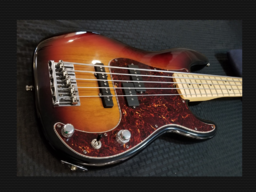
A Squier is a relatively inexpensive bass that could be considered a "beginner" bass but it's of a decent quality that many pros still play them.
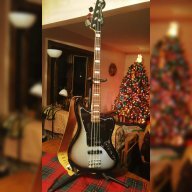
I lucked out, my first Bass is a Squier Troy Sanders Signature Jaguar and I LOVE it! I never thought a $300 Bass would be so nice. Are my standards to low? Haha.I'd say it's just a price class thing more than anything else. A beginner will typically get something cheap in case bass playing isn't in the cards. You probably wouldn't buy a Ric or something as your very first bass, but you might buy a Squier.
Not at all! Quite the contrary actually, you should be proud that you have a sense for value that isn't directly tied to a price tag. I play a $450 bass and it's my soul mate.I lucked out, my first Bass is a Squier Troy Sanders Signature Jaguar and I LOVE it! I never thought a $300 Bass would be so nice. Are my standards to low? Haha.

Pre-owned that sat in the corner almost it's entire life.What is "unused but used"?


Yes, he use all stock, cause it is a selling bass, they dont change anything on it. Price is about 170$.He's probably using stock strings on the thing. Not often you see a budget bass with 70s pickup spacing.
It's not a bad sounding bass, but better strings would probably improve the sound even more. Nothing wrong with that instrument.
True. My first bass (like 20 years ago) was a cheap $189 or something bass from a little shop in the mall, not sure they lasted long. Tuners would (or wouldn't) hold adjustment for 5 min. Wasn't very good quality. Was probably a laminate construction (aka plywood).For the world of stringed instruments, I would put them in three categories of beginner, intermediate, and professional grades. I see beginner and intermediate as a difference between quality of parts, but a professional instrument is something of great quality that was tailored to your person.
So good point of veiw! I think that any bass has only two major parts on which ppl must look and which make them bad or good, keeper or few months testing stuff - this things are neck and body. Everything other can be changed. If neck is good, if body is from sonorous hardwood, not soggy and making resonance - this is a good bassYeah as has been said it's more a price class than anything - marketing speak really. Generally inexpensive, and built as such.
There are plenty of "beginner" instruments that are brilliant - my Ibanez Jet King cost £300 new (I got it for £100) but plays as well and is as enjoyable as my Fender Precision that was twice the retail cost. Same is true of all my Epiphones, ranging in price from £250 to £700 which have notable differences in quality, but the cheaper ones are far from bad.
Notable differences in the instruments are in the hardware - the knobs aren't as solid, the tuners not quite as accurate or solid feeling, the jack (since replaced) was of a flimsy, cheap type that didn't last long. Epiphone/Gibson 3-way pickup selectors are always the first thing to go wrong in cheaper guitars. The pickups are not as powerful or as nice sounding (though sound great in their own way). Otherwise the two guitars play as well as each other, both are capable of a low action, and if anything the Ibanez fits me better, as the body sits more central to my body, as do my guitars, making the transition to bass more comfortable for me.
Given the choice, I'd buy a decent, cheap, instrument (Squier perhaps) and later if I felt and hardware wasn't cutting it, I'd upgrade it. The only thing that really matters to me is that the neck is good, and that the guitar hangs comfortably. And that it looks nice.
It does seem a shame that cheap instruments are marketed as "beginner" instruments when they are perfectly good for professional use, and with the cheaper parts bound to fail in the first year would be enough to put off many beginners!

Agreed.
Inexpensive in case you don't stick with it.
But playable enough that you don't get discouraged and may actually stick with it.
Beginner Bass for poor starter = Squier Affy or Ibby Gio.
Beginner Bass for Rich starter = Fender CS or Ibby Prestige.

1) Affordable
2) Not too complex
3) Not too pretty (beginners tend to beat their instruments up)




 Which means that not only me thinks about it