TalkBass has been independent since 1998. Add your voice.
Create a free account to reply to discussions, view embedded media, and browse with fewer display ads.
Join free Log in
Want zero display ads or expanded classifieds tools? Compare plans.
cool, thanks!Yep, that’s basically it. There are some subtle variations due to differences in pickup architecture (toaster versus hi-gain) and number of winds on the coil, but those are nuances.
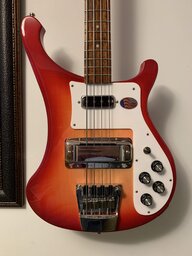
sweet, thank you for the help! I really love the tone with the capacitor engaged, that more aggressive tone rocks. Happy playing!Specifically it engages a small capacitor in series with the bridge pickup that cuts out a large chunk of the low-end of that pickup. This capacitor was hard-wired in 4001 basses, and was partially responsible for the uniquely aggressive mid-forward blended pickup tones that you hear in a lot of classic Rick tones. The capacitor eliminates some of the phase cancellation in the mids common to most blended dual pickup tones. Modern Rick pickups are wound much hotter than 4001 pickups, so the effects are a bit different but still get in the ballpark.
I agree- I pretty much always have that capacitor engaged when playing my Ricks!sweet, thank you for the help! I really love the tone with the capacitor engaged, that more aggressive tone rocks. Happy playing!