

Enjoy the benefits of a premium membership!
Upgrade Account
-
TalkBass has been independent since 1998. Add your voice.
Create a free account to reply to discussions, view embedded media, and browse with fewer display ads.
Join free Log in
Want zero display ads or expanded classifieds tools? Compare plans.
You are using an out of date browser. It may not display this or other websites correctly.
You should upgrade or use an alternative browser.
You should upgrade or use an alternative browser.
What Is A Ramp?
- Thread starter Shishka Bob
- Start date
-
- Tags
- ramp
More options
Who Replied?
It's basically an extended pickup cover that fills the volume around the pickups, fitted fairly close to the strings, so that your plucking fingers can't go too deep.
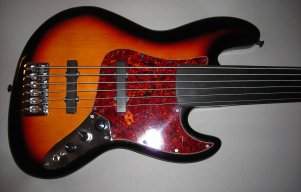
Personally I question what a ramp can do for the player and never liked the idea. But I've had some extended conversations here in TB (thread somewhere) with ramp players and they convinced me that for THEM it was an important addition to the bass and a great help in their playing. So as always it just depends on what works for you.
This is a ramp. (Note that while you might think of a "ramp" as something tilted or tapered, but a bass ramp is basically a flat platform.

This is a ramp. (Note that while you might think of a "ramp" as something tilted or tapered, but a bass ramp is basically a flat platform.


Late to the party, but I'd advise looking up Gary Willis' website. He has a section in which he describes what it does for him and it's quite an informative and interesting read. As a ramp player for roughly 8 years I can't say enough that it's not for everyone.
You may want to check out players that actually use them, Gary Grainger has been doing so since the 1980's. Check out Dominique Di Piazza, Matthew Garrison, Gary Willis, Damian Erskine.
The internationally recognized artists who've played and recorded with legends across multiple continents who use them are the ones to listen to if you want to have a fair opinion on the matter.
You may want to check out players that actually use them, Gary Grainger has been doing so since the 1980's. Check out Dominique Di Piazza, Matthew Garrison, Gary Willis, Damian Erskine.
The internationally recognized artists who've played and recorded with legends across multiple continents who use them are the ones to listen to if you want to have a fair opinion on the matter.

Bryan R. Tyler
TalkBass: Usurping My Practice Time Since 2002
Staff member
Administrator
Gold Supporting Member
Supporting Member
- May 3, 2002
- 28,948
- 20,933
- Disclosures
- Reviewer: Bass Player Magazine
Personally I question what a ramp can do for the player and never liked the idea. But I've had some extended conversations here in TB (thread somewhere) with ramp players and they convinced me that for THEM it was an important addition to the bass and a great help in their playing. So as always it just depends on what works for you.
This is a ramp. (Note that while you might think of a "ramp" as something tilted or tapered, but a bass ramp is basically a flat platform.
View attachment 2882036
Actually they should only be flat if you are fretboard radius is completely flat. Otherwise it should follow the radius of the fretboard so it will have an equidistant space below each string and the top of the ramp.

These are ramps. AKA wild leaks, and they are one of the first plants to grow in the spring.
First nations peoples used to await their arrival for the much needed vitamin C, as did mountain people of Appalachia.

They grow in abundance here, right before and overlapping the morel season.
Morels sautéed in butter and ramps are a real treat, as is making French onion soup with them.
First nations peoples used to await their arrival for the much needed vitamin C, as did mountain people of Appalachia.
They grow in abundance here, right before and overlapping the morel season.
Morels sautéed in butter and ramps are a real treat, as is making French onion soup with them.
The first time I smelled someone eating ramps raw was something I'll never forget. The only cure for smelling them is eating some too.

Passinwind
I know nothing.
- Dec 3, 2003
- 23,066
- 45,992
- Disclosures
- Designer/Toaster Tech @ Passinwind Electronics
Actually they should only be flat if you are fretboard radius is completely flat. Otherwise it should follow the radius of the fretboard so it will have an equidistant space below each string and the top of the ramp.
There's another school of thought that says they should match whatever radius the pickup covers have, so play feel stays consistent regardless of where you're plucking. I've tried both approaches, I slightly preferred matching the pickups on that particular bass.
I considered adding a ramp utilizing the angle of the strings from neck to bridge.There's another school of thought that says they should match whatever radius the pickup covers have, so play feel stays consistent regardless of where you're plucking. I've tried both approaches, I slightly preferred matching the pickups on that particular bass.
Also considered a more complex design:
Bryan R. Tyler
TalkBass: Usurping My Practice Time Since 2002
Staff member
Administrator
Gold Supporting Member
Supporting Member
- May 3, 2002
- 28,948
- 20,933
- Disclosures
- Reviewer: Bass Player Magazine
There's another school of thought that says they should match whatever radius the pickup covers have, so play feel stays consistent regardless of where you're plucking. I've tried both approaches, I slightly preferred matching the pickups on that particular bass.
That’s certainly an option. I wouldn’t call it a ramp though as it neither matches the design or purpose of what a ramp was created for.
Passinwind
I know nothing.
- Dec 3, 2003
- 23,066
- 45,992
- Disclosures
- Designer/Toaster Tech @ Passinwind Electronics
That’s certainly an option. I wouldn’t call it a ramp though as it neither matches the design or purpose of what a ramp was created for.
Fair enough. I initially came to the ramp through wanting to replicate the feel of plucking an upright over the board (didn't happen, but I still dug it for other reasons), and on most uprights I've played the strings aren't really all at equal distance from the board, so my perspective just may be a bit different.
So if the pickups don't match the board radius do you avoid plucking over them, or just cover them with an extended ramp too? I remember Damian Erskine saying a few years ago that non-radiused pickups bugged him a lot. And recently he mentioned that he now sometimes preferred to be able to dig in a bit more than his old setups allowed. I think he just raised his action some to get there though.
Last edited:
Bryan R. Tyler
TalkBass: Usurping My Practice Time Since 2002
Staff member
Administrator
Gold Supporting Member
Supporting Member
- May 3, 2002
- 28,948
- 20,933
- Disclosures
- Reviewer: Bass Player Magazine
Fair enough. I initially came to the ramp through wanting to replicate the feel of plucking an upright over the board (didn't happen, but I still dug it for other reasons), and on most uprights I've played the strings aren't really all at equal distance from the board, so my perspective just may be a bit different. View attachment 3079781
So if the pickups don't match the board radius do you avoid plucking over them, or just cover them with an extended ramp too? I remember Damian Erskine saying a few years ago that non-radiused pickups bugged him a lot. And recently he mentioned that he now sometimes preferred to be able to dig in a bit more than his old setups allowed. I think he just raised his action some to get there though.
Up until recently I’ve had radiused pickups on my basses for quite a while and before that I’ve used thin ramps that covered my pickups as well, although those proved to be a bit of a hassle. Generally I just pluck over the ramps and the pickups are raised up so the height matches where the ramp comes under the B and C strings, making the pickup basically work as the ramp does for the outermost strings. I do tend to keep the action on my B a bit higher than the other strings as a rattley B is exceptionally annoying to me.
Passinwind
I know nothing.
- Dec 3, 2003
- 23,066
- 45,992
- Disclosures
- Designer/Toaster Tech @ Passinwind Electronics
Up until recently I’ve had radiused pickups on my basses for quite a while and before that I’ve used thin ramps that covered my pickups as well, although those proved to be a bit of a hassle. Generally I just pluck over the ramps and the pickups are raised up so the height matches where the ramp comes under the B and C strings, making the pickup basically work as the ramp does for the outermost strings. I do tend to keep the action on my B a bit higher than the other strings as a rattley B is exceptionally annoying to me.
Thanks, that all makes sense to me. I just started playing a 5er last year, it's also the first fretted bass I've owned in over 30 years. My luthier friend who built it could do a one piece meld of pickups and ramp, and probably already has a mold made for that but I think I'll wait for my next build from him to try that.


