- Jun 28, 2005
- 1,015
- 18
- 87
- Disclosures
- Builder,mcdcustomguitars
The only logical reason it is called a Jazz Bass is: That is what Leo named it. He was it's father, ya know.

TalkBass has been independent since 1998. Add your voice.
Create a free account to reply to discussions, view embedded media, and browse with fewer display ads.
Join free Log in
Want zero display ads or expanded classifieds tools? Compare plans.

it is a bass that may look like a jazz bass, and that may sound somehow similar to a jazz bass.
the question is "what makes a bass a jazz bass"
If one of those above isn't fullfilled, it ain't a jazz bass
The width of the neck at the first fret is slightly thinner than that of non-jazz bass guitars.
usually on a "Jazz" bass, you have a 1 1/2" nut
would it still be considered a jazz bass if I swap out the pickups?
So the Deluxe models should be renamed the Fender "similar to a jazz bass"?
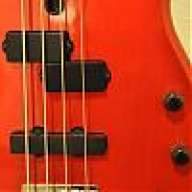
(I actually had a classmate back in college who had a Rickenbacker 4001 that he had installed Fender Jazz pickups and a Badass bridge on...and he kept insisting he now owned a Jazz Bass!
Fail.)
Above and beyond any characteristics, a "Jazz Bass®" is a Fender. That and only that is "What makes a bass a jazz bass". Everything else is a copy, an imitation built and sold on Leo's coattails. It’s a little sad that so many copycats have knocked off his design for profit, rather than come up with their own ideas, but it’s legal.
I think it’s disingenuous (to be polite) when people refer to their cheap imitations as "my Jazz Bass®", or even "my Jazz". To them I say step up to the plate and get the real deal, or refer to it as "my SX SJB62QMD 3TS" instead of inferring that you have something you don't.
At least the players with the expensive Jazz Bass® copies usually refer to them as such.
 I'll call it my tallywacker if I want to.
I'm surprised no-ones mentioned the humbucking between 2 coils very far apart, I'd imagine that's got alot to do with it's distinctive tone regardless of what electronics may be used.

it is a bass that may look like a jazz bass, and that may sound somehow similar to a jazz bass.
the question is "what makes a bass a jazz bass"
If one of those above isn't fullfilled, it ain't a jazz bass

So the Deluxe models should be renamed the Fender "similar to a jazz bass"?

So all this time, Marcus Miller hasn't been playing a jazz bass? Somebody let him know, he'll probably feel pretty stupid.
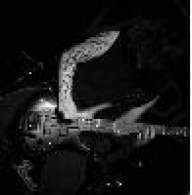
I wouldn't call that ugly looking, bad sounding bass a Jazz Bass, but i think he already knows it
To the OP: is it your intention for people to give you their personal definitions on what a jazz bass is or would you prefer the actual definition of what a jazz bass is?


A lot of people think [Marcus Miller's bass is] a great looking, great sounding JAZZ bass.

It's a very hard question.
I think the main thing would be the offset waist body. For me, a Jazz can be either active or passive, bolt-on or neck-through (and set in of course), 34" or 35", 4 or 5-string, Fender or non-Fender, single coils or humbuckers, but as long as it has that offset waist body, it's a Jazz for me.
For example, (snip) this isn't:
.