Jim Carr
Dr. Jim
- Jan 21, 2006
- 16,223
- 7,614
- 76
- Disclosures
- fEARful Kool-Aid dispensing liberal academic card-carrying union member Musicians Local 72-147
...fingering technique of upright bass, proper technique (classical/jazz), is completely different from how you play an electric bass guitar.
Good technique, and proper scale length for the player, allows us to comfortably play in first position without any issues, with ONE FINGER PER FRET, without having to move our hands - we should be able to have each finger in the correct fret position comfortably at the same time...
...Upright technique is designed to let you play effectively, despite the fact that you cannot play with one finger per semitone (fret distance) on such a long scale length...I am never as comfortable on 35" as I am on 34"...
There are different schools of fingering on double bass (including 1-3-4 and even 1-2-3-4 for semitones in low positions on D and G strings), just as there are on bass guitar. I don't consider 1 finger per fret to be the "proper technique" if neck position and scale length make it impractical or impossible. We all have different hands and instruments.
I often mix Simandl fingering (fingers 1-2-4 as semi-tones in lower positions on DB) into my electric playing when on 35" scale in the lower positions. I also use a lot of Simandl fingering on my fretless 34" scale 5-string.
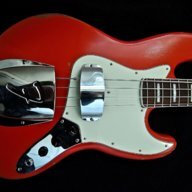
Yes, my 10 year-old DB students used 1-2-4 fingering ala Simandl, but they also used that on my Fender Jazz, which I had them play ampless while waiting for their lesson time. Scale length can require a technique or it might simply allow it.
For those who find a small change like going from 34" to 30" to be a shock, consider going from 42" to 34", which a number of my students did when switching from DB to electric bass. They often would ask to try the smaller double basses (smallest was 36" IIRC), and then want to try the same things on a 42" scale bass (my ancient Tiroler). For some, the size of the body and the sheer height of the instrument was more of an issue than the scale length or string spacing.
I'd suggest anyone adapting to a longer scale try sprinkling in some Simandl + shifts. I also do something I call micro-shifts on longer scale electric basses—simply a leaning of the hand. Having a hand position that keeps the palm of the hand off the back of the neck much of the time can help.