

Enjoy the benefits of a premium membership!
Upgrade Account
-
TalkBass has been independent since 1998. Add your voice.
Create a free account to reply to discussions, view embedded media, and browse with fewer display ads.
Join free Log in
Want zero display ads or expanded classifieds tools? Compare plans.
You are using an out of date browser. It may not display this or other websites correctly.
You should upgrade or use an alternative browser.
You should upgrade or use an alternative browser.
What makes a Bassist Adaptable to different Basses?
- Thread starter Dr. Cheese
- Start date
More options
Who Replied?Takes a while to learn how to play a 5 string or a 6 to any player.
After that IMO its physical limitations.
I cant play a D or U shaped neck if its wider than a 4 string jazz,wide neck with a belly and im in pain after 30 minutes.
I Can play 1.75 nut if its a C shaped neck no problem.
I dont mind any scale length or string spacing or fanned frets,doest bother me,just need a minute to adjust.
After that IMO its physical limitations.
I cant play a D or U shaped neck if its wider than a 4 string jazz,wide neck with a belly and im in pain after 30 minutes.
I Can play 1.75 nut if its a C shaped neck no problem.
I dont mind any scale length or string spacing or fanned frets,doest bother me,just need a minute to adjust.

I play church gigs where, pretty much ever weekend it's a new tine or two, or new arrangements, or different keys - though the sets aren't long (4 or 5 pieces of music), there can be a lot to learn and adapt to - just in the music. I memorize everything, looking to get to a state where I don't have to look at my fretboard but once in a while - starting a tune, etc. So, it's about muscle memory for me.
I had a medium scale bass for a while. I have huge hands, and the thing (with a J width neck and a couple inches shorter) felt like a toy in my hands. Sure, I could play it, but to do it as well as I need to, I would decide the week before that I was playing that bass, and practice the whole week, so I could get used to it. Eventually, I decided it wasn't an exceptional bass in any way except the necessary accommodations, so I donated it.
I used to keep a 4 string bass tuned in D standard, which I used for weekends where I needed to play lower notes. That worked, but....as I have pretty close to perfect pitch, the muscle memory fought my ability to play automatically - D is HERE, not THERE! Again, I'd pick that bass as necessary a weekend in advance, and practice with it the whole week, so I'd be automatic by the time I needed to be.
Eventually, I decided maybe it'd be easier when I needed lower tuning to play a 5. So, I built one, knowing full well that there would be a learning curve. I've played it a few times on gigs so far, and it's fine, but I am not yet as "automatic" on it as I am on a 4 - a few months vs decades, yeah, I'm more familiar with a 4. It is easier to me than playing the bass tuned in D standard, because I know where at least most of the notes are. But there were a few moments when I started practicing on it where I got lost on the fretboard - I had to play it a fair amount before I gigged on it, to avoid that happening on the gig.
I also play fretless. Somehow, that's not at all difficult for me.
I had a medium scale bass for a while. I have huge hands, and the thing (with a J width neck and a couple inches shorter) felt like a toy in my hands. Sure, I could play it, but to do it as well as I need to, I would decide the week before that I was playing that bass, and practice the whole week, so I could get used to it. Eventually, I decided it wasn't an exceptional bass in any way except the necessary accommodations, so I donated it.
I used to keep a 4 string bass tuned in D standard, which I used for weekends where I needed to play lower notes. That worked, but....as I have pretty close to perfect pitch, the muscle memory fought my ability to play automatically - D is HERE, not THERE! Again, I'd pick that bass as necessary a weekend in advance, and practice with it the whole week, so I'd be automatic by the time I needed to be.
Eventually, I decided maybe it'd be easier when I needed lower tuning to play a 5. So, I built one, knowing full well that there would be a learning curve. I've played it a few times on gigs so far, and it's fine, but I am not yet as "automatic" on it as I am on a 4 - a few months vs decades, yeah, I'm more familiar with a 4. It is easier to me than playing the bass tuned in D standard, because I know where at least most of the notes are. But there were a few moments when I started practicing on it where I got lost on the fretboard - I had to play it a fair amount before I gigged on it, to avoid that happening on the gig.
I also play fretless. Somehow, that's not at all difficult for me.


Exceptional photographic memory. Very useful in a musical life and elsewhere, even for bass players. Wish I had one.

You asked two direct questions - one in the title, and the other in the body of the message. I will answer each in turn.
And yes, I do see the disconnect between my sig and my words. But hey, I'm only human right?
Quite adaptable, imo. For the most part, anyway. In general, I'll play anything that is put in front of me regardless of how many strings it has, what it's made of, what type of pickups are installed - or even if it's a different instrument altogether. The joy is found in the DOING of the thing for me, not in thinking about it or in being perfect at it. Of course I have my specific preferences but they're not requisite demands.How adaptable are you when it comes to different basses?
I really think it's a state of being. If one wants to just play music all the time, then one is less likely to find a reason not to do so. Dig? So, basically the principle of "Play," which all children are born with, has to remain alive and thriving in the adult who wishes to remain adaptable. Curiosity, and delighting in something new and different are the key elements - after all, why do we still call it "playing" if these things are no longer a part of the experience?What makes a Bassist Adaptable to different Basses?
And yes, I do see the disconnect between my sig and my words. But hey, I'm only human right?
I play a lot of other stringed instruments, guitar, mandolin, banjo, lapsteel so adjusting to different basses feels easy.
Since I play a 4 string with the thumb anchored on the E (and floating or using the pickup when I play the E) I keep the same position on a five string, moving my anchor-thump upward when I need to play the E or the B. If I close my eyes when I play it makes almost no difference.
Since I play a 4 string with the thumb anchored on the E (and floating or using the pickup when I play the E) I keep the same position on a five string, moving my anchor-thump upward when I need to play the E or the B. If I close my eyes when I play it makes almost no difference.

drumvsbass
Commercial User
- Aug 20, 2011
- 1,985
- 4,325
- Disclosures
- I work for Long and McQuade Musical Instruments Canada in Sales.

I think that the more you play and get to know your instrument in such an intimate manner, the more you have a hard time adjusting to another bass. But also the more easily you can understand what are the differences.
But be careful, what might sound to you like you are adapting easily. May in fact be a lack of how well you can hear the subtle difference. You might actually not sound that amazing to that player who is a monster like Stanley Clarke. He might be able to hear stuff that would tell him that you are not on your instrument...
But be careful, what might sound to you like you are adapting easily. May in fact be a lack of how well you can hear the subtle difference. You might actually not sound that amazing to that player who is a monster like Stanley Clarke. He might be able to hear stuff that would tell him that you are not on your instrument...
I've found that I'm much more susceptible to setup than I am to the specific features of a bass. Give me any scale length, any string spacing, and string gauges, flats, rounds, whatever, and I'll be fine as long as the setup is good. Give me a P-bass with a mediocre setup and I'll play poorly.

being a human by nature makes us adaptable.... 10 fingers really helps too (or 9, or less, you get my idea) I think you should be able to adapt to any bass, I think preference is what hangs people up
For the past couple of years, my only Bass was a Warwick Corvette fretless. I recently picked up a P-bass, fretted of course, and it took me about a week to get use to having frets again. Obviously, between the two basses, the radius and neck dimensions are night and day, but still, I think Jaco Pastorious refered to frets as speed bumps, and that's exactly what it felt like. When I first tried to play bass lines I've know for decades, oh man! My self-esteem took a wicked dump after hearing all those awful noises I was making. After spending some time with it, I eventually achieved redemption.
Anyway, at the height of my gear collection/hoarding, I never had a problem going to a 35" scale five, then grabbing a Jazz for the next song, they all felt familiar as long as I played them from time to time. Just like I have no problem going from driving my Jeep one day, and my Mustang the next.
Anyway, at the height of my gear collection/hoarding, I never had a problem going to a 35" scale five, then grabbing a Jazz for the next song, they all felt familiar as long as I played them from time to time. Just like I have no problem going from driving my Jeep one day, and my Mustang the next.

Being a doubler, I'm sure, has made me comfortable with most scale lengths / string spacings. Still, 6-string EBG is awkward for me to mute correctly.

devnulljp
Supporting Member
I've never known the nut width, neck profile, string spacing, fingerboard radiu or any of that stuff on any bass I've ever played and always got on just fine. I swap happily between a bunch of electric basses (4s and s and even a 6 for a while) and a couple of uprights. Whatever gets the job done.

What makes a person be able to play other basses is not being rigid. I've played a lot of different basses over the years. If you don't get stuck in a rut, you don't have trouble adjusting to new things.
Same goes with listening habits.
Same goes with listening habits.
My opinion won't be popular, but I believe the reason is that most bassists have very poor technique compared to players of other stringed instruments, so the differences tend to be more noticeable. This is further compounded by the fact that bass guitar is one of the least ergonomic instruments there is.

Ric5
Inactive
- Jan 29, 2008
- 29,772
- 30,452
- Disclosures
- I like 5, 8, 10, and 12 string basses
I was a hard core 4 string only, passive only, vintage gear only guy until 2001 ...
Now when I play 4 string basses I feel like it is missing a string
Now when I play 4 string basses I feel like it is missing a string
I think it was talked about in this thread, but I just wanted to point out my thoughts about the imho strange correlation some folks put in this thread between scale length of upright versus electric basses.
The fingering technique of upright bass, proper technique (classical/jazz), is completely different from how you play an electric bass guitar.
Good technique, and proper scale length for the player, allows us to comfortably play in first position without any issues, with ONE FINGER PER FRET, without having to move our hands - we should be able to have each finger in the correct fret position comfortably at the same time. Not saying we have to play like that, LoL, but you should be able to do so without pain or much strain, whether or not you actually have the technique and muscle in your hands to have your fingers press the strings usefully like that isn't important for this point.
You do not play that way on upright bass. Upright technique is designed to let you play effectively despite the fact that you cannot play with one finger per semitone (fret distance) on such a long scale length.
The Cello is played with one finger per semitone, like a bass guitar (again I'm emphasizing guitar just to differentiate - don't spam me about calling it that LoL). Classical bass, upright bass, is not played like that.
Short scale basses do have purpose for smaller hands and shorter arms. And shorter scale instruments allow us to play much faster and play much larger intervals and more impressive leaps without as much physical movement. Hence why the violin has the most showy, widest range music composed for it, of all the string instruments.
I am never as comfortable on 35" as I am on 34"... it makes a different. I don't mean because of getting used to it - which I'm doing now - I mean because it actually physically is very difficult for my hands, not particularly big, to play all the notes of first position without little flexes and adjustments for lower and higher frets.
The fingering technique of upright bass, proper technique (classical/jazz), is completely different from how you play an electric bass guitar.
Good technique, and proper scale length for the player, allows us to comfortably play in first position without any issues, with ONE FINGER PER FRET, without having to move our hands - we should be able to have each finger in the correct fret position comfortably at the same time. Not saying we have to play like that, LoL, but you should be able to do so without pain or much strain, whether or not you actually have the technique and muscle in your hands to have your fingers press the strings usefully like that isn't important for this point.
You do not play that way on upright bass. Upright technique is designed to let you play effectively despite the fact that you cannot play with one finger per semitone (fret distance) on such a long scale length.
The Cello is played with one finger per semitone, like a bass guitar (again I'm emphasizing guitar just to differentiate - don't spam me about calling it that LoL). Classical bass, upright bass, is not played like that.
Short scale basses do have purpose for smaller hands and shorter arms. And shorter scale instruments allow us to play much faster and play much larger intervals and more impressive leaps without as much physical movement. Hence why the violin has the most showy, widest range music composed for it, of all the string instruments.
I am never as comfortable on 35" as I am on 34"... it makes a different. I don't mean because of getting used to it - which I'm doing now - I mean because it actually physically is very difficult for my hands, not particularly big, to play all the notes of first position without little flexes and adjustments for lower and higher frets.

I listen to people talk about not being able to adjust to fives or narrower string spacing. Some really can't take 35" scale. Some hate short scale basses.
I love fours or fives, I can play sixes, but I feel the C string gets in my way more than I actually use it. 32",34",35" scales are fine for me. I like short scales, but I would not want one as a main player. 19mm at the bridge is my favorite spacing, but I can do 17mm spacing if a bass has a pretty fat neck.
My guess is that I am pretty versatile because my chops are quite modest. I remember Stanley Clarke saying how he got lost when he tried to cut loose on a five. I will never have that problem.
How adaptable are you when it comes to different basses?
I think I'm like you in the sense that I don't have enough chops to have an issue transitioning from one bass to the next. I can say that I'm a smaller guy and thinner necks tend to be more comfy on the 3 hour sets, but I think with enough practice, I can adapt easily enough. It's nice and easy being a pocket, groove bassist.
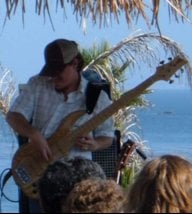
I have my preferences of basses and feels, but I can bounce around and play like myself comfortably on anything from 4-6 strings, or size-wise from a U-bass to an acoustic upright. Probably from practice.


