

Enjoy the benefits of a premium membership!
Upgrade Account
-
TalkBass has been independent since 1998. Add your voice.
Create a free account to reply to discussions, view embedded media, and browse with fewer display ads.
Join free Log in
Want zero display ads or expanded classifieds tools? Compare plans.
You are using an out of date browser. It may not display this or other websites correctly.
You should upgrade or use an alternative browser.
You should upgrade or use an alternative browser.
What matters?
- Thread starter Brother V
- Start date
More options
Who Replied?

Wood minor? yes, you see $300 & $3000 made out of the same wood., the wood is minor, ,,the pick ups are psychological,,, the strings impact playing,, better made instruments tune more accurately and stay in tune. I wanted deep and defined tone with warm, mellow attack (funk, reggae, blues,,,,But it seems what matters most is what I do with my fingers? (That's what she said).
Pickups? a little difference
Strings? some difference (see next comment)
Fingers? probably more than anything. Poor playing style can make good strings sound bad.
Warm mellow attack? warm & mellow, play between the pickup & neck. Active EQ bass can help, add a little highs to give you the punch or attack you need.
type of bass? jazz style? lacks big sound and attack or punch, you have to make up for it by playing harder. P style bass? warm & mellow but lacking attack or punch, again, playing harder to make up for it.
or finally get some big pedal and it will give you any sound you want.
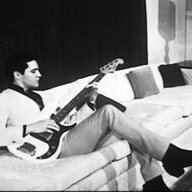
The best bass is the one (or ones) YOU love to play, and that can get the best out of you as a player.

the wood is minor
the pick ups are psychological,
the strings impact playing preference more than sound
and the size of the speaker does not correlate to sound frequency.
Wood pickups, strings, and speakers all matter
But the way they matter is not a simple correlation between superficial qualities and sound
It's not "wood A is superior to Wood B"
wood can vary as much within a species as accross:
the individual piece of wood matters
and skill of the craftsman in picking that wood out
It's not "humbuckers beat single coils"
It depends on the craftsmanship of the individual pickup
It's not "flats are better than rounds",
it's craftsmanship of the strings
It's not "15's have more bass"
It's the design and craftsman ship of the amp & cab.
But it seems what matters most is what I do with my fingers?
Any choice of gear might overwhelm the contribution of your hands
But you can arrange things to maximize the responsiveness of gear

Just like drums - lots of practice. Give yourself the task of learning a new song each week. Challenge yourself with techniques and styles you're not familiar with.But it seems what matters most is what I do with my fingers?.
Sounds like you've got some pretty decent gear for a new player.
Disregard (most) opinions here on TB. There are some knowledgeable people here for sure, but also a lot of fanboys and pretenders who will encourage you to spend money on things you don't need.
What really matters most is that your instrument is properly set up. It will make it inspiring & enjoyable to play.I am a new bass player, lifelong drummer. I've been playing electric bass about 6 months and following TalkBass throughout. I am trying to figure out what matters most in a bass. From what I've gathered, the wood is minor, the pick ups are psychological, the strings impact playing preference more than sound and the size of the speaker does not correlate to sound frequency. I got mid range basses to begin with (import Lakland, Maruszczyk, vintage Czech Spector) and never really played the economy models. I have found with other instruments, better made instruments tune more accurately and stay in tune. I wanted deep and defined tone with warm, mellow attack (funk, reggae, blues). I was gonna change my bass, then my pick ups and then I thought maybe thicker flatwound strings. But it seems what matters most is what I do with my fingers? (That's what she said).
Woods do not matter IMO - it’s mostly marketing BS.

You're welcome, and Thanks.

So does a short handled shotgun pistol; at least according John Lee and Freddie.Bass go boom boom boom.

Biggest thing for me is ergonomics.
Is the bass physically comfortable for me to play? When I strap it on, is first position an easy reach? Does it balance nicely? Does it press uncomfortably against my body? Do I feel like I'm fighting the instrument when I play it, or does it allow me to transfer what's in my head into music? Is it light enough that I can gig with it for an hour or two but still heavy enough that it doesn't neck dive or feel like a cheap toy?
That's one of the biggest reasons I don't like to buy basses I can't physically try out. After all, sometimes a bass that has all the "right" specs on paper just doesn't feel "right" in your hands, whereas a bass that isn't what you go for on the spec sheet may be your joy to play.
So, yeah, ergonomics, playability, and physical comfort over all else for me.
And never underestimate strings. Sometimes a new/different set of strings can really wake a bass up and make your fingers go "ooh, dat niiice!" I often see people talking about changing their pickups, preamps, etc. yet sometimes all that's needed is a different set of strings to get "the" sound. Save yourself money and hassle. Strings are the easiest and cheapest "mod" that has the most dramatic effects. I'm a "gotta try 'em all" string-pokemon GASer.
Is the bass physically comfortable for me to play? When I strap it on, is first position an easy reach? Does it balance nicely? Does it press uncomfortably against my body? Do I feel like I'm fighting the instrument when I play it, or does it allow me to transfer what's in my head into music? Is it light enough that I can gig with it for an hour or two but still heavy enough that it doesn't neck dive or feel like a cheap toy?
That's one of the biggest reasons I don't like to buy basses I can't physically try out. After all, sometimes a bass that has all the "right" specs on paper just doesn't feel "right" in your hands, whereas a bass that isn't what you go for on the spec sheet may be your joy to play.
So, yeah, ergonomics, playability, and physical comfort over all else for me.
And never underestimate strings. Sometimes a new/different set of strings can really wake a bass up and make your fingers go "ooh, dat niiice!" I often see people talking about changing their pickups, preamps, etc. yet sometimes all that's needed is a different set of strings to get "the" sound. Save yourself money and hassle. Strings are the easiest and cheapest "mod" that has the most dramatic effects. I'm a "gotta try 'em all" string-pokemon GASer.
Last edited:

Lol]the pick ups are psychological, the strings impact playing preference more than sound(That's what she said).

my two cents:I am a new bass player, lifelong drummer. I've been playing electric bass about 6 months and following TalkBass throughout. I am trying to figure out what matters most in a bass. From what I've gathered, the wood is minor, the pick ups are psychological, the strings impact playing preference more than sound and the size of the speaker does not correlate to sound frequency. I got mid range basses to begin with (import Lakland, Maruszczyk, vintage Czech Spector) and never really played the economy models. I have found with other instruments, better made instruments tune more accurately and stay in tune. I wanted deep and defined tone with warm, mellow attack (funk, reggae, blues). I was gonna change my bass, then my pick ups and then I thought maybe thicker flatwound strings. But it seems what matters most is what I do with my fingers? (That's what she said).
Ability to be tuned and stay in tune
a bass has to be intonatable.
And has to hold tune. So avoid or replace crappy tuning gears. Some necks can shift constantly, putting it out of tune as well. So beware of that.
Nice feel and ergonomics for your body
Does it hang well on a strap? Does it neck-dive?
Is it heavy enough that it would be uncomfortable?
Does anything about it feel uncomfortable?
Playability
Does it fight you? Or facilitate you?
Does it inspire you?
This can be a combination of many things including looks. But an instrument should make you want to pick it up when you set your gaze upon it.

How does it sound?
This can be changed quite a bit with modifications, but the tone should inspire you and fit the music you want to play.
Tort


Given that strings are usually cheaper than basses (there are exceptions  ) head on down the string swapping rabbit hole. You may stumble upon the perfect marriage after having a number of "learning experiences". Some of my basses don't seem to give a
  what strings I use, others make it crystal clear when the relationship isn't working. Seems like what you've got is pretty solid stuff. One of my go-to basses is a Mensinger so I know a bit about them and those others are well regarded, too. However, no bass will improve your knowledge base or essential skill set (if you can't do a one-drop in a reggae tune or swing uneven 8th notes a new bass won't fix it). It's your money and your time but my painfully extensive experience has been practice trumps gear. I've never lost a gig because I didn't bring the right material "stuff", just not the right chops "stuff".
BBB
) head on down the string swapping rabbit hole. You may stumble upon the perfect marriage after having a number of "learning experiences". Some of my basses don't seem to give a what strings I use, others make it crystal clear when the relationship isn't working. Seems like what you've got is pretty solid stuff. One of my go-to basses is a Mensinger so I know a bit about them and those others are well regarded, too. However, no bass will improve your knowledge base or essential skill set (if you can't do a one-drop in a reggae tune or swing uneven 8th notes a new bass won't fix it). It's your money and your time but my painfully extensive experience has been practice trumps gear. I've never lost a gig because I didn't bring the right material "stuff", just not the right chops "stuff".BBB

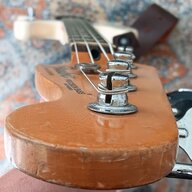
I think of it as analogous to a house. What matters? The foundation? The framing? The roof? The walls? Etc., etc. The answer is, all the components matter--some more than others. In a bass, I think the following components are most important:
1. The bass is well built (which pretty much any bass over $1,000.00 will be, and many under $1,000.00 are too).
2. The pickups & electronics. Here I mean more in terms of which pickup design provides the sound you're after: Single coil? Humbucker? P-style split? J-style? MM style? Soapbar? And where are they positioned on the body of the bass (for example, for me a J-style pickup positioned right next to the bridge is completely useless, because that's not the sound I want). Likewise with the onboard electronics: Passive? Active?
3. Strings. Your choice of strings can make a big difference in your sound (for example, going from round wounds to flat wounds or vice/versa). Going from brand to brand can make a more subtle difference.
4. Ergonomics. A bass might be well built and sound great, but if it's uncomfortable to play (due to bad ergonomic design, excessive weight, neck dive, etc.) then it will have an adverse effect on your playing. This is one reason why FSO's are perennially popular (albeit, not for everyone).
5. Tone shaping. In other words, the type of amp/preamp/eq you use and how it is configured.
6. Your playing style. Are you aggressive or do you have a light touch? Do you prefer a pick or fingers? Do you pluck (or pick) over the pickup, or back at the bridge, or up over the neck?
In your situation, where you're seeking "warm, mellow attack" I think you're on the right track by starting with trying different strings. La Bella Low Tension flats or, if you want to spend more, Thomastik-Infeld Jazz flat wounds. I would favor a pickup closer to the neck. And try positioning your plucking hand closer to the neck and further from the bridge. Try rolling off the tone on your bass and setting your amp tone controls flat and then adding/subtracting as needed to get what you're looking for. My $0.02, YMMV, etc.
1. The bass is well built (which pretty much any bass over $1,000.00 will be, and many under $1,000.00 are too).
2. The pickups & electronics. Here I mean more in terms of which pickup design provides the sound you're after: Single coil? Humbucker? P-style split? J-style? MM style? Soapbar? And where are they positioned on the body of the bass (for example, for me a J-style pickup positioned right next to the bridge is completely useless, because that's not the sound I want). Likewise with the onboard electronics: Passive? Active?
3. Strings. Your choice of strings can make a big difference in your sound (for example, going from round wounds to flat wounds or vice/versa). Going from brand to brand can make a more subtle difference.
4. Ergonomics. A bass might be well built and sound great, but if it's uncomfortable to play (due to bad ergonomic design, excessive weight, neck dive, etc.) then it will have an adverse effect on your playing. This is one reason why FSO's are perennially popular (albeit, not for everyone).
5. Tone shaping. In other words, the type of amp/preamp/eq you use and how it is configured.
6. Your playing style. Are you aggressive or do you have a light touch? Do you prefer a pick or fingers? Do you pluck (or pick) over the pickup, or back at the bridge, or up over the neck?
In your situation, where you're seeking "warm, mellow attack" I think you're on the right track by starting with trying different strings. La Bella Low Tension flats or, if you want to spend more, Thomastik-Infeld Jazz flat wounds. I would favor a pickup closer to the neck. And try positioning your plucking hand closer to the neck and further from the bridge. Try rolling off the tone on your bass and setting your amp tone controls flat and then adding/subtracting as needed to get what you're looking for. My $0.02, YMMV, etc.
I'd second that. If the body wood does make a difference, it's such a small impact on the overall tone that it's nuance will be lost in a mix anyway
This is so far from correct. The pickups make the most impact on how a bass sounds, hands down.
No, you'll hear a difference between varying strings. Nickel and Steel sound different and overall construction makes an impact as well
True... sort of. Don't open that can of worms.
There's nothing wrong with economy instruments. I have a ~$2000 EBMM and a $50 Jay Turser P Bass that both feel pretty similar. The Turser is no slouch. The only thing I'll say about economy basses is that you need to play them before buying them because there's a bigger chance of getting a dud off the line.
Flats are lame, don't go down that road. If you want deep tone, you're going to need an amp that can move some serious air, there's no way around that. Any bass can sound monstrous through a monstrous amp or an FOH set up with subs and a ton of head room.
^^^^^^^^
This is dead on. I will add that there can be a big difference between pickups, but generally the biggest difference lies between cheap pickups and electronics and top of the line pickups/electronics.

You said it, most important are the fingers.
Then, it's a bass that will feel good to you, and then strings
Then, it's a bass that will feel good to you, and then strings
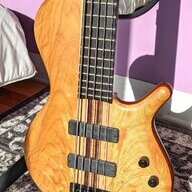
What Killing Floor said. Make whatever and however you play, your own! Too many people try to sound like someone else they think are a bass God. You were (are) a drummer. Do what "you" think is good and go with it. A bass, any bass, any dollar amount, has to feel good, play well, ( after a proper setup) is all that matters. Don't get caught up in it "has to be" a certain brand to make you good. Every brand has it duds!
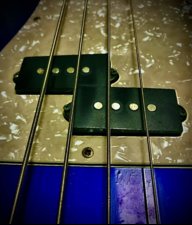
Can it be set up properly? Does it stay in tune? Do the electronics work?
I can write up my list of what matters and doesn’t, but ultimately it’s just my list. I believe it’s highly subjective and part of the journey to discover for yourself.
so unless you have a strong desire to try bass type X, Y or Z; or have a defined problem or complaint with the current basses- stick with them for another 6-18 months. Work on technique and go try out more basses then.
I can write up my list of what matters and doesn’t, but ultimately it’s just my list. I believe it’s highly subjective and part of the journey to discover for yourself.
so unless you have a strong desire to try bass type X, Y or Z; or have a defined problem or complaint with the current basses- stick with them for another 6-18 months. Work on technique and go try out more basses then.

Here is my take and subjective rating on its' impact on tone.
Wood) 1/10
The type of wood (and quality of wood for that matter) that the instrument (body, neck, fret board, etc) is made of does indeed make a difference. However, that difference is pretty dang small and can almost always be "undone" or "made up" with even just the most basic EQ so they sound essentially identical - especially in a mix. Check out this clip of an A/B between a Mahogony and an Ash guitar. I bet you can't tell a lick of difference in the mix. Heck, check out this video of a dude that strapped some strings to 2 benches with a pickup in the middle and compared it to a tele. Sounds pretty dang close to me.
Pickups) 5/10
The pickups are what turns the vibration of your strings into an electrical signal, so it's always going to be in your signal affecting/defining your tone. Probably the biggest overarching 'rule' (there are always exceptions to rules) is that single coils will be more 'direct' and 'focused' (think spank-y sound from a strat) where humbuckers will often sound 'fuller' and 'warmer' (think Les Paul). Here's an example of a guy swapping Bartolini BH2's (humbuckers) with Nordstrand Big Singles. Beyond that, there are so many different nuances between the same type of pickup that it's mind boggling. Here's an example of just a P bass using different pickups. The difference is subtle, but it always sounds like a P-bass because that's what those pickups are designed to sound like. Similarly, here's a guy that swapped Aguilar and Bartolini pickups in the same bass. The different is noticeable, but subtle because the pickups are designed to sound very similar, but they really don't sound much like a P-bass.
Preamp) 4/10
The preamp (especially on an active bass) can have an equal impact on the tone of a bass and can greatly impact the clarity, tone, and versatility of a bass. A preamp gives you a couple tone controls and pickup selection options for your first like of tone shaping electronics. A good preamp will provide a very clear signal to your amp, but a poor preamp can just create all kinds of mush. Here's an example of a guy switching the preamp from a stock Bartolini MK1 (fairly decent preamp IMO) to an Aguilar OBP-3 (definite step up in terms of clarity to my ears).
Strings) 5/10
This is another can of worms because you have so many different types of strings. They can generally be narrowed down to 'flats' and 'round wound' strings. Flats will usually be more 'vintage' sounding where rounds are generally more 'bright'. Nate Navarro does an excellent job comparing them here. Beyond that, you've got so many different flavors of rounds or flats. Fluff does a great shootout comparing several different types of strings on the same bass including nickel, stainless, cobalt, coated, etc. You've also got the string gauge debate where thicker strings sound, and play, different than thin strings. This clip shows the tonal differences between a couple different gauges of the same string. Just remember to change them strings every once in a while if you're doing anything remotely modern!
Guitar Setup) 3/10
One of those things that doesn't really help you "sound better", but it can absolutely make things sound like crap if you don't have a good setup. Things like intonation, string height to the pickups, action, etc, can all make an otherwise good sounding rig sound bad. Note that not everyone always prefers the same setup too when it comes to things like action.
Speaker Size (I'm going to translate this to 'bass cabinet') ) 8/10*
It's not really the same "15 inch sounds deeper and have less punch than 10's" rule that it once was. Generally, larger speaker cones have more mass, which lowers their 'natural frequency' (I.E. if you thump it, how quickly does it bounce back and forth on its' own before coming to a stop). Speakers with a lower natural frequency are often able to play lower in a controlled manner. The second part of the reputation is that 15" speakers aren't able to react to fast midrange punch as well as 10". That's also due to the mass of the cone. More mass means it has more momentum to control and just won't be able to start and stop as quickly as something with less mass to control would. That said, speaker improvements have been made in the last few decades where there are plenty of 10" cabinets that can go every bit as deep as a 15" (an Ampeg SVT-410HLF was the 'deepest' cabinet I ever had) and there are plenty 15" cabinets that sound every bit as nuanced and detailed as a 10" cabinet (my Markbass 151HR is every bit as punchy and detailed as any 10" cabinet I've played through). Cabinet design also comes into play as well (ported, sealed, box volume, port tuning frequency, tweeter, crossover, etc). I've had several 10" and several 15" cabinets, but oddly, I have yet to hear a 12" that I really like. It's all just down to the particular cabinet. At the end of the day, if you're playing through a cabinet, it WILL have a very specific tone that will ALWAYS be in your sound and there's little to nothing you can do about it.
* However, if you're just using it for practice, and running an output directly to FOH, then your cabinet doesn't really matter at all from the audience perspective. Everything I've played for the past 10 years has had IEM's and FOH support, so I haven't even needed to take an actual amp to a gig for over decade now. I have them 'for giggles' and 'just in case', but they're currently just very expensive bedroom practice amps.
Player) 10/10
Technique. Technique. Technique. The player's technique is the absolute most important part in the equation. If you've got poor technique, you'll make a $10,000 Fedora or Warwick bass sound like crap. If you've got good technique, you can make a $1,000 bass sound just as good any high-end bass out there like Charles Berthoud does on his ~$1,000 Schecter Stiletto 6. I have nearly the same exact Schecter Stiletto bass, but Charles can make it sound WAY better than I can because his technique is mint and his talent is off the chart! You can do all kinds of things with good technique like smooth finger style, 'raspy' finger style, 'slappy' finger style, pop/slap, palm muting, picking, etc that all give different sounds/tones. Even the position of your plucking hand relative to the bridge makes a significant difference in the tone. A good musician can make a shovel sound good.
Wood) 1/10
The type of wood (and quality of wood for that matter) that the instrument (body, neck, fret board, etc) is made of does indeed make a difference. However, that difference is pretty dang small and can almost always be "undone" or "made up" with even just the most basic EQ so they sound essentially identical - especially in a mix. Check out this clip of an A/B between a Mahogony and an Ash guitar. I bet you can't tell a lick of difference in the mix. Heck, check out this video of a dude that strapped some strings to 2 benches with a pickup in the middle and compared it to a tele. Sounds pretty dang close to me.
Pickups) 5/10
The pickups are what turns the vibration of your strings into an electrical signal, so it's always going to be in your signal affecting/defining your tone. Probably the biggest overarching 'rule' (there are always exceptions to rules) is that single coils will be more 'direct' and 'focused' (think spank-y sound from a strat) where humbuckers will often sound 'fuller' and 'warmer' (think Les Paul). Here's an example of a guy swapping Bartolini BH2's (humbuckers) with Nordstrand Big Singles. Beyond that, there are so many different nuances between the same type of pickup that it's mind boggling. Here's an example of just a P bass using different pickups. The difference is subtle, but it always sounds like a P-bass because that's what those pickups are designed to sound like. Similarly, here's a guy that swapped Aguilar and Bartolini pickups in the same bass. The different is noticeable, but subtle because the pickups are designed to sound very similar, but they really don't sound much like a P-bass.
Preamp) 4/10
The preamp (especially on an active bass) can have an equal impact on the tone of a bass and can greatly impact the clarity, tone, and versatility of a bass. A preamp gives you a couple tone controls and pickup selection options for your first like of tone shaping electronics. A good preamp will provide a very clear signal to your amp, but a poor preamp can just create all kinds of mush. Here's an example of a guy switching the preamp from a stock Bartolini MK1 (fairly decent preamp IMO) to an Aguilar OBP-3 (definite step up in terms of clarity to my ears).
Strings) 5/10
This is another can of worms because you have so many different types of strings. They can generally be narrowed down to 'flats' and 'round wound' strings. Flats will usually be more 'vintage' sounding where rounds are generally more 'bright'. Nate Navarro does an excellent job comparing them here. Beyond that, you've got so many different flavors of rounds or flats. Fluff does a great shootout comparing several different types of strings on the same bass including nickel, stainless, cobalt, coated, etc. You've also got the string gauge debate where thicker strings sound, and play, different than thin strings. This clip shows the tonal differences between a couple different gauges of the same string. Just remember to change them strings every once in a while if you're doing anything remotely modern!
Guitar Setup) 3/10
One of those things that doesn't really help you "sound better", but it can absolutely make things sound like crap if you don't have a good setup. Things like intonation, string height to the pickups, action, etc, can all make an otherwise good sounding rig sound bad. Note that not everyone always prefers the same setup too when it comes to things like action.
Speaker Size (I'm going to translate this to 'bass cabinet') ) 8/10*
It's not really the same "15 inch sounds deeper and have less punch than 10's" rule that it once was. Generally, larger speaker cones have more mass, which lowers their 'natural frequency' (I.E. if you thump it, how quickly does it bounce back and forth on its' own before coming to a stop). Speakers with a lower natural frequency are often able to play lower in a controlled manner. The second part of the reputation is that 15" speakers aren't able to react to fast midrange punch as well as 10". That's also due to the mass of the cone. More mass means it has more momentum to control and just won't be able to start and stop as quickly as something with less mass to control would. That said, speaker improvements have been made in the last few decades where there are plenty of 10" cabinets that can go every bit as deep as a 15" (an Ampeg SVT-410HLF was the 'deepest' cabinet I ever had) and there are plenty 15" cabinets that sound every bit as nuanced and detailed as a 10" cabinet (my Markbass 151HR is every bit as punchy and detailed as any 10" cabinet I've played through). Cabinet design also comes into play as well (ported, sealed, box volume, port tuning frequency, tweeter, crossover, etc). I've had several 10" and several 15" cabinets, but oddly, I have yet to hear a 12" that I really like. It's all just down to the particular cabinet. At the end of the day, if you're playing through a cabinet, it WILL have a very specific tone that will ALWAYS be in your sound and there's little to nothing you can do about it.
* However, if you're just using it for practice, and running an output directly to FOH, then your cabinet doesn't really matter at all from the audience perspective. Everything I've played for the past 10 years has had IEM's and FOH support, so I haven't even needed to take an actual amp to a gig for over decade now. I have them 'for giggles' and 'just in case', but they're currently just very expensive bedroom practice amps.
Player) 10/10
Technique. Technique. Technique. The player's technique is the absolute most important part in the equation. If you've got poor technique, you'll make a $10,000 Fedora or Warwick bass sound like crap. If you've got good technique, you can make a $1,000 bass sound just as good any high-end bass out there like Charles Berthoud does on his ~$1,000 Schecter Stiletto 6. I have nearly the same exact Schecter Stiletto bass, but Charles can make it sound WAY better than I can because his technique is mint and his talent is off the chart! You can do all kinds of things with good technique like smooth finger style, 'raspy' finger style, 'slappy' finger style, pop/slap, palm muting, picking, etc that all give different sounds/tones. Even the position of your plucking hand relative to the bridge makes a significant difference in the tone. A good musician can make a shovel sound good.


