• TalkBass has been independent since 1998. Add your voice.
    Create a free account to reply to discussions, view embedded media, and browse with fewer display ads.
    Join freeLog in
    Want zero display ads or expanded classifieds tools? Compare plans.

What to play over specific guitar chords

You don't need to have any knowledge of modes to learn this. You just need to learn the major scale and how to construct chords from it.


I think that introducing new players to these concepts too soon can cause confusion (as we see over and over again in these threads).

Like you said we just have a different point of view about that. To me, learning to recognize these very typical chord progressions, able a player to play millions of songs instantly.

For me, learning this stuff early with practical examples is a good place to start if the student is already dealing with some harmonic content and harmonic functions. Just my way of seeing it and I don't need to think about it, it is just there, part of the knowledge.

Anyway, good point you had about the correction on the music notation above ;-)
 
.. ask the author.

Invalid Link Removed

The chords (including the G2) are written at the bottom. Paul Baloche is very good about releasing information on his songs.

Praise and Worship guitar is an odd beast - chords have some really odd names, but they're actually very easy to play, because a lot of people playing praise and worship aren't actually too good on the guitar.

His instructional videos are quite good also - Paul Baloche: "Today is the Day" electric guitar with Ben Gowell - YouTube
 
.. ask the author.

Invalid Link Removed

The chords (including the G2) are written at the bottom. Paul Baloche is very good about releasing information on his songs.

Praise and Worship guitar is an odd beast - chords have some really odd names, but they're actually very easy to play, because a lot of people playing praise and worship aren't actually too good on the guitar.

His instructional videos are quite good also - Paul Baloche: "Today is the Day" electric guitar with Ben Gowell - YouTube

Between this and what AQUANOVA said is correct. The rest of the thread is interesting, and useful, but for the OP's original question, simple is better.

P&W is not rocket science, especially the stuff written/performed by guitar players. They are intentionally accessible for a variety of skill levels.

I got my most recent start (after a 10-year hiatus) in P&W. I started by playing 8th's and quarters on the root. As I felt more comfortable on a tune, I started figuring out what sounded good between the chord changes.

On the CCLI chord charts, play the letter. That's the root. on CCLI charts, G2 almost always refers to a Gsus2. Gsus is almost always a Gsus4.

On a slash chord, play the letter after the slash. A really common line is E B/D# C#m B A. You play E D# C# B A.

Also, avoid trying to find "easier" charts on other sources for a song. All worship songs have multiple versions, and different people have transcribed the same songs differently. Use the version the Worship Leader has provided, otherwise, you can end up in situations where you are playing something totally different.

Good luck, and welcome to the Fold!
 
Between this and what AQUANOVA said is correct. The rest of the thread is interesting, and useful, but for the OP's original question, simple is better.

P&W is not rocket science, especially the stuff written/performed by guitar players. They are intentionally accessible for a variety of skill levels.

I got my most recent start (after a 10-year hiatus) in P&W. I started by playing 8th's and quarters on the root. As I felt more comfortable on a tune, I started figuring out what sounded good between the chord changes.

On the CCLI chord charts, play the letter. That's the root. on CCLI charts, G2 almost always refers to a Gsus2. Gsus is almost always a Gsus4.

On a slash chord, play the letter after the slash. A really common line is E B/D# C#m B A. You play E D# C# B A.

Also, avoid trying to find "easier" charts on other sources for a song. All worship songs have multiple versions, and different people have transcribed the same songs differently. Use the version the Worship Leader has provided, otherwise, you can end up in situations where you are playing something totally different.

Good luck, and welcome to the Fold!

This has been a very interesting read with some very good advice from everyone for the OP, particularly pg 1 replies by AquaNova and MalcolmAmos.
Page 1 is about as deep as the very newbie-ish OP needs to go IMO, for the purpose that he posted, although if he can handle the deeper theory, by all means read and understand.
I was inspired to go learn more theory from all the deeper theory posts that followed page one.
 
For me, learning this stuff early with practical examples is a good place to start if the student is already dealing with some harmonic content and harmonic functions. Just my way of seeing it and I don't need to think about it, it is just there, part of the knowledge.

Groove, I think that the issue that most guys have with some of your responses (in this and other threads), isn't that the information is wrong or is a bad way to look at things, it is because it doesn't answer the original question in a way that is useful for the OP within the context of their question.

Look at the original question, it is basically, "do I just play roots over the chord changes?" Can you use modes if you know how the chords function in the progression? Sure and it is very useful to know how to do this. Is that answer in any way helpful to a self-admitted noob asking if he should just play the root of each chord? Not even a little bit, even if he did know the modes well and knew how each chord functioned, it would be too much information to apply all at once.

Practical examples of playing over chord changes are absolutely the key (it is the primary thing we are asked to do) but only if you build up gradually starting from very simple concepts, like root, then root and 5, then chord tones, approach notes, modes, harmonic function, etc. You say you don't need to think about things when you play, that is the most important part. The way to get to that point is by practicing playing over changes at great length, starting with simple things and few note choices and then adding complexity with more note choices and advanced harmony.

Many people have given good advice with respect to the original question about using chord tones and interpreting some of the chord notations. To add to that I will suggest checking out Scott Devine's website and his lessons on Developing Bass Lines and Ed Friedland's book Building Walking Bass Lines. For Ed's book, practice all the songs at the end, mastering each simple concept before moving on rather than just going through the book and trying to apply everything at once, it doesn't work very well because it is too much information to think about while the chords race by.
 
I am fairly certain that in this case, they are intended to be slash chords, even though they are notated like polychords. For example, the A/C# is undoubtedly meant to indicate an inversion, and not an A Major chord over a C# Major chord.

Yes, you are right. I was not pointing to the chart and suggesting those were polychords, rather how it should be done. And that the way the chords are notated is confusing.

The polychord labeled chords are indeed slash chords. Sorry for not being clear.

My impression of the posted chart is that the arranger or copyist does NOT know what they are doing.
 
G2 just means Gsus2...I thought this was common knowledge.

It's not a good way to notate a chord because it is ambiguous as to whether it means Gsus2 or Gadd2 (or Gadd9). As it turns out, if you look at the guitar fingering diagrams contained in the PDF link contained in post #42, the guitar voicing shown for the G2 has both an A and a B, so this particular composer at least is using it to mean an "add" chord rather than a "sus" chord.
 
It's not a good way to notate a chord because it is ambiguous as to whether it means Gsus2 or Gadd2 (or Gadd9). As it turns out, if you look at the guitar fingering diagrams contained in the PDF link contained in post #42, the guitar voicing shown for the G2 has both an A and a B, so this particular composer at least is using it to mean an "add" chord rather than a "sus" chord.

I would be inclined to agree, but I just see it so often that I've long since accepted that as just the normal way to write a "sus2" chord. I can't remember ever encountering an "add2" chord, I'm pretty surprised that's what that wound up being.
 
Groove, I think that the issue that most guys have with some of your responses (in this and other threads), isn't that the information is wrong or is a bad way to look at things, it is because it doesn't answer the original question in a way that is useful for the OP within the context of their question.

Look at the original question, it is basically, "do I just play roots over the chord changes?" Can you use modes if you know how the chords function in the progression? Sure and it is very useful to know how to do this. Is that answer in any way helpful to a self-admitted noob asking if he should just play the root of each chord?

If you do study modes/scales or whatever people want to call it "here", it will give you the informations that is hidden most of the time. For example in the key of D from the OP, the A chord is not define as a dominant and some newbies might think that the Major scales can be used over the D, the G and the A. Which would of course introduce wrong notes like the C and G# as scale tones.

Anyway, I just think that there is only benefits from learning your modes/scales and arpeggios built from the major scales because they also function right from the bat in a piece of music.
It should be introduce in the lessons imo ( and this is what I do anyway in my classes) right after the major scale is taught.

Even if some people think it is wrong' I know from all my years as a pro that it is sooooo right to do so :bassist::bassist:

BTW just check my sig, it will give you a clue of what I'm talking about :D
 
I think it's even more important that people are taught how to implement scales and modes in their playing than it is to teach them the scale itself.

I know the major and natural minor scales. I've learned all of the modes, the harmonic minor and melodic minor (ascending and descending) scales. But it hasn't done me a lot of good, because I still haven't quite figured out how to implement them into my playing. It did help me realize the relationships between chords, keys, and scales, which is good, but I don't ever use them in a musical context because I've yet to find a way that works.
 
I think it's even more important that people are taught how to implement scales and modes in their playing than it is to teach them the scale itself.

I know the major and natural minor scales. I've learned all of the modes, the harmonic minor and melodic minor (ascending and descending) scales. But it hasn't done me a lot of good, because I still haven't quite figured out how to implement them into my playing. It did help me realize the relationships between chords, keys, and scales, which is good, but I don't ever use them in a musical context because I've yet to find a way that works.

Did someone teach you the harmonic functions of the modes from the major scale and the Harmonic minor scale? Everything is pretty much all there imo.
Then each mode of melodic minor scale is useful especially for us bass players because a lot of infos are hidden gems for us in our bass parts always imo.

I think there is just a lack of practical examples when these things are taught.

I will start a thread about how we can play modes and how to actually hear the difference and how to use them.
 
Yes. Knowing how to make them is one thing. Knowing how to use them is another.

I guess we need to know how to make them first. Then we need to work on how do we incorporate them into what we are doing. That depends a lot on the type of music you play.

I'm ole time country and ole time country is basically root five with chromatic runs to the next chord. Got that, and when ever I add something else I get fish eyes from the guys. So ----- knowing how to use all that stuff in what you play, there lies the hard part.

Some time it adds and some time it detracts.

:bassist:
 
Yes. Knowing how to make them is one thing. Knowing how to use them is another.

I guess we need to know how to make them first. Then we need to work on how do we incorporate them into what we are doing. That depends a lot on the type of music you play.

I'm ole time country and ole time country is basically root five with chromatic runs to the next chord. Got that, and when ever I add something else I get fish eyes from the guys. So ----- knowing how to use all that stuff in what you play, there lies the hard part.

Some time it adds and some time it detracts.

:bassist:
I think this is a misconception about modes. It just tell you what notes are the best to play. Like I don't mind the chromatic runs to connect chords but if you always use the same runs for all types of chords, this is where it is wrong. How many times did I hear bassists of all levels playing their same stock licks on different type of chords? A lot of time bassists don't make a difference between a minor chord vs a dominant chord. That is wrong, our responsability is to define the harmony from the the first place. Learning how to connect chords properly is a big part of how to create a good bassline especially for students and beginners and not so newbies after what I read here on TB ;-)
 
louise-max-pie-a-la-mode.jpg
 
I think this is a misconception about modes. It just tell you what notes are the best to play. Like I don't mind the chromatic runs to connect chords but if you always use the same runs for all types of chords, this is where it is wrong. How many times did I hear bassists of all levels playing their same stock licks on different type of chords? A lot of time bassists don't make a difference between a minor chord vs a dominant chord. That is wrong, our responsability is to define the harmony from the the first place. Learning how to connect chords properly is a big part of how to create a good bassline especially for students and beginners and not so newbies after what I read here on TB ;-)

Jamerson used chromatics around chord tones way more than he used modes and "in" notes to connect chords, it sounds great to me. He was a master of tension and release. It sounds quite a bit better than guys who follow the right mode at the right time all the time. He didn't get to that point by playing connect the dots with the "right" notes, he got to that point by experimenting for countless hours with what sounded good. His most simple lines were purely chord tones. His foundation was chord tones and he used "experience" to tell him how to connect them rather than "rules."

Look at pilots and how they learn to fly. Simple planes with simple controls for countless hours until they can do it automatically, then they graduate to more complex planes and systems. They don't study all the complex systems of jets at length and jump into one, they would crash due to information overload. Piloting jets is an extreme example because of the consequences of failure but the reason they progress in this manner of building fundamental skills until they are automatic before adding more complex ideas, is because it has proven to be the most effective and best method to learn a complex skill that requires using their body as the primary input and the ability to improvise to various situations that arise. Look at the best coaches in sports, they have been studied at length and proven to be the ones that focus the most on the basic fundamental skills required, the fancy concepts and best schemes mean nothing if the players can't perform the fundamental skills at a very high level.

Congrats on the success of your books, I've listened to a number of the examples and your method appears to be working very well for you and it may work well with your students but it doesn't make it the best way. I clearly misjudged why guys take issue with some of your posts, it is because you think yours is the only and best way to approach things and you insist on "proving" that by responding to every single post with why you and your method are superior to us all in every way. Good luck with that, I'm sure it will sell even more books and make more people listen to you. :D
 
Congrats on the success of your books, I've listened to a number of the examples and your method appears to be working very well for you and it may work well with your students but it doesn't make it the best way. I clearly misjudged why guys take issue with some of your posts, it is because you think yours is the only and best way to approach things and you insist on "proving" that by responding to every single post with why you and your method are superior to us all in every way. Good luck with that, I'm sure it will sell even more books and make more people listen to you. :D

Ditto.
 
I do get sad when I see charts with G2 on it.

There are two main types of "G with a 2 in it" chord, and saying G2 does not make it clear which is intended:

Gadd2 (G major with a 2 note added: G A B D). This chord is better written as "add9".
or
Gsus2 (a G chord that's been gutted. It isn't major or minor any more. It has G A D)

The lesson:
(1) never write a G2 chord
(2) when you're on bass and see a G2 chord, play a G.

Exactly what I thought when I saw G2. Gsus2 yes which given the tune is what I thought it would be since in the other instance I've only seen it written Gadd9. This creates a lot more confusion than it needs to.
 
Congrats on the success of your books, I've listened to a number of the examples and your method appears to be working very well for you and it may work well with your students but it doesn't make it the best way. I clearly misjudged why guys take issue with some of your posts, it is because you think yours is the only and best way to approach things and you insist on "proving" that by responding to every single post with why you and your method are superior to us all in every way. Good luck with that, I'm sure it will sell even more books and make more people listen to you. :D

How can you tell if you haven't experiment the whole thing?

This is a very premature statement of yours,

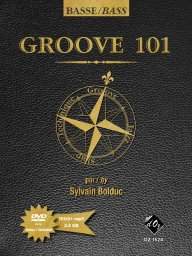
The concept is called groove 101 and even if there is little infos about harmonic stuff, it is not the subject of that book.
Look at the best coaches in sports, they have been studied at length and proven to be the ones that focus the most on the basic fundamental skills required, the fancy concepts and best schemes mean nothing if the players can't perform the fundamental skills at a very high level.
And yes modes are very fundamentals skills. Playing around all that fancy chord-tones approach with chromatic notes is the fancy stuff that will hit the wall if the players don't understand the basics which are the harmonic functions coming from chords that dictated the right scales/modes.

Anyway, who cares who's method's best, I know mine does work and my paychecks with union contracts for the past 30 years justify it. I don't get why people here are so stubbern about modes when pop music is based on it. I guess some people here think they will sound more intelligent if they deny the fundamentals of the principles of harmony in music. And by the mean time they actually don't understand what bass is, in music.

Take care :cool: