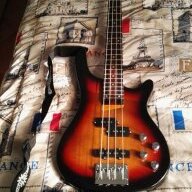
So, it's the first time I'm ever entering a recording studio, and I don't know what to take there. I've asked for advice and everyone just told me to bring my bass only and my part of money. Should I bring anything else? I was thinking about a notebook to write down tabs and corrections, so that I can remember what we have done and keep practicing at home.

Enjoy the benefits of a premium membership!
Upgrade Account
-
TalkBass has been independent since 1998. Add your voice.
Create a free account to reply to discussions, view embedded media, and browse with fewer display ads.
Join free Log in
Want zero display ads or expanded classifieds tools? Compare plans.
You are using an out of date browser. It may not display this or other websites correctly.
You should upgrade or use an alternative browser.
You should upgrade or use an alternative browser.
More options
Who Replied?It's a great idea to bring options. Bring any of your basses that you feel sound good, bring any DIs that you think are quality (the studio will certainly have some, but it's nice to have options) and bring you Amp in case the engineer would like to split your signal between DI and a mic'd cab. Be on top of the songs that you intend to record, and make sure your bass is in operational order. Also be prepared and willing to allow the producer/engineer to exercise control over your sound. Your studio sound will likely differ greatly from your stage sound, so you need to be comfortable hearing natural sound of your bass. You might dislike the sound in your headphones, but they will manipulate the bass EQ to fit the track in ways that will best serve the song (this often happens post tracking). Just be easy to work with, prepared, and pliable.

Can you talk to a producer or recording engineer? I just had my own first studio gig. I had thought I would be just going direct to the board, but to my surprise they asked me to bring my amp and pedalboard too. When I first recorded the tracks we did indeed go direct. But then they "re-amped" the signal back through my chain, including mic'ing the amp, so that they had parallel tracks they could blend in that would have more of my live sound.
I guess the point being, they may just record your bass straight to the board, but you might want to bring along the rest of your rig just in case it's useful. If you can ask ahead of time, of course, you would save yourself the trouble.
And yes, a notebook is a good idea, and something to do for the long times you'll be sitting around doing nothing while they fuss with a mic placement and such.
I guess the point being, they may just record your bass straight to the board, but you might want to bring along the rest of your rig just in case it's useful. If you can ask ahead of time, of course, you would save yourself the trouble.
And yes, a notebook is a good idea, and something to do for the long times you'll be sitting around doing nothing while they fuss with a mic placement and such.
Last edited:
What tabs and corrections are you thinking about taking notes on?
You should have your parts down cold going in and know exactly what you are playing.
I usually take my bass with a set of fresh strings (not necessary if you use flats) a few cords, any effects I plan on using, my amp or preamp if I feel it is vital to my tone. and my own set of headphones (i'm kinda picky about how things feel touching my ears.)
A notebook is useful though. You can keep track of what's been recorded, timestamps for questionable parts on tracks that may or may not need to be checked out and patched later, It's a good idea to note all amplifier and pedal settings. A guy who has the information jotted down can be a huge time saver. And time is everything in the studio. Just make sure you aren't creating a distraction with your note taking.
It's also useful for making a list of everyone's lunch order. If you are good and nail your parts down in the first take you are likely going to be the one making the food run while everyone else is mucking about with re-takes and patches.
Also bring your patience and a zen like attitude. Be prepared to go back and forth between pressure and boredom in an instant.
You should have your parts down cold going in and know exactly what you are playing.
I usually take my bass with a set of fresh strings (not necessary if you use flats) a few cords, any effects I plan on using, my amp or preamp if I feel it is vital to my tone. and my own set of headphones (i'm kinda picky about how things feel touching my ears.)
A notebook is useful though. You can keep track of what's been recorded, timestamps for questionable parts on tracks that may or may not need to be checked out and patched later, It's a good idea to note all amplifier and pedal settings. A guy who has the information jotted down can be a huge time saver. And time is everything in the studio. Just make sure you aren't creating a distraction with your note taking.
It's also useful for making a list of everyone's lunch order. If you are good and nail your parts down in the first take you are likely going to be the one making the food run while everyone else is mucking about with re-takes and patches.
Also bring your patience and a zen like attitude. Be prepared to go back and forth between pressure and boredom in an instant.


Make extra sure that your bass is well set up. Change your strings (unless you love your old flats) and check your intonation - especially if you haven't for a while. It needs to be perfect. Make sure your bass isn't rattling anywhere due to a bad set up or misadjustment. Stuff you don't hear in a live mix will sound horrible in a solo'd track.


You should have your parts down cold going in and know exactly what you are playing.
This! Times 2000. Also, eat healthy and sleep well before the session.
A good tuner is essential.
Somebody mentioned "options" above, also. I'll take as many instruments (mine and borrowed, all set up correctly) as possible, spare strings, my pedalboard, amp, cab(s)... Everything I think I could possibly need to get the right sound and feel for the song(s) in question. I'll gladly carry stuff in and out even if I don't use it, but lacking something can seriously affect the feel and fluidity of the session, at least for me.
I try not to waste too much of everybody's time, but I like to get it right when tracking. "Fix it in the mix" never worked.
Be flexible with possible changes, too. Studio surroundings might reveal something in the song that needs fixing.
Last edited:
The last time I was in the studio, I thought I would be prepared so I brought a Roland Bass Cube, along with a pedalboard. I brought the Bass Cube since it has some settings that I liked and thought it work well on the upcoming tracks and it has a DI.
On the first song, the engineer had a sour look on his face so I thought I missed a change or something. We redid the song a second time and again, the engineer still wasn't happy. He came running out of the control room, looking at the cables then I asked him what was wrong. "Too much noise on the bass" was his reply. On the third time, he was still mystified by the noise so he pulled the cable from the Bass Cube and hooked it up to a passive DI and the problem was solved. So, don't assume the DI out of your amp is always clean for recording purposes.
On the first song, the engineer had a sour look on his face so I thought I missed a change or something. We redid the song a second time and again, the engineer still wasn't happy. He came running out of the control room, looking at the cables then I asked him what was wrong. "Too much noise on the bass" was his reply. On the third time, he was still mystified by the noise so he pulled the cable from the Bass Cube and hooked it up to a passive DI and the problem was solved. So, don't assume the DI out of your amp is always clean for recording purposes.

Notebook is a good idea. Talk to the engineer/producer beForeHand to see if you will need your amp. They may want to have a mic'd bass cab in the mix, they might have a bass amp but it may not be the right tone. You may or may not need pedals but it doesn't hurt to have them. Cables too. And multiple basses if you have ones with different tones.

Bass, spare strings, picks if you use them, strap, batteries if it's an active bass, cable and a spare cable, DI box if you have one, notebook, water bottle, hand towel, headphones if you have a pair you prefer, your prepared/ known by heart basslines, a good attitude, and patience.
Don't assume the studio will have any spare stuff for you.
Go in knowing what the f*** you're playing, because time in the studio is money. Be prepared to change and try new things, but know your parts.
Listen to the engineer when they have constructive feedback and recommendations.
Don't assume the studio will have any spare stuff for you.
Go in knowing what the f*** you're playing, because time in the studio is money. Be prepared to change and try new things, but know your parts.
Listen to the engineer when they have constructive feedback and recommendations.

I just recorded a few weeks ago and took my active 6 string & Fender P, my amp and pedal board (I have a fuzz & distortion I wanted to use) & some picks for certain parts of some songs.
Bass had new strings and was set up.
I didn't take cabs this time but the time before I took my 810.
Talk to the studio and see what they want you to take.
Bass had new strings and was set up.
I didn't take cabs this time but the time before I took my 810.
Talk to the studio and see what they want you to take.

I think a notebook is a great idea.
What people have said about your bass being well setup is also good advice. If you only have one bass that's fine. If you have more than one, bring at least two that are somewhat different fro each other.
Bring your patience.
Also, be ready to play at any moment when you are there. Do everything you can to get locked in to the feeling of the music. Close your eyes, listen to the whole song, and not just your own part. Lose yourself in the moment and be awesome.
What people have said about your bass being well setup is also good advice. If you only have one bass that's fine. If you have more than one, bring at least two that are somewhat different fro each other.
Bring your patience.
Also, be ready to play at any moment when you are there. Do everything you can to get locked in to the feeling of the music. Close your eyes, listen to the whole song, and not just your own part. Lose yourself in the moment and be awesome.

P bass with flats.
P bass with rounds.
Notebook.
Something to do during down time.
Patience.
Pick your battles. I have written what I thought were great bass lines to songs only to have the engineer dumb them down quite a bit (and I'm not a notoriously busy player to begin with). But I stuck to my guns on a few parts that really meant a lot to me.
P bass with rounds.
Notebook.
Something to do during down time.
Patience.
Pick your battles. I have written what I thought were great bass lines to songs only to have the engineer dumb them down quite a bit (and I'm not a notoriously busy player to begin with). But I stuck to my guns on a few parts that really meant a lot to me.

This is why many sound "engineers" are not able to mix basses but Pbass....P bass with flats.
P bass with rounds.
Bring basses you used on songs that will be recorded because you already know the feeling on theses instruments.
Change strings 1 week before entering the studio
Your amp, pedals, or favorite D.I.
Your recording mic if it's worth it.
Your headphones.
Tools for setting up if needed.
This is why many sound "engineers" are not able to mix basses but Pbass....
Bring basses you used on songs that will be recorded because you already know the feeling on theses instruments.
Change strings 1 week before entering the studio
Your amp, pedals, or favorite D.I.
Your recording mic if it's worth it.
Your headphones.
Tools for setting up if needed.
It was kind of a joke big guy (thus the smiley face).
The only real album I ever recorded was done on a Carvin 6 string and the engineer actually picked that one over several others...including a Fender or two.
Ho! my bad! French guys don't take jokes as well as others....It was kind of a joke big guy (thus the smiley face).
The only real album I ever recorded was done on a Carvin 6 string and the engineer actually picked that one over several others...including a Fender or two.
So we are on the page.
Actually in France, my sentence takes full sense since i had the issues with many sound guys, live or studio...

Bass, cables, extra strings, DI if desired, wallet. Know your parts to keep $$$ down.So, it's the first time I'm ever entering a recording studio, and I don't know what to take there. I've asked for advice and everyone just told me to bring my bass only and my part of money. Should I bring anything else? I was thinking about a notebook to write down tabs and corrections, so that I can remember what we have done and keep practicing at home.
- Sep 11, 2016
- 1,199
- 2,148
- Disclosures
- Endorsing Artist: LowEnd basses, DR Strings, Warm Audio, Shaw Audio
Being a session player and recording engineer here in Nashville I can say times have changed. Firstly, always make sure you have extras of the essentials (strings, batteries, cables, musicians toolkit, etc). If you have several basses always bring options. Now, the biggest thing that's changed here in town is playing on the union card is a thing of the past along with the use of cartage. Budgets are down so you work with what you can get! So, most guys in town have their pedalboard with them along with great DI and/or small road case with their favorite pre and outboard compressor. With the lack of anyone being able to budget in cartage anymore you rarely have amps to mic these days unless the studio has some in their lockers.


