I just checked some brand new 9V batteries and they are about 9.6 volts. The battery in my bass is about 8.4 volts and it still sounds fine. I guess all preamps are a little bit different, but is there a typical voltage where a battery should be changed?

Enjoy the benefits of a premium membership!
Upgrade Account
-
TalkBass has been independent since 1998. Add your voice.
Create a free account to reply to discussions, view embedded media, and browse with fewer display ads.
Join free Log in
Want zero display ads or expanded classifieds tools? Compare plans.
You are using an out of date browser. It may not display this or other websites correctly.
You should upgrade or use an alternative browser.
You should upgrade or use an alternative browser.
When do you change your battery?
- Thread starter The Ryantist
- Start date
More options
Who Replied?When the preamp in my bass stops working, i.e., no sound comes from the bass when innactive mode, or 6 months; whichever comes first.

i change my batteries the same time i do the smoke detector batteries. i figure i gotta buy 9 volts anyways.

Which I find amusing, because on my Steinberger, which has a damaged-but-functional battery door, I use 9V long life lithium smoke detector batteries. They cost about 2x the top of the line Duracell/Energizer alkalines, but they're usually good for two years or more. Normal alkaline 9V batteries seem to last me 9-12 months in my other active basses.i change my batteries the same time i do the smoke detector batteries. i figure i gotta buy 9 volts anyways.

If you're just using a standard multimeter, you're not getting an accurate measure from the battery, just FYI.

Which I find amusing, because on my Steinberger, which has a damaged-but-functional battery door, I use 9V long life lithium smoke detector batteries. They cost about 2x the top of the line Duracell/Energizer alkalines, but they're usually good for two years or more. Normal alkaline 9V batteries seem to last me 9-12 months in my other active basses.
i change them twice a year whether they need it or not. both the bass and the smoke detector. ill have to try those batteries

If you're just using a standard multimeter, you're not getting an accurate measure from the battery, just FYI.
I am also curious about this comment. I have used all kinds of voltage measuring equipment over many years of R&D and have not seen significant discrepancies with multimeters. You can of course get into some electrochemical nuances that occur under different loads; but those are nearly irrelevant to assessing the viability of a healthy 9 volt battery. Just curious.

My amp tells me when the batt is getting weak and I'll generally throw in what I can find (repurpose) at the moment.
My observations are;
-I can't really tell (hear) it's getting ready to happen - it either works acceptably or it doesn't, that quick.
-Being diligent about unplugging when not in use, I get roughly 4.5 months of use with daily playing.
-My bass generally eats batteries about a third faster as compared to what I read on TB - but again I've been know to use whatever batt I can scrounge.
-21 year old Alembic with Anniversary Electronics.
My observations are;
-I can't really tell (hear) it's getting ready to happen - it either works acceptably or it doesn't, that quick.
-Being diligent about unplugging when not in use, I get roughly 4.5 months of use with daily playing.
-My bass generally eats batteries about a third faster as compared to what I read on TB - but again I've been know to use whatever batt I can scrounge.
-21 year old Alembic with Anniversary Electronics.
I am also curious about this comment. I have used all kinds of voltage measuring equipment over many years of R&D and have not seen significant discrepancies with multimeters. You can of course get into some electrochemical nuances that occur under different loads; but those are nearly irrelevant to assessing the viability of a healthy 9 volt battery. Just curious.
A multimeter will in general be close, but yes - since it does not place a load on the battery, you don't get a true measure of it. You're simply measuring the terminal voltage. As the amp-hours of charge in the battery decay there is a voltage depression which moves along a curve - this curve varies with the type of battery (and, even brand).Standard multimeter? What, you want a load tester or something? Dc volts should be accurate.
Think of it like this, as I'm sure we've all done this a time of two. You have a device with a battery that is nearly dead. The device can't be powered by the remaining juice in the battery, so it turns off. If you let it sit powered off for a time, you can almost always at least get it to somewhat turn back on.
For real life, using a multimeter gets you enough in the ballpark for what we do. When I want to really know, I bust out this:
[Invalid or Expired Link Removed]
And usually test a battery for at least 10 seconds to see what the final readout is. I've seen some pretty big swings on batteries.
TL;DR - Multimeter is likely close enough for our application, but I've seen enough deltas of multimeter vs load test to only really trust load testing.

I'd say 8 volts would probably be the lowest you'd want to go - your bass may stop working before then anyway. And a standard multimeter will work fine for your purposes. There's a bit of hair splitting going on around here.
Even a bad battery can show good voltage when there's no "load".
And by "load" I mean when there's current flowing out of the battery to do "work", such as to power a preamp.
A multimeter by design is not going to put much of a load on a battery to test voltage.
Change them once or twice a year, especially if you are gigging.
No reason to have them die on you in front of an audience, because you know that's when it will happen!
And by "load" I mean when there's current flowing out of the battery to do "work", such as to power a preamp.
A multimeter by design is not going to put much of a load on a battery to test voltage.
Change them once or twice a year, especially if you are gigging.
No reason to have them die on you in front of an audience, because you know that's when it will happen!

A multimeter will in general be close, but yes - since it does not place a load on the battery, you don't get a true measure of it. You're simply measuring the terminal voltage. As the amp-hours of charge in the battery decay there is a voltage depression which moves along a curve - this curve varies with the type of battery (and, even brand).
Think of it like this, as I'm sure we've all done this a time of two. You have a device with a battery that is nearly dead. The device can't be powered by the remaining juice in the battery, so it turns off. If you let it sit powered off for a time, you can almost always at least get it to somewhat turn back on.
For real life, using a multimeter gets you enough in the ballpark for what we do. When I want to really know, I bust out this:
[Invalid or Expired Link Removed]
And usually test a battery for at least 10 seconds to see what the final readout is. I've seen some pretty big swings on batteries.
TL;DR - Multimeter is likely close enough for our application, but I've seen enough deltas of multimeter vs load test to only really trust load testing.
This is an excellent post on battery life and testing. I knew that your first post would raise some comments was waiting to see if you were going to explain further before I responded and you did, and perfectly, I might add..
I like that you commented on the real-life needs of most of us. And I appreciate that you provided a link to that particular meter. For the very most of us, a Bb (basic) battery checker will suffice as long as we are reasonable about how low we let the batteries get before we replace them. Me, personally, I change the battery in my Music Man Stingray when it's at 8.5V, but I've experimented with batteries as low as 7V at the house and I'm amazed that the bass sounded fine. I wasn't interested in how low it would work below that. At work, in our wireless mics on shows and events, we'll use new batteries regardless of the age or voltage, but we'll use them for rehearsals and run-throughs until they reach 9.25V.
I'm not going to tell folks when to change batteries. That's one of those "your cross to bear" areas. Do some experimenting and see what works.
Good stuff, Selta, thanx again!

Do any of your electronics wizards have a battery brand that you would endorse above all others? I've often wondered if there was a diff when I'm in the store aisle staring at Duracell vs Energizer, among others. All things being equal of course ... standard 9v. If it's not breaking any TB rules, I would like to hear opinions on this.

- Mar 22, 2000
- 1,972
- 73
- Disclosures
- Big Cheese Emeritus: Gollihur Music (retired)
I have a number of active basses, some of which are used infrequently, so it's nice to know how long the battery has been installed and its date, so if a proactive changing of the battery pre-gig is a good idea. I use my ears to judge when it's change time on my more frequently used instruments, when lower notes are squashed or distorted.
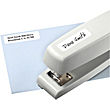
For your consideration: I have been using the little removable 1/2" x 1-3/4" Avery 05422 (or preferably, Invalid Link Removed) labels to write the date I changed the battery and its expiry date, and stick it to the back of the headstock. Also another label with the last strings used and change date. Being removable there's no damage to the bass. And I use them for lots of other purposes around the house, and also on effects pedals, etc...
For your consideration: I have been using the little removable 1/2" x 1-3/4" Avery 05422 (or preferably, Invalid Link Removed) labels to write the date I changed the battery and its expiry date, and stick it to the back of the headstock. Also another label with the last strings used and change date. Being removable there's no damage to the bass. And I use them for lots of other purposes around the house, and also on effects pedals, etc...
We'll agree to disagree on this point. Sure, if I am designing deep discharge rechargeable Li+ based cells or something; sure I'll use cyclic voltammetry to understand how my cell behaves in a lot of challenging situations.
A 9 volt alkaline cell in my bass. I'll check it with my Fluke meter, thank you very much. If you want to use a sledge hammer to kill the mosquito because you feel better about it, that's great. But, doesn't mean the rest of us are stupid.
A 9 volt alkaline cell in my bass. I'll check it with my Fluke meter, thank you very much. If you want to use a sledge hammer to kill the mosquito because you feel better about it, that's great. But, doesn't mean the rest of us are stupid.

Do any of your electronics wizards have a battery brand that you would endorse above all others?
From the Music Man website:
"Average battery life is 6 months. We recommend Duracell batteries as replacements mostly due to size inconsistencies between battery manufacturers. Do not leave your bass plugged in when you have finished playing, as this will drain your battery faster. Battery life of course depends on how often and how long you play. When the sound of your bass becomes distorted, it's ready for a new battery."


