

Enjoy the benefits of a premium membership!
Upgrade Account
-
TalkBass has been independent since 1998. Add your voice.
Create a free account to reply to discussions, view embedded media, and browse with fewer display ads.
Join free Log in
Want zero display ads or expanded classifieds tools? Compare plans.
You are using an out of date browser. It may not display this or other websites correctly.
You should upgrade or use an alternative browser.
You should upgrade or use an alternative browser.
Who can build this absurd bass?
- Thread starter Tubbs Anjeron
- Start date
More options
Who Replied?



Be aware that when you dream up crazy things that only exist in your mind, expect a 100% payment upfront for a custom project and zero refund if you decide that it doesn't sound like something that only exists in your head.
There is a reason that well established builders don't generally take on things like this (i.e. they politely did it in the past and the whole thing was a disaster....!)
This is what happens when you don’t read the whole thread. It’s been done and BTW, it’s been done by an established builder. Go figure.

Prometeusguitars makes multistring basses, and he is also a member on TB (@Triad )
Prometeus Guitars
Prometeus Guitars

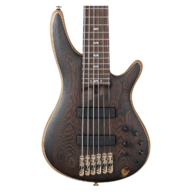
This is what happens when you don’t read the whole thread. It’s been done and BTW, it’s been done by an established builder. Go figure.
There's a bunch of reasons why an "established builder" may not take on this kind of a project.
I run a side business on top of my day job producing some components that go into the aviation industry. We do some custom carbon fibre and other composite pieces. I assume that some of this will be the same for the musical instrument industry for boutique builders; factories are a very different thing. Anything custom requires a considerable amount of additional work and disrupts other work processes. It is also often done at the expense of other business. I do some custom work, but only when I have space in my orders, which is not often, and I charge a shop rate for all of my work, including the construction of molds, prototyping, etc. Depending on the boutique builder, they seem to have many levels of templating/machining/automation in their processes. My other products have these costs built into overhead and distributed amongst everything I sell (economy of scale). I would suggest that most builders are going to turn an unusual product down for the reasons above - it is disruptive and there's no additional revenue available if the unusual product is taking production time from an established product that has all of the templating, forms, g-code, or whatever already worked out. It also may be why a business may require full payment/no refund on this sort of product. If a boutique builder builds a 5 string bass, takes a 25% deposit and the buyer disappears, there's a reasonable market for a 5 string bass, so the builder may be able to recoup their costs, particularly if they have up to 25% discount to offer on the price of the instrument. An 18 string bass is not this kind of an instrument and I would expect there'd be almost no market to sell the instrument to anyone else at even a fraction of the price. I would be expecting to pay close to 100% up front. I work in this way, but generally estimate about 85% of my shop time when charging custom with the client aware of this and there's generally some amount still owing at the end.

As though an established player in a well known band with a record deal is the same thing as some nerd on TalkBass that might make a cell-phone mic'd YouTube video of the unboxing.This is what happens when you don’t read the whole thread. It’s been done and BTW, it’s been done by an established builder. Go figure.
It's such a niche bass that I think any builder should charge a premium because there is absolutely no guarantee that it will be like what you imagine.
It'll be super heavy, the neck will be super wide to accomodate all those strings, and it'll probably neck dive.
Most builders don't have templates and designs for such a bass and will likely only use those templates for this one build. That's a significant investment of time and money. Pickups are going to be custom, bridge is going to be custom, case is going to be custom, strings will be a pain in the ass to source.
Consider strings. You're already going for a .020 or .018 on the G octaves and it's pretty hard to find anything smaller for the C octaves. You could go shorter scale to accomodate thicker strings at a playable tension but then your B strings are going to be really unpleasant to play (source: I put a .145 and .075 pair of Bs on my Dean 10 string bass and found it awkward and difficult to fret the two strings together cleanly).
Your bass will essentially be a prototype. I think any sane builder would charge most of the cost upfront and only guarantee the construction.
As though an established player in a well known band with a record deal is the same thing as some nerd on TalkBass that might make a cell-phone mic'd YouTube video of the unboxing.
It's such a niche bass that I think any builder should charge a premium because there is absolutely no guarantee that it will be like what you imagine.
It'll be super heavy, the neck will be super wide to accomodate all those strings, and it'll probably neck dive.
Most builders don't have templates and designs for such a bass and will likely only use those templates for this one build. That's a significant investment of time and money. Pickups are going to be custom, bridge is going to be custom, case is going to be custom, strings will be a pain in the ass to source.
Consider strings. You're already going for a .020 or .018 on the G octaves and it's pretty hard to find anything smaller for the C octaves. You could go shorter scale to accomodate thicker strings at a playable tension but then your B strings are going to be really unpleasant to play (source: I put a .145 and .075 pair of Bs on my Dean 10 string bass and found it awkward and difficult to fret the two strings together cleanly).
Your bass will essentially be a prototype. I think any sane builder would charge most of the cost upfront and only guarantee the construction.
You make some valid points concerning the issues with such an instrument, but to be fair, there are remedies for a number of the problems you've brought up (I've spend some time imagining a 10 or 15 string bass, so I have looked into some of this). Strings appropriately long and at the right scale lengths can be sources. I've played around with the tension calculator at www.kaliummusic.com and there are strings available for the C octaves (perhaps 0.013). Bridge will certainly be custom. Case may need to be custom depending on overall length - scale length and headstock length being pretty important to determining this. Pickups won't necessarily need to be custom - depends on the string spacing and but certainly there will be limited options.
In the case of an 18 string bass, a shorter scale length and narrower string spacing will make it less of a problem.
Kalium is not a solution to any string issues if you've read anything about the issues they've repeatedly had with actually shipping orders to people over the years.You make some valid points concerning the issues with such an instrument, but to be fair, there are remedies for a number of the problems you've brought up (I've spend some time imagining a 10 or 15 string bass, so I have looked into some of this). Strings appropriately long and at the right scale lengths can be sources. I've played around with the tension calculator at www.kaliummusic.com and there are strings available for the C octaves (perhaps 0.013). Bridge will certainly be custom. Case may need to be custom depending on overall length - scale length and headstock length being pretty important to determining this. Pickups won't necessarily need to be custom - depends on the string spacing and but certainly there will be limited options.
In the case of an 18 string bass, a shorter scale length and narrower string spacing will make it less of a problem.
Kalium is not a solution to any string issues if you've read anything about the issues they've repeatedly had with actually shipping orders to people over the years.
I had read about the issues, but I’ve honestly not had issue with them in the couple of years I’ve been using them. YMMV.


