

Enjoy the benefits of a premium membership!
Upgrade Account
-
TalkBass has been independent since 1998. Add your voice.
Create a free account to reply to discussions, view embedded media, and browse with fewer display ads.
Join free Log in
Want zero display ads or expanded classifieds tools? Compare plans.
You are using an out of date browser. It may not display this or other websites correctly.
You should upgrade or use an alternative browser.
You should upgrade or use an alternative browser.
More options
Who Replied?

I got picked up by a Nashville artist several years ago and played in her band for a few years. She had her whole book of original material in the Nashville Number system and they were not (generally) simple I IV V type changes at all. Lots of moving bass lines/inversions, complex chords, pushes, transitions, modulations, rhythm marks/articulations for specific sections etc. Prior to doing that gig I was kind of aware of the Nashville number thing, but I had not been exposed to it. I thought it was pretty cool and once I got my head around how the more complex elements were represented, I was very comfortable with it. I've played jazz for many years too and have had plenty of roman numeral number type charts thrown at me over the years too, so that probably helped.


As others have said, Once you recognize the numbers are scale degrees it makes more sense. In the key of C , C=1, D=2, E=3, F=4, G=5, etc. When you get the hang of it it’s actually pretty convenient, especially if you’re experimenting with different keys,


Definitely.As others have said, Once you recognize the numbers are scale degrees it makes more sense. In the key of C , C=1, D=2, E=3, F=4, G=5, etc. When you get the hang of it it’s actually pretty convenient, especially if you’re experimenting with different keys,
If you’re new to it or having troubles, I’d strongly recommend translating the Nashville Chart to several different key signatures and writing out each chord chart by hand. Heck, do all 12 keys if you want to. You’ll get heaps faster and dead accurate the more charts you write out.
I learned this in Mickey Bakers’s Jazz Guitar book 30+ years ago and it still helps me to this day.
Convert songs you already know into Nashville charts. Start easy at first and work your way up to really hard stuff. You’ll develop your own shorthand along the way.

These two videos should help give you a crash course on Nashville Numbers:

Keys and chords and overall form are pretty easy to notate. I’m still not happy with any of the options I’ve seen for notating either rhythm or melody. In the middle of a session, the singer songs a melody or groove, and I want to jot it down. Is there anything out there???
And just to be sure: There are plenty producers, arrangers, and the musicians here who play to straight, written standard notation charts. More of this as time goes on.
You have to remember, the Number System has its roots in the earlier days where you had terrific yet unschooled musicians who came here from all over, a slower, innocent world with cats in from literally out in the country. Brilliant players that would have been utterly lost having to read real charts, and so the Number System was a way for everyone to grasp what was wanted.
And there are a zillion small variations on just how it's written out, as a lot of the previous posts have pointed out.
You have to remember, the Number System has its roots in the earlier days where you had terrific yet unschooled musicians who came here from all over, a slower, innocent world with cats in from literally out in the country. Brilliant players that would have been utterly lost having to read real charts, and so the Number System was a way for everyone to grasp what was wanted.
And there are a zillion small variations on just how it's written out, as a lot of the previous posts have pointed out.

It started out as a way for non-readers to quickly notate simple material, but has evolved into a highly sophisticated way of writing charts. I was thrown into it when I started playing steel guitar shows and have much respect for it. This book lays it out pretty well:
https://www.amazon.com/Nashville-Nu...ix=nashville+number+system+book,aps,37&sr=8-5
https://www.amazon.com/Nashville-Nu...ix=nashville+number+system+book,aps,37&sr=8-5
As an Amazon Associate, TalkBass may receive commissions from qualifying purchases made via links on this site.
As it was said. In order to understand the Nashville system, you need to understand the modal system. (in the key of C, C is 1, Dm is 2, Em is 3, F is 4, G is 5, Am is 6, Bm is 7). Learning modes is a must in my opinion in order to become a great player.
The Nashville system allows to play the same song on any key you want which you can't do if you write the name of the chords instead. It is typically meant to be used for musical genre that are relatively simple and in which there are not too many key changes but you can always use it and players tend to add their own notations to remember a tune.
In the chart above, the player is adding some alterations to the chords for example, if the 6 is not the expected Am but a Am7 instead, he writes "6-7" (dash means minor). As mentioned, he also added some rythm informations.
I understand most of the chart but it took me a second to understand what he meant by 1/3. As a bass player, it is his own notation to indicate that he only plays the root and the third on a major chord. What we typically call a "double stop"
So here we go for the begining of the chart (and assuming it is in C but it could be in whatever and you'd still would know what to play)
1 1/3 4 1/3 = C double stop and F double stop
1 1/3 2-7 1 = C, C double stop, Dm7, C
*I once played with a guy who toured with Johnny Cash and taught me how to sign the Nashville system with one hand when you play with someone who does not know a tune and want to announce the chords while playing. Up to 5 fingers with one hand it is easy but for "6", it is one finger pointing downward and "7" two fingers pointing downward.
The Nashville system allows to play the same song on any key you want which you can't do if you write the name of the chords instead. It is typically meant to be used for musical genre that are relatively simple and in which there are not too many key changes but you can always use it and players tend to add their own notations to remember a tune.
In the chart above, the player is adding some alterations to the chords for example, if the 6 is not the expected Am but a Am7 instead, he writes "6-7" (dash means minor). As mentioned, he also added some rythm informations.
I understand most of the chart but it took me a second to understand what he meant by 1/3. As a bass player, it is his own notation to indicate that he only plays the root and the third on a major chord. What we typically call a "double stop"
So here we go for the begining of the chart (and assuming it is in C but it could be in whatever and you'd still would know what to play)
1 1/3 4 1/3 = C double stop and F double stop
1 1/3 2-7 1 = C, C double stop, Dm7, C
*I once played with a guy who toured with Johnny Cash and taught me how to sign the Nashville system with one hand when you play with someone who does not know a tune and want to announce the chords while playing. Up to 5 fingers with one hand it is easy but for "6", it is one finger pointing downward and "7" two fingers pointing downward.
Last edited:
Over the years, I have thought of coming up with the quickest way to teach the modal system using the least amount of words possible, in a simple et visual way that works for bass players. Some people wrote entire books to teach the modal system in detail but I maintain you can teach the basic concept in a few lines. If anyone requests it, I'll be happy to oblige.

In order to understand the Nashville system, you need to understand the modal system. (in the key of C, C is 1, Dm is 2, Em is 3, F is 4, G is 5, Am is 6, Bm is 7). Learning modes is a must in my opinion in order to become a great player.
teach the modal system
It looks more like simple scale harmonisation to me, not a modal system.
It looks more like simple scale harmonisation to me, not a modal system.
You say tomatoes, I say TomAtoes.
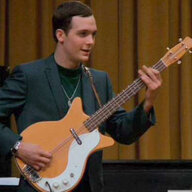
I reached out to the player. We DM’d about the chart. The 1/3 is actually a 1 over 3 or a 1 chord with a 3rd in the bass (ie: C/E or F/A… etc). Add the rhythms and a decent ear, and thus chart makes a lot more sense.As it was said. In order to understand the Nashville system, you need to understand the modal system. (in the key of C, C is 1, Dm is 2, Em is 3, F is 4, G is 5, Am is 6, Bm is 7). Learning modes is a must in my opinion in order to become a great player.
The Nashville system allows to play the same song on any key you want which you can't do if you write the name of the chords instead. It is typically meant to be used for musical genre that are relatively simple and in which there are not too many key changes but you can always use it and players tend to add their own notations to remember a tune.
In the chart above, the player is adding some alterations to the chords for example, if the 6 is not the expected Am but a Am7 instead, he writes "6-7" (dash means minor). As mentioned, he also added some rythm informations.
I understand most of the chart but it took me a second to understand what he meant by 1/3. As a bass player, it is his own notation to indicate that he only plays the root and the third on a major chord. What we typically call a "double stop"
So here we go for the begining of the chart (and assuming it is in C but it could be in whatever and you'd still would know what to play)
1 1/3 4 1/3 = C double stop and F double stop
1 1/3 2-7 1 = C, C double stop, Dm7, C
*I once played with a guy who toured with Johnny Cash and taught me how to sign the Nashville system with one hand when you play with someone who does not know a tune and want to announce the chords while playing. Up to 5 fingers with one hand it is easy but for "6", it is one finger pointing downward and "7" two fingers pointing downward.

- Mar 19, 2013
- 1,612
- 2,694
- Disclosures
- If only I were that good....

Gibberish, personally made up notation.
How are fractions telling you anything?
That's NOT the Nashville number system or any system I'm aware of.
How are fractions telling you anything?
That's NOT the Nashville number system or any system I'm aware of.


