
This might come across as rude IME people are afraid to adjust their settings, particularly their EQ, because they aren't confident in their ears' ability to dial the sound back in. I don't intend this to be a hot take or rude at all, and I've definitely been there too. You get a perfect sound and then it sucks when you lose it. Best remedy for this is to write down or take pictures of your settings and then get weird with them.I know it's a bit of a clickbaity title, but that's what came to mind.
I've read quite a few comments on TB, where people will say that they use only a bass and an amp for gigs, and even home usage. Furthermore, I've read plenty of people say that they don't adjust their EQ, don't buy any effects, basically don't do anything but use their fingers, maybe bass, maybe a slight amp adjustment.
Now I was wondering, why?
I get that people like a simple solution, where they just plug in, turn on the amp, and they're off to the races. But at the same time, many spend quite a lot of time trying to find the right bass and the right amp.
Why would you try to find the perfect amp, instead of adjusting the EQ on your current one, until you like it?
I've heard people say that adjusting EQ too much will cause it to sound unnatural, or that when you have to do that you should better just get a different bass / amp altogether.
I don't quite understand where this came from, because I would assume that when you get a nice piece of gear with a couple of knobs, you would assume that all of them are usable to their extremes. I know that that's not always the case, but I believe alot of gear nowadays is designed to still be usable at their most extreme settings. And even if not, they usually have quite a bit of adjustability.
Why would you not want to take advantage of that?
When I look at all the outboard gear, and more commonly nowadays, plugins that producers use, I feel like I should not ever shy away from trying to make the most of the gear that I have.
This isn't really meant as a critique of the people that use such minimalistic setups, but I would like to know if someone could explain it a bit further to me.
I can tell you, I'm not content with the notion that too much EQ makes it sound unnatural. To me an amplified bass signal already sounds completely unnatural, compared to the electric bass played acoustically, or compared to any other acoustic instrument.

Enjoy the benefits of a premium membership!
Upgrade Account
-
TalkBass has been independent since 1998. Add your voice.
Create a free account to reply to discussions, view embedded media, and browse with fewer display ads.
Join free Log in
Want zero display ads or expanded classifieds tools? Compare plans.
You are using an out of date browser. It may not display this or other websites correctly.
You should upgrade or use an alternative browser.
You should upgrade or use an alternative browser.
Why are people afraid to use their gear?
- Thread starter Fynn
- Start date
More options
Who Replied?
We rehearse in a large space. At rehearsal my sound is pretty much set. Might tweak it a little if I change basses (my backup) but not much. 99.9 % of the time I use the same bass. I may also make minor changes at a gig. I let the (FOH, sound person) tell me if I need to change something. I trust our SP explicitly. He's been with us for years. But an unknown FOH, I usually ask.
That I understand. I know that you can't just adjust stuff at home and then expect it to work everywhere. Though I feel like that there's quite a few people out there, that will go to a venue and not change anything, because they feel like that's not the right thing to do. Even if it would benefit the situation. Afterall, there's plenty of people who play gigs without a sound guy, or even without a PA all together.My personal reasonings:
Just because a knob is usable to its extremes doesn't mean it should be used to its extremes, or even at all. I would "not want to take advantage of" the knobs if changing them offers no advantage. Tone is arbitrary. Tone is relative. You can sit there fiddling with the knobs all day until you achieve some mystical magical tone you like, but that tone doesn't mean anything until it's in a mix or in a room playing music.
I think my 4 string sounds fantastic in its current setup. I plug it into my amp and i think it sounds great. Cool. If i start boosting the low-mids on my amp, cool. Now it sounds great plus more low-mids. If i cut the low-mids, now it sounds great with less low-mids. Cool. I've accomplished nothing, and it means nothing. I'm just playing my bass with different EQ settings that are completely arbitrary.
If i'm recording, i leave the EQ flat because i'll be EQing the bass and every other instrument in the context of the mix. It would be silly to boost my amp's low-mids only to have to pull out the low-mids in the mix. And then once the good clean sound is in there, i can use all my plugins to do whatever crazy manipulations i might want or need.
If i'm playing with other musicians in a room, i'll wait until i hear how the bass fits in sonically with the other instruments and in the room, then adjust the EQ if i need to. If i just show up and turn the knobs to those holy "MY SOUND" settings people speak of, it might be all wrong for the room or the instrumentation or fitting in with the other instruments.
And if i'm performing live at a venue, i'll leave the EQ flat and let the Sound Engineer adjust the tone for the room out of the mains. Since i don't (won't) do live sound anymore, i'll gladly let them deal with the headache of adjusting. If they're a regular at that venue, they'll know the room better than me and adjust on the board, or ask me to adjust my EQ.
If i plug in my bass and HAVE TO use the EQ because i don't like the sound, either the bass sounds like garbage, the amp does, or the combination of the two doesn't. Case in point: My 6 string. Has active electronics on it. I essentially have the Bass, Mid, & Treble set on those the same all the time. If i used the onboard EQ to adjust for different situations as needed, cool. But leaving it set the same way all the time to make it sound good? That just means i'm compensating for the sound coming out of the pickups, which means either the strings, pickups, or both don't sound good to my ear. So i'm planning on getting new pickups for it.
And from my experience in production, engineering, and live sound, it was usually the musicians who came in, cranked their amp's dials to "their settings" for "their sound," and refused to or complained about adjusting the settings for the recording process, the mic, the song, or how it sounds in the control-room, are the same ones who complain at the end of the production process that their instrument sounds terrible in the mix. The flip side, when players came in, plugged in and then adjusted to the situation usually played great and were much easier to get great tone for the mix from.
---
The flip side to your question about not using gear:
Why would you use your gear?
Say you're standing there with your bass, a pedal board with 2 different distortions, a Wah Wah, and Envelope Filter, and an octaver. Why not use all that gear, right? Say you're gonna play Etta James "At Last." You still gonna use all the gear? I'm not talking about playing a crazy space-funk-rock version of it in some experimental band. I'm saying play "At Last" straight. Why would you use all your gear? All you need is your bass and an amp, and if the bass sounds good and sits well in the mix already, why would you use the EQ on your amp too?
But beyond that, you can use pedals and even amp settings to change the timbre of your sound to a degree that a sound guy couldn't. I feel like playing an electric instrument, that's bound to be amplified, there's a lot of things you can do. And I'm a big proponent of using different pickup configurations to change your sound. A P pickup in it's normal position has a quality that a single coil in bridge position will never have. Further, a pedal could produce a sound, that you wouldn't get otherwise. Which is why I don't feel comfortable just leaving it all up to the sound guy, when I have a specific idea of what my sound should be.
All the problem frequencies in the room, can then be taken care of afterwards.
I also don't understand why you would want to record completely flat. You can always take two signals, which I would recommend anyways. And if you're planning to just record it once with one signal, then I feel like you should be set to what you want it to sound like in the mix anyways.

I was just saying that I don't understand why people would not adjust anything, when pretty much all controls on an amp, bass, pedal, are designed to be used. And often even designed to be used at their extremes.
When you hear Marcus Miller talk about the Sire basses, he says that they designed the preamp to still sound good even at the most extreme settings.
Similar to when David Nordschow talks about the amps he designs. He says that the controls should be usable at their most extreme settings.
As I said, that's not how all gear is, and I don't think everybody should set their mid gain to 11, but I'm trying to show that there's no technical reason why you shouldn't experiment around and turn stuff up or down.
Kinda like how the typical tube screamer User puts the level all the way up, and the drive all the way down (or was it the other way around?).
It may be because those folks tried setting knobs to 11 and found it wasn't good. I don't see what the mystery is here.
All that stands between my passive basses and my amp is a compressor. Every time I think I should need more in my signal chain, I end up deciding it really is just a needless complication.
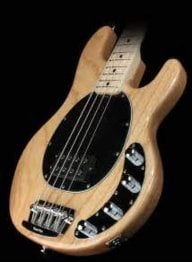
While I hate to quote Gene Simmons, he did say it best when he said "any gear will do". I've had lots of Peavey gear and then switched to Mesa Boogie and low and behold, I always sounded the same with whatever gear I had. My only real criteria for a bass is that it has good vibrance when played acoustically. I never practice at home through an amp. A good bass has to have that "life" unplugged. Other than that, gear is gear to me. My current head is a Hartke LH500 (as simple as it gets) and 2 Peavey 210 cabs. I've always sought a clear low end tone and this gets it with minimal tweaking. I have a Sushi Box Slampegg when I want some color, but so far I only seem to need it when I play my precision with a pick. My Stingray is straight bass to amp.

You're confusing me with another lobster. (No worries; it happens all the time.) So, I don't know if you're interested in my opinion about this, but if you are....Hi Lobster. Big fan of your videos here. A HPF is a high pass filter? Could you please explain it more? Thanks!
I jumped on the bandwagon a few years ago when HPFs were all the rage. I didn't think I needed one, but was willing to spend 75 bucks to satisfy my curiosity. The first time I brought it to a rehearsal I was amazed: I hadn't realized that there was mud in my bottom end until it was suddenly gone. Even one of my guitarists commented on how much "punchier" my sound was. So now I use it with two different rigs at two different places and can't live without it.
Or you buy a second one of that gear you're using and leave the other one dialed in exactly where you left it.This might come across as rude IME people are afraid to adjust their settings, particularly their EQ, because they aren't confident in their ears' ability to dial the sound back in. I don't intend this to be a hot take or rude at all, and I've definitely been there too. You get a perfect sound and then it sucks when you lose it. Best remedy for this is to write down or take pictures of your settings and then get weird with them.
I've seen this plenty of times with pretty successful musicians too. The trick where they would tape their tone knobs to a specific position for example. Others use tape and such to indicate where settings should go.
I use little pieces of tape with ab arrow on them. But instead of having the arrow point a specific way, the arrow has to point up. Way easier to see if one arrow isn't pointing upwards!
I don't think I've got a piece of gear where I put anything at 100, but I'm not afraid to add quite a bit. Usually low mids, because that gives a thump that's very pleasant sounding to me at home.i can twiddle knobs with the best of 'em, but it's nice when i don't have to do too much of that.
sounds like you might prefer using those "extremes" you referenced. cool beans --- good luck!
If I remember correctly, I have about 12dB boost around 40hz too. Only for at home use though, because that way I can turn up the amp quite a bit before the highs and the high mids start becoming annoying for me
Buy as much as you possibly can, and have offspring, so they can take care of everything you bought after you're no longer on this planet.What is the meaning of life?
This works as long as nobody touches your gear and your knobs don't get knocked during transit... seems like a really expensive way to avoid taking a pictureOr you buy a second one of that gear you're using and leave the other one dialed in exactly where you left it.
i've done most of my crazier experimentation at home. on the gig, i'm mostly trying to make the bass part (tones and all) listenable while i try to 'play nice' with the other musicians.I don't think I've got a piece of gear where I put anything at 100, but I'm not afraid to add quite a bit. Usually low mids, because that gives a thump that's very pleasant sounding to me at home. If I remember correctly, I have about 12dB boost around 40hz too. Only for at home use though, because that way I can turn up the amp quite a bit before the highs and the high mids start becoming annoying for me

My gear philosophy revolves around live performances. If its not gig worthy, I dont bother. Has nothing to do with value. Has everything to do with gigging!!!!
You mean like when Monk Montgomery plugged the P bass into an amp and played it just like that, back in 1953 or so? yep, short lived trend, that.It’s a hipster trend. The zero EQ trend. Just look at the Joe Dart MusicMan bass series and you will see what is all about. They purged everything out of those basses except of the strings and the pickup. As a trend I assume it will last a few years only.
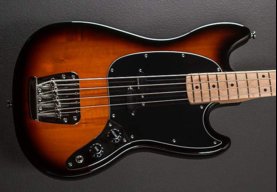
I've found that it's easier to project with a straight ahead sound. I don't veer too far from a flat EQ setting, although I'll adjust a bit here and there. I can easily play a gig without any pedals. I generally use small effects board with an always-on compressor set to minimal compression to even things out a bit, a Vintage Mictrotubes overdrive also set low and mostly clean for a bit of focus and heft, a high pass filter to make my amp sound louder and punchier, and a flanger to annoy my bandmates. I'd be surprised if an audience could tell the difference if I left all my pedals at home.
It's not a religion for me. My bandmates put the kibosh on my more psychedelic tendencies or I'd still use a fuzz, an envelope filter and a tap tempo analog delay with an oscillation switch. But there is something to be said for keeping it simple. It makes performing less complicated.
It's not a religion for me. My bandmates put the kibosh on my more psychedelic tendencies or I'd still use a fuzz, an envelope filter and a tap tempo analog delay with an oscillation switch. But there is something to be said for keeping it simple. It makes performing less complicated.
Why not just make a pencil mark?This works as long as nobody touches your gear and your knobs don't get knocked during transit... seems like a really expensive way to avoid taking a picture

It's been said that maybe it's more about choice than being afraid.
I like passive bass, my wireless and pedal tuner. That's it. I fell into the trap of trying some pedals after getting on TB and just found I spent all my available time fiddling with them and not having any "a-ha" moments where I found something I really liked. So back to basics.
Everyone's perspective on gear is based on what works for them, in my opinion.
I like passive bass, my wireless and pedal tuner. That's it. I fell into the trap of trying some pedals after getting on TB and just found I spent all my available time fiddling with them and not having any "a-ha" moments where I found something I really liked. So back to basics.
Everyone's perspective on gear is based on what works for them, in my opinion.
A bass, a cable, a head and a cab is all ya really need (unless just DIing into the PA)
I'm convinced the rest is for vanity and fun...
I know it is for me.
Im with you why use a bunch of fx so you dont hear the bass use a keyboard for that.


It really is down to some people preferring turnkey, while others want something tweakable, and others still find supreme enjoyment out of bending a piece of gear to their will with an epic struggle.
I used to turn my EQ knobs like I was tuning an old-timey radio early on, now I leave mine close to flat and tweak with a much lighter hand....typically to far better results (utilizing more cut than boost too). These days I want to spend more time playing and less time fiddling with my gear, so having something near impossible to screw up is nice. I like having options that I don't HAVE to use, so I guess that's middle ground? I'd be the person with active EQ on my bass but just leaving it flat all the time.
I used to turn my EQ knobs like I was tuning an old-timey radio early on, now I leave mine close to flat and tweak with a much lighter hand....typically to far better results (utilizing more cut than boost too). These days I want to spend more time playing and less time fiddling with my gear, so having something near impossible to screw up is nice. I like having options that I don't HAVE to use, so I guess that's middle ground? I'd be the person with active EQ on my bass but just leaving it flat all the time.


