
Enjoy the benefits of a premium membership!
Upgrade Account
-
TalkBass has been independent since 1998. Add your voice.
Create a free account to reply to discussions, view embedded media, and browse with fewer display ads.
Join free Log in
Want zero display ads or expanded classifieds tools? Compare plans.
You are using an out of date browser. It may not display this or other websites correctly.
You should upgrade or use an alternative browser.
You should upgrade or use an alternative browser.
Why Are Short Scale Basses Looked Down Upon?
- Thread starter mcrracer
- Start date
More options
Who Replied?

I was in a rather unusual situation last night. I play bass and sing as a solo at open mics. I'm usually the only person who shows up with a bass. Last night, there were three of us. My Cort GB 34a was the only "regular scale" one of the bunch. One of the other bass players had a Gibson Les Paul bass with lots of knobs & switches. The other had a Fender P-bass that looked to be about the same scale as one of those super short scale six strings basses with the real skinny strings. Definitely shorter than 30 ". Maybe it was just me, but they both sounded great. Especially the Fender. The lady playing the Fender was probably about my age (late 50s) and would not have tried a "standard scale" bass. That is not to say that she could not have learned to manage one, but why do so when the one she had sounded fine and was very playable for her?
We all were playing through the PA provided by the host, so the amplification was a constant.
Furthermore, since I am a volunteer at a local theater that features live music, I get to see and hear all kinds of basses. Nearly every scale and amount of strings except for an 8 string strung in octives. I can say with complete assurance that if the player can play, it WILL sound good.
Being a small person, I'd consider a short scale if I were to buy another bass.
The only reason I'd look down on one is because it would be below my eye level when it's strapped on, just like any other bass would be.
Jack
We all were playing through the PA provided by the host, so the amplification was a constant.
Furthermore, since I am a volunteer at a local theater that features live music, I get to see and hear all kinds of basses. Nearly every scale and amount of strings except for an 8 string strung in octives. I can say with complete assurance that if the player can play, it WILL sound good.
Being a small person, I'd consider a short scale if I were to buy another bass.
The only reason I'd look down on one is because it would be below my eye level when it's strapped on, just like any other bass would be.
Jack

I bet that Lakland Decade Shorty is junk.
And those new Warmoth shorty necks and bodies? Junk.
Those guys don't know anything about making basses...

I know that is sarcasm. But nobody ever said that in this thread...

warmoth has a short scale neck? where can i read about that?
I bet that Lakland Decade Shorty is junk.
And those new Warmoth shorty necks and bodies? Junk.
Those guys don't know anything about making basses...

warmoth has a short scale neck? where can i read about that?
Invalid Link Removed
Invalid Link Removed
Well, there's physics involved and the shorter the scale, the more difficulty and compromises you have with tension, pitch, etc. All other things being equal, longer string lengths are better for producing lower pitches - that's just a fundamental truth. If you don't like it, you'll have to find another universe to play in.
That's not to say those problems are dealbreakers, as many here have said they can get great sound and playability out of their short scale basses. But let's be honest, if I asked about a bass with an 11" scale or something, you can't seriously tell me it wouldn't be a problem (at least for a conventional bass guitar). The question is how short is "too short" to achieve a particular sound and playability.
So in addition to the common perception of short scales being inferior "beginner" instruments discussed by others here, IMHO, for people who are perfectly happy and comfortable playing on a 34" scale, moving to a shorter scale is all downside compromises with no upside, hence the disdain for short scales. OTOH, if you find a longer scale to be an undesirable compromise, you will naturally prefer a shorter scale.
But it's going to be a compromise either way. It only doesn't seem like a compromise to you if you really don't care at all about the things you're giving up. And different people will care about different things.
That's not to say those problems are dealbreakers, as many here have said they can get great sound and playability out of their short scale basses. But let's be honest, if I asked about a bass with an 11" scale or something, you can't seriously tell me it wouldn't be a problem (at least for a conventional bass guitar). The question is how short is "too short" to achieve a particular sound and playability.
So in addition to the common perception of short scales being inferior "beginner" instruments discussed by others here, IMHO, for people who are perfectly happy and comfortable playing on a 34" scale, moving to a shorter scale is all downside compromises with no upside, hence the disdain for short scales. OTOH, if you find a longer scale to be an undesirable compromise, you will naturally prefer a shorter scale.
But it's going to be a compromise either way. It only doesn't seem like a compromise to you if you really don't care at all about the things you're giving up. And different people will care about different things.
Well, there's physics involved and the shorter the scale, the more difficulty and compromises you have with tension, pitch, etc. All other things being equal, longer string lengths are better for producing lower pitches - that's just a fundamental truth. If you don't like it, you'll have to find another universe to play in.

did you try EQing your amp?
That was the very first thing to cross my mind. I would like to know if the new bass was plugged in with the old bass EQ settings on the amp....
Inquiring minds need to know.
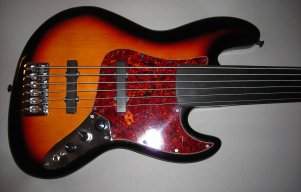
I play any scale... I own a 35.5 scale (extra long) 5 string custom made jazz, a 32 scale (medium) 5 string alembic, and a 34 scale (long) musicman stingray 5 hh...
As far as short scale goes... The only downside I can think about them is for low tunings and the lack of tension compared to longer scales, which some people may not like... I dont think it'd be possible to have a tight and clear sounding D let alone B on a short 30 scale bass... I guess thats why I dont see many 5 string 30 scales if any exist at all...
I also played short scale for years (some time ago). I loved that bass. The main plus with it is the way you can reach double stops and chords and any other stretches. You can easily create some kick butt grooves that there is no possibility of reaching on a 34" scale let alone my 35".
But as Garmenteros notes, the downside of a short scale is the tone. It just doesn't "measure up". Compared to say my 35" Modulus 6 a short scale is dull, weak, floppy and doesn't cut. I'm not saying you can't use it. That would be wrong. But one needs to understand that you have a compromise going here. You are sacrificing a bit of tone, to get some added fingering reach.
I still have my old short scale and at the price of SX short scales, I"m pondering getting an SX just for fun even though I haven't felt the need for a short scale bass for years.
I am 6'1' 195 lbs and have had over 65+ basses in scales 30.5" to 38" and love them all...my favorites..long scale Carl Thompsons and short scale Birdsongs !!! 
But as Garmenteros notes, the downside of a short scale is the tone. It just doesn't "measure up". Compared to say my 35" Modulus 6 a short scale is dull, weak, floppy and doesn't cut.
That's an apples/spaceshutttle comparison if I ever saw one.

Sorry, but there are too many inherent material, structural, pickup, and electronics differences between a Modulus and an "old short scale" for that to be a valid example of differencees due to scale length.
As far as short scale goes... The only downside I can think about them is for low tunings and the lack of tension compared to longer scales, which some people may not like... I dont think it'd be possible to have a tight and clear sounding D let alone B on a short 30 scale bass... I guess thats why I dont see many 5 string 30 scales if any exist at all...
i dont understand this mentality people have that there is no such thing as thicker strings. I have a .130 for my 4th string that i tune to drop C, B, D.... watever i feel like, and its tight as a virgin. 'Specially at D.

That's an apples/spaceshutttle comparison if I ever saw one.
.
Sig worthy!

With your permission sir....
Why Are Short Scale Basses Looked Down Upon?

It'd be silly if we played them above our heads...
I presently own two basses - a Squier Affinity P-Bass and a Hofner Icon bass. My P-Bass is my "thumper" - flats, string mutes, a great bass for grooving and locking in with the drummer. My Hofner Icon is a different animal - because of my middle-age spread (to put it delicately) I have trouble reaching around to play fingerstyle, so I play it with a pick. It's a much faster and easier to play bass than the P, so when I want to play lines with lots of notes in them I grab the Hofner. If I was ever inclined to play jazz a la Jeff Berlin or shred like Billy Sheehan it would be on the Hofner. And when I want to lay it down like Jamerson or Duck Dunn it's the P all the way.
Different tools for different jobs.
Different tools for different jobs.
Well, there's physics involved and the shorter the scale, the more difficulty and compromises you have with tension, pitch, etc. All other things being equal, longer string lengths are better for producing lower pitches - that's just a fundamental truth.
Dammit, Drew, I'm a doctor, not a physicist...
But I think the physics says that a short scale can produce the fundamental note just as well as a long scale can produce. The overtone series is not as complicated as a longer scale bass, thus people claim that the tone is different. But if you've seen my short scale soundclip challenge, people can't easily tell the difference.


