I would have thought Tele-style wiring would be popular on bass. But NO! Why not? I'd like to try it, but have no clue for values on pots or capacitors (2 jazz-type pups). Any suggestions?

Enjoy the benefits of a premium membership!
Upgrade Account
-
TalkBass has been independent since 1998. Add your voice.
Create a free account to reply to discussions, view embedded media, and browse with fewer display ads.
Join free Log in
Want zero display ads or expanded classifieds tools? Compare plans.
You are using an out of date browser. It may not display this or other websites correctly.
You should upgrade or use an alternative browser.
You should upgrade or use an alternative browser.
Why are there no 1 volume, 1 tone, 1 switch basses?
- Thread starter WJK
- Start date
More options
Who Replied?
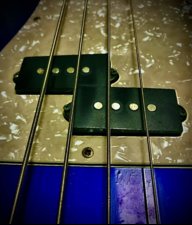
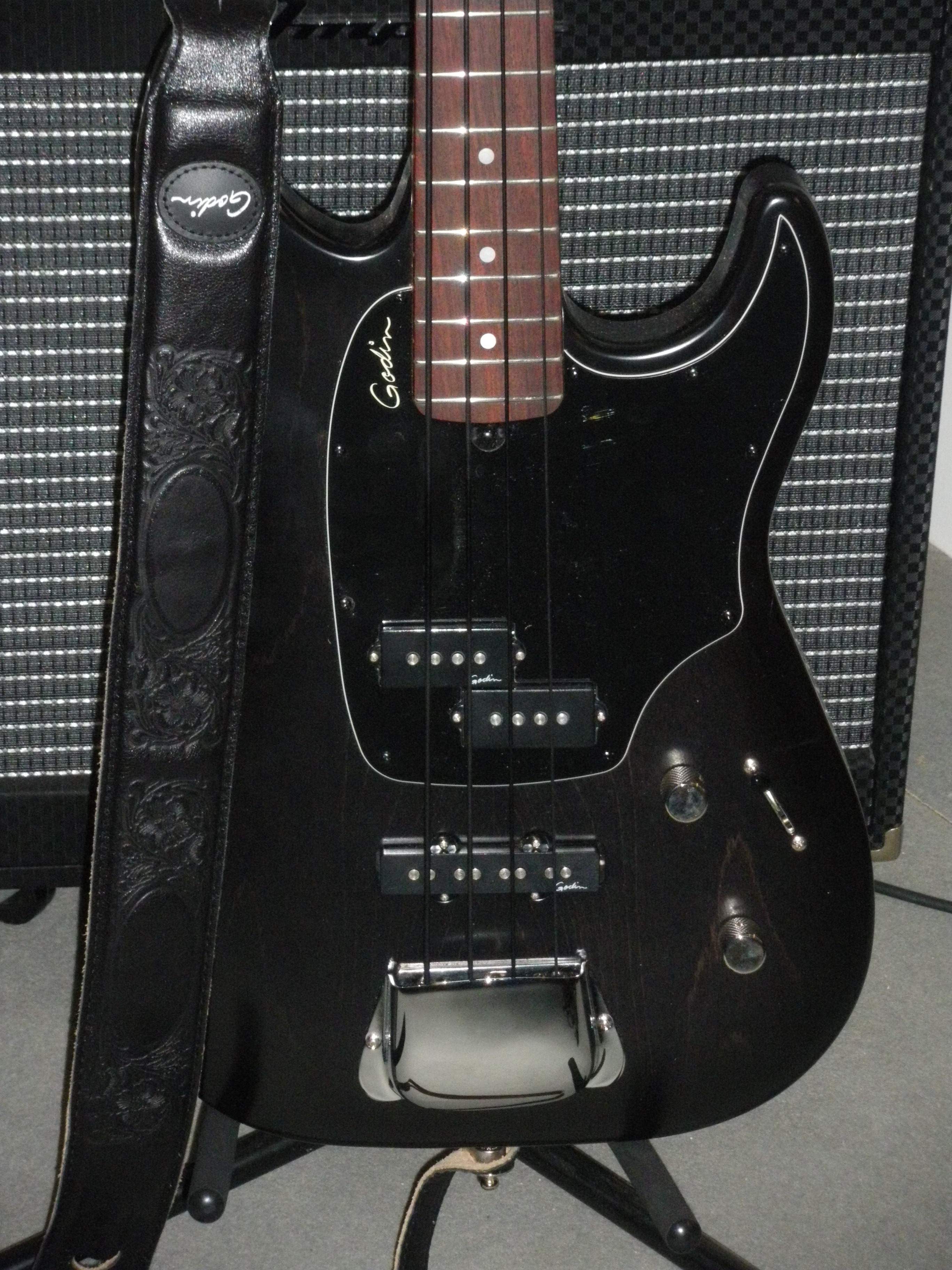
They’re out there, but I’ve only seen it on PJ. MIM Fender Mustang, Godin Shifter has a 4 way (including series.) Probably not popular on a Jazz since most people want the freedom to blend the pickups.
I’d just use the pots and cap you have and see what that sounds like, and go from there
I’d just use the pots and cap you have and see what that sounds like, and go from there

They’re out there. My Aria Pro II (admittedly back in ‘94) had just such a layout. Although in the 4 years I owned it I had to have the pickup selector switch replaced 5 times. Needless to say, my parents were not thrilled with forkin out the money so often.

Use a standard telecaster wiring with 47nf tone cap and 250k pots to start . Think you would pretty well have it nailed on the first attempt . Switching can be neck/bridge/series/parallel .

- Apr 18, 2008
- 16,016
- 1
- 31,730
- Disclosures
- I'm highly opinionated and extremely self-assured

Sometimes you can see 1 Volume - 1 Blend (=pickup to pickup ratio). See here. This will let you have the ability to use the volume control, as well as set the sound to your liking AND care enough for the single coil hum. Tone control, to my honest belief, is absolutely pointless in jazzbass, and the sooner you will stop using it, the sooner you can become a better musician. No pun intended, I really think so.
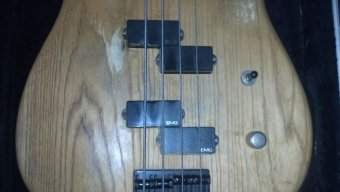
Why are there no 1 volume, 1 tone, 1 switch basses?
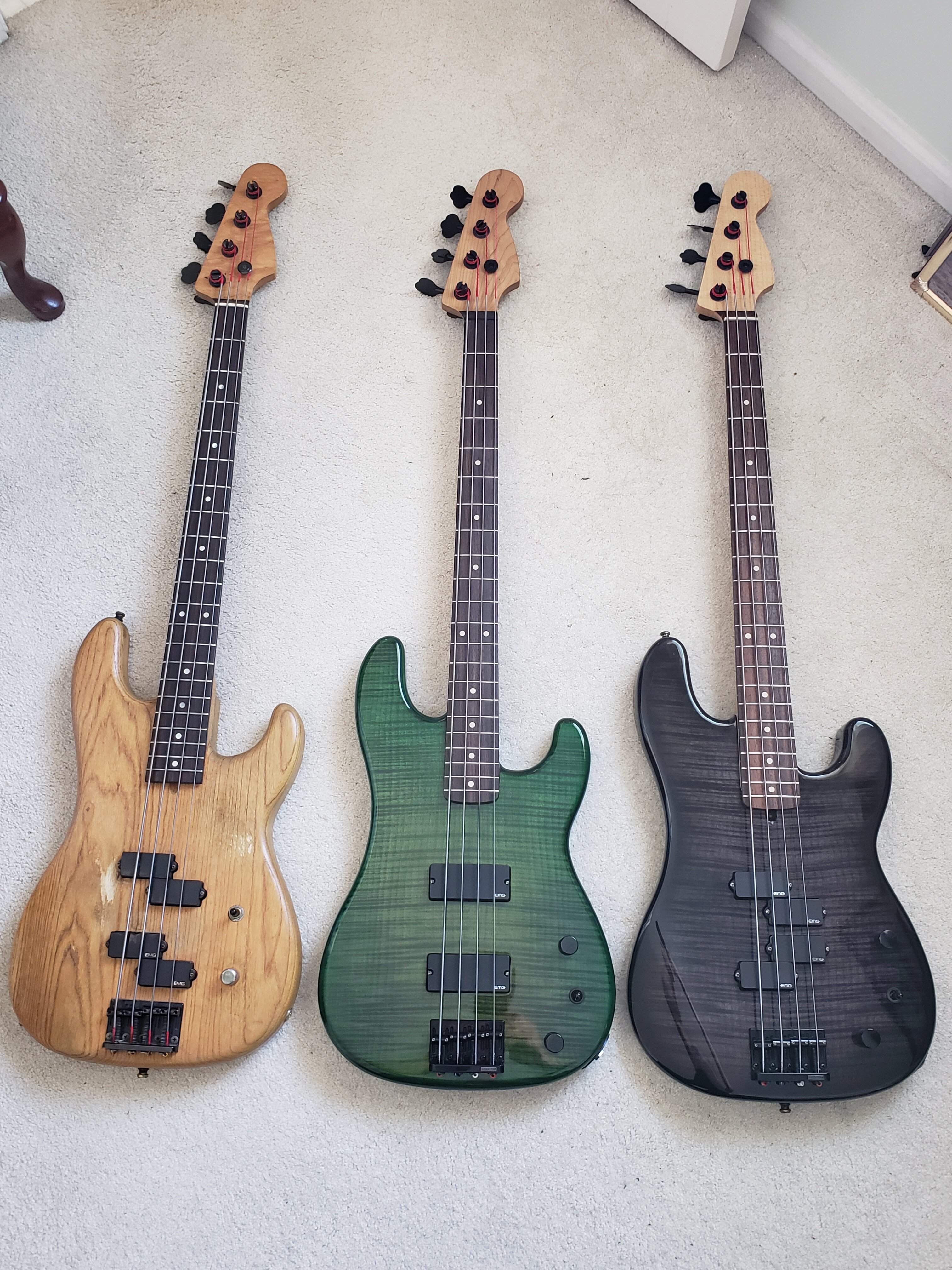
I actually have 3...well, 2 & 1/2.
I actually have 3...well, 2 & 1/2.

The older Yamaha BB's had that setup, I quite like it on my BB415. Simple and effective. I don't need just-so tweaking live, either I'm kicking the J pickup in or I'm not.
(not mine, just a pic to illustrate).

(not mine, just a pic to illustrate).

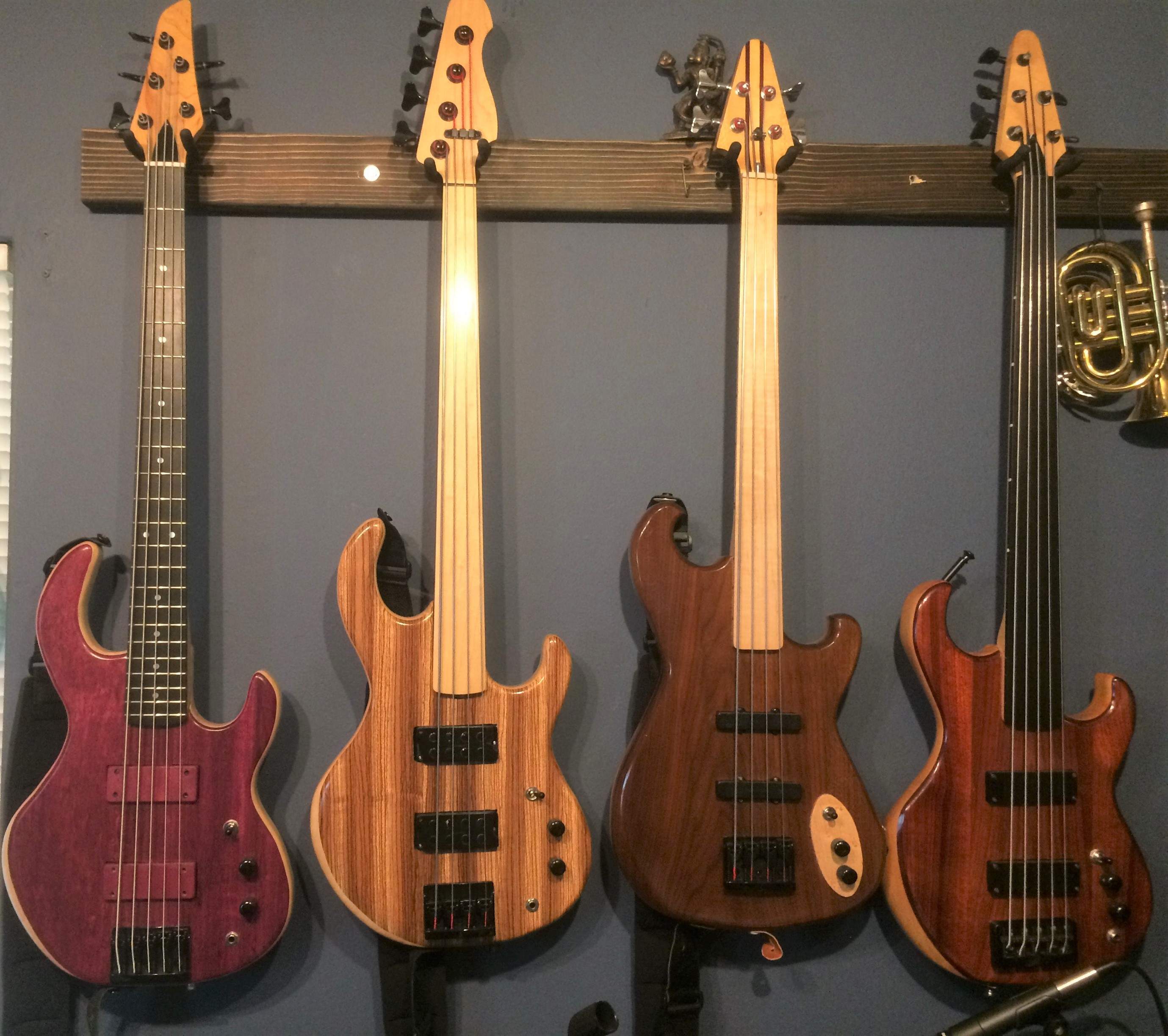
I've had a ton of basses over the years, but I've settled on a Tele-style wiring as my favorite. I prefer passive electronics, and I never had much luck with blend pots. For performing, the Tele style gives me enough variation and quick switching when needed. Here are four basses I built, all with this wiring scheme.


My old Yamaha BB1600 had that. If I had to wire up a P/J I might consider going that route.
I might as well have a switch on my J bass. I never use the volume controls for blending - they're always 100% on or off.
I really like what Dingwall does with their 4-way rotary switch: neck/series/parallel/bridge. Each setting is very distinct, and very musically useful. (Well, 3 out of 4; I'm not real big on soloing the bridge pickup. Still much preferable IMHO to the simpler neck/bridge/both circuit - or those multi-coil axes that have a bunch of different settings, most of which don't sound very good.)
I might as well have a switch on my J bass. I never use the volume controls for blending - they're always 100% on or off.
I really like what Dingwall does with their 4-way rotary switch: neck/series/parallel/bridge. Each setting is very distinct, and very musically useful. (Well, 3 out of 4; I'm not real big on soloing the bridge pickup. Still much preferable IMHO to the simpler neck/bridge/both circuit - or those multi-coil axes that have a bunch of different settings, most of which don't sound very good.)
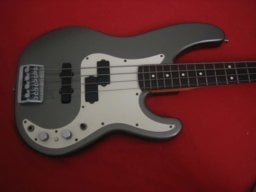
My avatar bass. The Precision P-plus from the late 80s/early 90s. Tone, vol, selector. Technically has a 4th control- series parallel switch. Bass has Lace noiseless pickups stock.
I suspect the reason this wasn't more popular is you really want hum cancelling or noiseless pickups for this application. It's too easy to dial in single coil hum.
I suspect the reason this wasn't more popular is you really want hum cancelling or noiseless pickups for this application. It's too easy to dial in single coil hum.

I have some 1 volume, 1 switch, 2 tone basses:
The trouble for me is that standard Telecaster wiring - a 3 position switch, where you choose neck, both, or bridge pickups, and then have one tone control, has some issues:
1) I never use a bridge pickup alone. I'm a bass player; if I switch from a neck pickup to a bridge, pickup, the FOH person is gonna have a hard time with a bass that suddenly has no bass. So I have to do something different there.
2) The Telecaster wiring has only one tone control - If I'm using a switch to choose between two different modes of operation, it really helps to have a tone control for each mode. One of the things that I HATE about a VVT wired bass is that, if I want a different sound, I have to twiddle 3 knobs to change the sound - that just doesn't work for me.
What I have in this bass (other basses are similar) is a 2 position switch. One position is the neck pickup only (a "P mode" if you will). The knob furthest fro the bridge is the volume knobs - works all the time, wired like in a P bass (not backwards, like in a J bass). The middle knob is a relatively standard tone control circuit for that mode (slightly different capacitor values, but it's not too far off of what most folks use). In the other mode (which we'll call the "J mode, for lack of a better term, the P mode tone control circuit is completely out of the circuit.
The other position (the J mode) uses both pickups. As I don't want the low end to change, there's a "crossover circuit" in that mode - the neck pickup runs full range, the bridge pickup does not operate at the lowest frequencies - that avoids a small (but noticeable) change in low end when switching modes. At mid and high frequencies, both pickups are in the mix - it "scoops" kinda like a jazz bass. The knob nearest the bridge is the tone control for this mode (it's out of the circuit in the P mode) - the tone control circuit in this mode is different than a standard one (a much lower capacitor value - it goes to a completely different place when it's "off") - I don't want this mode to replicate what I have in the P mode, I want two different flavors of sound, each with some control over a range of all usable sounds.
The point of all this is I can set up two different sounds, and without turning a single knob - literally at the flick of a switch, I've transitioned from one good sound to another. I can, if I want to, set up a different sound for the mode I'm not using, so that when I go there (again, at the flick of the switch), I'm "there" immediately. I'm primarily a live player - the ability to do things accurately and quickly in the middle of a performance drives my decisions about the user interfaces I have on my instruments.
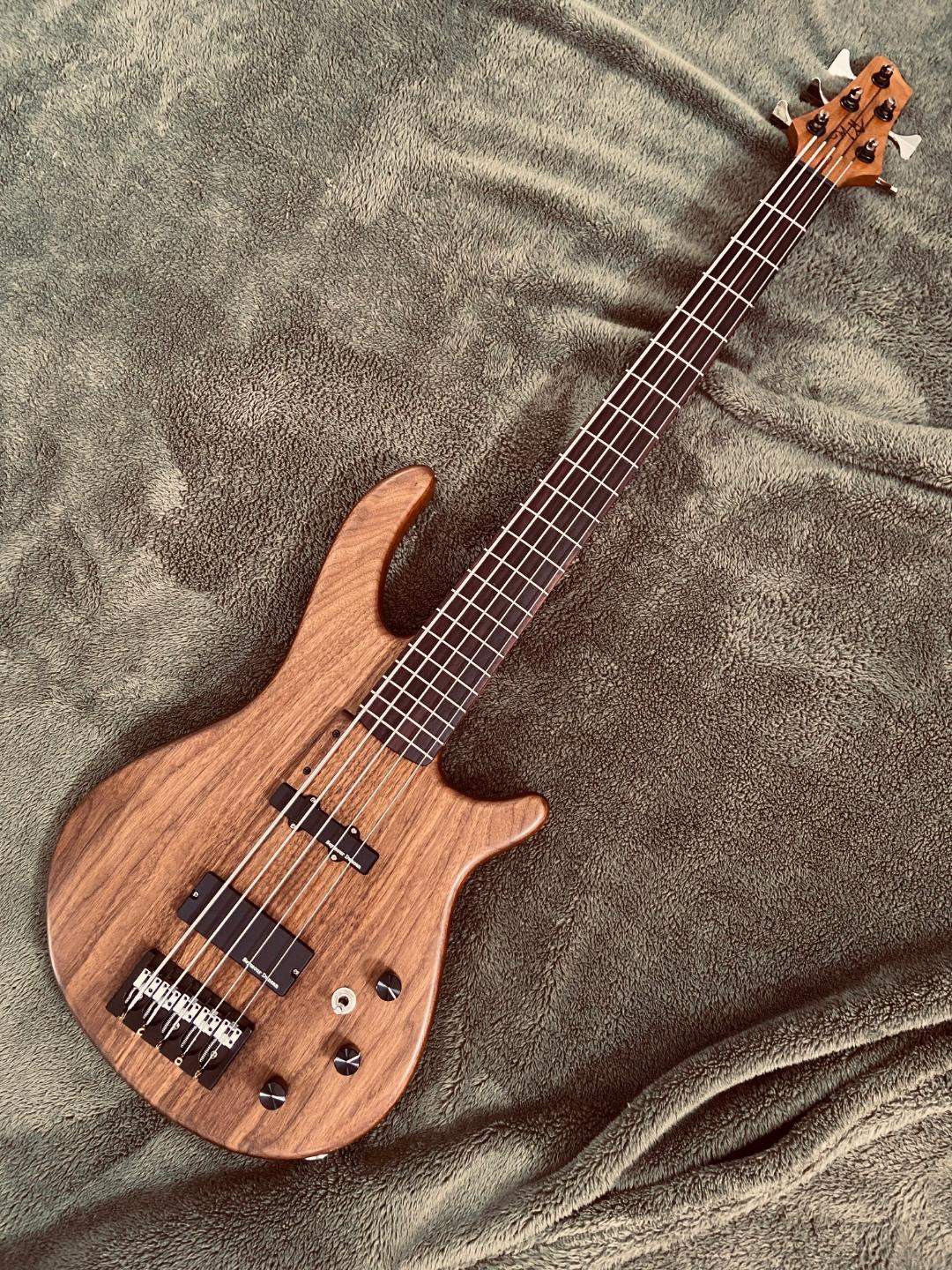
The trouble for me is that standard Telecaster wiring - a 3 position switch, where you choose neck, both, or bridge pickups, and then have one tone control, has some issues:
1) I never use a bridge pickup alone. I'm a bass player; if I switch from a neck pickup to a bridge, pickup, the FOH person is gonna have a hard time with a bass that suddenly has no bass. So I have to do something different there.
2) The Telecaster wiring has only one tone control - If I'm using a switch to choose between two different modes of operation, it really helps to have a tone control for each mode. One of the things that I HATE about a VVT wired bass is that, if I want a different sound, I have to twiddle 3 knobs to change the sound - that just doesn't work for me.
What I have in this bass (other basses are similar) is a 2 position switch. One position is the neck pickup only (a "P mode" if you will). The knob furthest fro the bridge is the volume knobs - works all the time, wired like in a P bass (not backwards, like in a J bass). The middle knob is a relatively standard tone control circuit for that mode (slightly different capacitor values, but it's not too far off of what most folks use). In the other mode (which we'll call the "J mode, for lack of a better term, the P mode tone control circuit is completely out of the circuit.
The other position (the J mode) uses both pickups. As I don't want the low end to change, there's a "crossover circuit" in that mode - the neck pickup runs full range, the bridge pickup does not operate at the lowest frequencies - that avoids a small (but noticeable) change in low end when switching modes. At mid and high frequencies, both pickups are in the mix - it "scoops" kinda like a jazz bass. The knob nearest the bridge is the tone control for this mode (it's out of the circuit in the P mode) - the tone control circuit in this mode is different than a standard one (a much lower capacitor value - it goes to a completely different place when it's "off") - I don't want this mode to replicate what I have in the P mode, I want two different flavors of sound, each with some control over a range of all usable sounds.
The point of all this is I can set up two different sounds, and without turning a single knob - literally at the flick of a switch, I've transitioned from one good sound to another. I can, if I want to, set up a different sound for the mode I'm not using, so that when I go there (again, at the flick of the switch), I'm "there" immediately. I'm primarily a live player - the ability to do things accurately and quickly in the middle of a performance drives my decisions about the user interfaces I have on my instruments.
Last edited:

I've wanted to change my Jazz to be Volume, Blend, and Tone. I like having a single volume so I can easily boost/kill my sound on stage without having to move two knobs.

The old Univox Hi-Flyer had volume, tone, and a neck/both/bridge switch. I think the Eastwood reissue does too. IMO, the neck pickup alone was too thuddy, the bridge was too trebly, and the bass might have benefited from a balance knob rather than a switch to get a better tonal range.


As already mentioned, Godin Shifter Classic, 1 volume, 1 tone and 1 switch. Okay, the switch is a 4 way, neck only, both parallel, both series, bridge only.
Latest posts
-

-
 Curious what the percentage of bass players use rounds vs flats is.
- Latest: Watchootognbout
-

-

