
The wood you need to use to make a good neck (hard maple, mahogany would also work) is a bit...dense. Sure you can make a bass out of one piece of wood, but it's gonna be heavy, and a waste of a bunch of good wood, as all the wood in the original slab to either side of the neck would be thrown away.

Enjoy the benefits of a premium membership!
Upgrade Account
-
TalkBass has been independent since 1998. Add your voice.
Create a free account to reply to discussions, view embedded media, and browse with fewer display ads.
Join free Log in
Want zero display ads or expanded classifieds tools? Compare plans.
You are using an out of date browser. It may not display this or other websites correctly.
You should upgrade or use an alternative browser.
You should upgrade or use an alternative browser.
Why are there no completely solid/1-piece basses?
- Thread starter nickpc
- Start date
More options
Who Replied?
Just because you can do something, doesn't mean you should.
There doesn't seem to be any upside besides showing off the novelty of a one-piece bass.
There doesn't seem to be any upside besides showing off the novelty of a one-piece bass.


I’d be way too concerned about neck problems to try such a thing. Sure, that’s true of a neck thru also, but you can use a laminate neck for a neck thru. I can’t see myself feeling comfortable with a 1-piece neck that I can’t just replace.

Besides being heavier, a one piece bass might not sound the way you want, as it would be all hard/dense wood.
The lighter wood of, say, an alder p-bass body is part of what makes it lively.
The lighter wood of, say, an alder p-bass body is part of what makes it lively.

Smooth_bass88
vaxx!
- Oct 31, 2006
- 12,122
- 16,793
- Disclosures
- have been on nationally released albums, charting on the Billboard 200
probably wouldn't balance well eitherBesides being heavier, a one piece bass might not sound the way you want, as it would be all hard/dense wood.
The lighter wood of, say, an alder p-bass body is part of what makes it lively.
And Basslab,
Invalid Link Removed
and Miller,

and others too ...


Stability is a big reason wooden things are made of multiple pieces of wood rather than 1 solid piece. Look at any traditional item made of wood and you will see it is made by gluing or fitting pieces together. The reason is, wood moves. By using these techniques this movement is minimized or allowed to happen in a way that doesn’t affect the stability of the item.
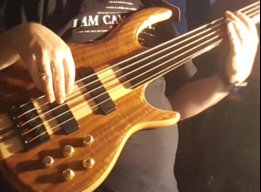
It's a super complicated way to make something that has no benefits other than cosmetic and "I told you I could do it, and it's awesome, check it out!".
If ritter makes one, I'm sure it kicks ass.
But I would never want that. Neck through is as close as I'll get to that, and the wood material I like for bodies is light, often soft, or artificial - not wood at all. The wood material I like for necks is very very hard, often pretty heavy, and I have seen arguments pro/con laminate necks but I personally have always found great and bad examples of both laminate and one piece.
I don't like hte idea of a fretboard or fingerboard that is made out of the same piece of wood as the bass, though - too much danger when refretting, or if fretless, permanent damage to the beautiful wood from playing it for years. Also getting the damn truss rod in - you'd have to have a skunk stripe or cut off the fretboard (even if from one piece) and then glue it back on... otherwise you will likely have serious trouble putting in the ideal truss rod cutout.
I don't make instruments from complete scratch (sawing wood etc), but I've assembled and worked on plenty - I would hate to work on one that was one piece.
If ritter makes one, I'm sure it kicks ass.
But I would never want that. Neck through is as close as I'll get to that, and the wood material I like for bodies is light, often soft, or artificial - not wood at all. The wood material I like for necks is very very hard, often pretty heavy, and I have seen arguments pro/con laminate necks but I personally have always found great and bad examples of both laminate and one piece.
I don't like hte idea of a fretboard or fingerboard that is made out of the same piece of wood as the bass, though - too much danger when refretting, or if fretless, permanent damage to the beautiful wood from playing it for years. Also getting the damn truss rod in - you'd have to have a skunk stripe or cut off the fretboard (even if from one piece) and then glue it back on... otherwise you will likely have serious trouble putting in the ideal truss rod cutout.
I don't make instruments from complete scratch (sawing wood etc), but I've assembled and worked on plenty - I would hate to work on one that was one piece.
also, back in the 60s, I'm sure I saw some very poor japanese guitars that were made from a single piece of wood - neck and all, and they were atrocious because they were poorly made and designed. Not because of being one piece of wood. But it really scarred me for life on the idea LoL

Not something I'm personally into, but I'm fairly sure we have seen "carved out of one solid chunk of wood" basses before. One issue is having a body made of wood hard enough for the finger/fretboard tends towards heavy. Another issue is that you are super-scrod if anything decides to move once you remove all the wood that doesn't look like a bass.
Please define "super-scrod"

It's kind of like "super-screwed" but a typo...Please define "super-scrod"



The original Steinberger L2 was essentially a single casting, laid up in a mold like a boat hull, just Carbon/Graphite fiber instead of wood. Your chances of finding a single piece of lumber that doesn’t have natural flaws that are problematic are pretty slim. I’m sure Ritter dug through a huge pile of lumber to find that one suitable piece. It’s also almost criminally wasteful to then cut away most of that one perfect log to make a bass.

You gotta cut the wood up to put a truss rod in there anyway. Plus there aren't many choices of wood that work well for a neck and fretboard, and the ones that are suitable are typically quite heavy.
Might as well save time money resources and hassle and make a better bass with wood specially selected for its intended purpose.
The (made from) one piece bass does look pretty sweet, though.
Might as well save time money resources and hassle and make a better bass with wood specially selected for its intended purpose.
The (made from) one piece bass does look pretty sweet, though.
Last edited:

Basically because of the nature of wood as a material. It moves, it dries, it lives in a world of changing humidity and it adapts (unless you encase it in so much plastic it doesn't do that any more). To quote the USDA bible
"The combined effects of radial and tangential shrinkage can distort the shape of wood pieces because of the difference in shrinkage and the curvature of annual rings."
And all wood has a T/R Ratio. So you mix the woods up (laminated necks for example) and change directions and most of these movements cancel each other out (sometimes more than other). Or you live with the movement by using a hard, dry wood that doesn't take in a lot of moisture (hard maple).
Lots more in here. Check Chapter 3
Link Removed
"The combined effects of radial and tangential shrinkage can distort the shape of wood pieces because of the difference in shrinkage and the curvature of annual rings."
And all wood has a T/R Ratio. So you mix the woods up (laminated necks for example) and change directions and most of these movements cancel each other out (sometimes more than other). Or you live with the movement by using a hard, dry wood that doesn't take in a lot of moisture (hard maple).
Lots more in here. Check Chapter 3
Link Removed


Nope. Not a typo.It's kind of like "super-screwed" but a typo...
 Regional past tense of screw, also happens to be a term for generic whitefish, but generally obvious from context unless you have scrod scrod, in which case you're pretty scrod and it won't smell pretty.
Last edited:

I think the idea is silly and I agree that the initial piece wood would be much more expensive, but I don't see any reason to think it's necessarily a terribly wasteful process. Assuming you were also making other non-single-piece neck-thru basses, the wood taken off the sides of the necks could be body halves right?


