• TalkBass has been independent since 1998. Add your voice.
    Create a free account to reply to discussions, view embedded media, and browse with fewer display ads.
    Join freeLog in
    Want zero display ads or expanded classifieds tools? Compare plans.

WHY ARE WE STILL USING 1/4" JACKS!

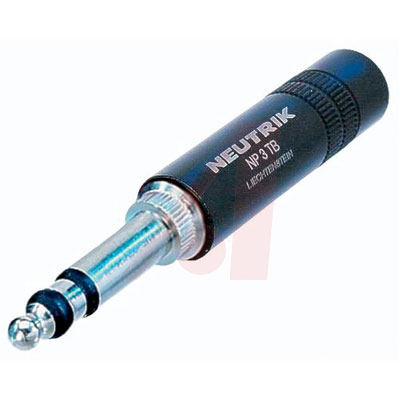
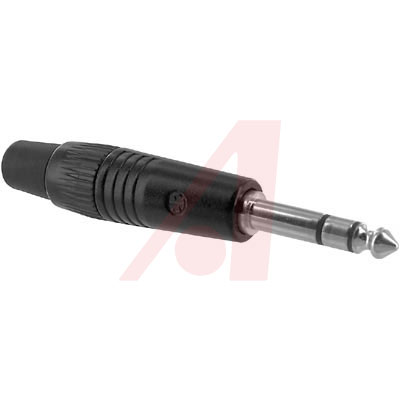
And, there IS a different 1/4" plug. Our 1/4" plug is not the same as the telephone patch plug. The telephone patch plug is the same as current professional patch panels use. They are also known as a Mil-Spec plug, Mil plug, or Long Frame plug.

Our plug:
70088537_large.jpg


The Mil-spec Phone patch plug:

70088412_large.jpg


Both come in 2-conductor as well, of course.


The jacks for the Mil-spec/Phone plug is rated for many times as many insertions as our standard 1/4" jacks.
 
They're less than ideal of your bass is active. I could see it being a chore to pull the thing out without the rest of the jack to grab hold of.

I'm not recommending using their exact cable design (although there is no chore in removing the adapter, is pulls out as easily as any other cable even with the lead cable disconnected.) My original post said "this magnet connector minus the 1/4" connector"

This means that instruments would have an integrated magnetic connector flush with the bass body. It would be very easy to integrate a small momentary switch to turn off active basses when the connector is removed. Zzyzz had a similar momentary switch design integrated as a "mute" function when unplugging a cable completely.

Magnet connectors are the only current option that would be a potential improvement.
 
There were several comments regarding USB ... have to try multiple time to plug in, no visual orientation ... most if not all male USB plugs have a symbol on one side ... plug in with the symbol up.

Except in the case where the jacks are upside down...as they are on ONE of my computers. Naturally that means that you get to try cables twice on ALL the computers.
 
Right-angled plug at the guitar and putting the cable through the strap should eliminate 99.99% of the problem of stepping on your cable and yanking it out. Back in 1971, my band opened for The James Gang and Glass Harp in Ohio. With Joe Walsh and Phil Keaggy looking on, our guitarist stepped on his cord and yanked it out of his Les Paul in the middle of the "Heartbreaker" cadenza by Zep. :eek:
Looping thru the strap has never failed me either. And a BIG shout out from PA.!
 
Why exactly are they a dumb idea? I've used them and they work brilliantly... They attach unidirectionally with greater ease than any 1/4" cable, they eliminate noise while changing instruments, they eliminate any potential damage being caused to an input jack if pressure is put on the cable in the wrong way... The list goes on and on... but please tell me why you think it's a bad idea?

Hehe i didn't mean to insult, phone-posting makes me blunt


to me the whole point of having magnetic plugs is that they can fly right out of the connection under stress. call me old fashioned , but the open-circuit hum of a detached cable through a PA is a much worse trade-off than looping a cable through your strap.

Macbooks makes sense with those plugs because when you trip over the cord your 2000 dollar computer flies on the ground, but the human musculoskeletal system holds my bass up pretty well when my cable gets stepped on
 
Except in the case where the jacks are upside down...as they are on ONE of my computers. Naturally that means that you get to try cables twice on ALL the computers.


Agreed. The standard does say that the symbol should face up. Except not all manufacturers follow it and a significant amount of time, the ports are oriented sideways. And since they're behind the computer, you can't see them so you have to do it by feel.

Don't get me wrong, USB A connectors are a huge leap over the DB series of connectors, but USB B is really a much better setup. It would be even nicer if it were orientationless and self-centering like a phono.
 
Maybe some kind of steadying mechanism (bumps that come out of the plug when something is switched or a button is pressed) that would fit into a regular 1/4" jack? I honestly think it's a good idea because I don't care much for them either. My beef would be with them in my amp head more than my bass, which would be significantly harder to remedy.

I think the speakons are a great example, many of them can do speakon or 1/4" with the same jack, something along those lines would be great IMO.
 
Maybe some kind of steadying mechanism (bumps that come out of the plug when something is switched or a button is pressed) that would fit into a regular 1/4" jack? I honestly think it's a good idea because I don't care much for them either. My beef would be with them in my amp head more than my bass, which would be significantly harder to remedy.

I think the speakons are a great example, many of them can do speakon or 1/4" with the same jack, something along those lines would be great IMO.

I just ran into some receptacles that could do 1/4 inch, Speakon, or XLR - all in the same receptacle.
 
After all these years electric guitars and basses are STILL using these sorry 1/4" jacks!
They suck! I know it! You know it!
I have been installing stereo input jacks (wired for mono) in my basses, so it will at least be a little more stable, BUT.....
SURELY in the 21st Century we can come up with a better way of plugging in than this.


(I know. I know. "That's not important right now, and STOP CALLING ME SURELY!")

Because we're spending all our research dollars on boner pills and hair restoration.

You want to talk upgrading, why stop at the ancient connector design, let's redesign the whole damn thing. Use a small laser and sensor to pick up the vibration of the strings and run that straight thru a fiber optic cable to the input of the amp where it can be converted into an electronic signal, the same way cds and dvd players have operated for decades now. You could even run power to the instrument thru the same cable, so no batteries, yay for the environment. Sure it's a bit more digital, but analog is so last millennium. I can't imagine how it might sound, but I imagine it could sound like whatever you wanted if you gave the amp a port to hook up a laptop and run the signal thru your favorite software then back to the amp or studio console.
 

Latest posts