• TalkBass has been independent since 1998. Add your voice.
    Create a free account to reply to discussions, view embedded media, and browse with fewer display ads.
    Join freeLog in
    Want zero display ads or expanded classifieds tools? Compare plans.

Why do frequencies disappear?

I am not sure if this is a bass amp question or an electric bass question. So I will ask it hear as people are likely more knowledgeable in the amp area than in the bass area -- the issue seems to be electronic.

I have a Cort Curbow -- one of the classic ones from the 90's -- and when I played it through my Peavey Pro Bass 500, certain notes would just disappear from the mix of the band. For example, if I hit a D on the G string, it was like I hadn't played it at all. It was like the amp couldn't pick that frequency up.

Can anyone explain why this might have happened?
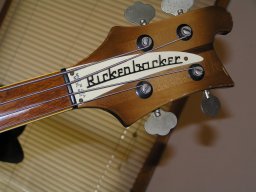
 
It's called a dead spot and frequently is in the area you describe. Some basses are worse than others regarding this issue. It's not all that uncommon and there doesn't seem to be a whole lot you can do to correct it. There are devices such as the Fat Finger that attaches to the headstock and may help. Some people put weights somewhere on or in the peghead to do essentially the same thing. According to some sources, Fender style headstocks with four tuners per side suffer more than two per side headstocks like Gibson or Rickenbacker. Hope this information helps, even though it's not really good news.
 
I thought it might be a setting on my amp. I didn't have time to mess with it at the gig. but the Pro Bass 500 has a detailed parametric eq section (way too detailed, looking back), and I wondered if perhaps I had de-emphasized a section the frequency spectrum that caused this.
 
I am not sure if this is a bass amp question or an electric bass question. So I will ask it hear as people are likely more knowledgeable in the amp area than in the bass area -- the issue seems to be electronic.

I have a Cort Curbow -- one of the classic ones from the 90's -- and when I played it through my Peavey Pro Bass 500, certain notes would just disappear from the mix of the band. For example, if I hit a D on the G string, it was like I hadn't played it at all. It was like the amp couldn't pick that frequency up.

Can anyone explain why this might have happened?

What you are describing sounds exactly like a dead spot. They are most common from the 5th to 7th frets and have more affect on the higher strings. Lots of basses have it. Try hitting the same D on the octave fret of the D string. If the note rings out true, it's not a frequency problem. It's a dead spot.
 
I am not sure if this is a bass amp question or an electric bass question. So I will ask it hear as people are likely more knowledgeable in the amp area than in the bass area -- the issue seems to be electronic.

I have a Cort Curbow -- one of the classic ones from the 90's -- and when I played it through my Peavey Pro Bass 500, certain notes would just disappear from the mix of the band. For example, if I hit a D on the G string, it was like I hadn't played it at all. It was like the amp couldn't pick that frequency up.

Can anyone explain why this might have happened?

Hello. Though you didn't say, you imply that it's only when you play this bass through this amp that you get the frequency dropouts. Please confirm:

Do you get the dropouts only with this amp, or also when playing this bass through other amps, etc.?
 
Hello. Though you didn't say, you imply that it's only when you play this bass through this amp that you get the frequency dropouts. Please confirm:

Do you get the dropouts only with this amp, or also when playing this bass through other amps, etc.?

I never tried it with a different amplifier. After it let me down on that gig, I put it on the bone pile and plan to put a short scale neck on it But I did a couple gigs where the dead spots didn't seem to exist with a rock band. Either I missed them, or I changed my EQ frequencies. The EQ section is really detailed on the Peavey Pro Bass 500 where you can dial in parametric EQ across the low mids and highs, and cut/boost them too.

upload_2018-4-26_18-59-51.png


I wonder if I inadvertently cut out a frequency that was in a light dead spot.

I have lost interest in all this experimentation given all the equipment I have, but if you're suggesting I should do more investigation, I think that's a wise piece of advice. But there seems to be consensus my particular bass might be predisposed to disappearing frequencies in spots.

The fact that it only happened on one gig makes me wonder if it was a set of EQ settings on the bass, and amp together that did it.
 
I never tried it with a different amplifier. After it let me down on that gig, I put it on the bone pile and plan to put a short scale neck on it But I did a couple gigs where the dead spots didn't seem to exist with a rock band. Either I missed them, or I changed my EQ frequencies. The EQ section is really detailed on the Peavey Pro Bass 500 where you can dial in parametric EQ across the low mids and highs, and cut/boost them too.

View attachment 2997857

I wonder if I inadvertently cut out a frequency that was in a light dead spot.

I have lost interest in all this experimentation given all the equipment I have, but if you're suggesting I should do more investigation, I think that's a wise piece of advice. But there seems to be consensus my particular bass might be predisposed to disappearing frequencies in spots.

The fact that it only happened on one gig makes me wonder if it was a set of EQ settings on the bass, and amp together that did it.

All good. However, what I'm looking for is constants. By changing only one factor in each round of testing, keeping all others constant, there's a good chance that the cause will follow you from test to test either in a given round or across rounds. For example,
  • if
    • when playing bass 1 with its controls set at X, through amp 1 with its controls set at Y, you get the dropouts in rooms A and B and C
  • and
    • when playing bass 1 with its controls set at X, through amp 2 with its controls set at Z, you do not get the dropouts in each of rooms A and B and C
  • then
    • all other factors being constant, the relationship of bass 1 and amp 1 is the cause.

  • but if instead
    • when playing bass 1, through any amp, you get the dropouts in any room
  • then
    • all other factors being constant, bass 1 itself is the cause.
and so on.
 
I get that using a full stack whereas I'm kicking out some bass in the room and I hit a B on the E string and nothing.. dead, flat whatever.. it doesn't resonate. but it will if I hit a B on a different string... each room provides a different sounding board for the bass. Sometimes I just miss striking the string altogether but that's another story.
 
  • Like
Reactions: HolmeBass
Yep, boundary cancellation.....
Walk around and check it at several spots on stage.
Change speaker position/angle.
Change EQ.

I've had the opposite.... a ridiculous boom anytime I played a B, any octave on any string. I was exciting the resonant frequency of that triangular room. Lucky I had my Thunderfunk at that gig, EQ'd the s*** out of it.
 
  • Like
Reactions: JimmyM and PauFerro
It's called a dead spot and frequently According to some sources, Fender style headstocks with four tuners per side suffer more than two per side headstocks like Gibson or Rickenbacker.
”I’m hearing...” ”People are saying” -

I’ve played a bunch of Fenders over the years and have never encountered one with multiple dead spots. Happily, they are usually 5-6 fret on the G string, so fairly avoidable.
 
Boundary cancellation just means the room itself rings at a particular frequency (like a string) and you are standing in a node. It’s akin to standing on the 12th fret when someone plays the octave harmonic. From where you stand, the string isn’t moving. Same thing but with air.

But my fretless MIM Jazz has a spot so dead on that D it sound out of tune, even when the tuner says it’s right on. That’s worth checking out.
 
  • Like
Reactions: JimmyM
It was right up against a wall, but to the side of it, maybe angled a bit toward it. What is boundary cancellation?
BassUrges has it right, but it can also be caused by your cab being by a nearby wall and the reflections from the wall hitting your ear at a time that cancels out the note, too. But it would have to be slightly less than 2 feet from a wall to cancel out that particular D. Here's a chart for it...the D on the G string is 146.83 hz:

[Invalid or Expired Link Removed]

However, I somehow glossed over it being the D on the G, and that's right in the range where you could have a dead spot, as it's typical on certain basses to be in the C-D range. But if it was fine in other settings, I suspect that it might not be a dead spot. It's possible you did de-emphasize a frequency that brings it out.

Anyway, sorry I missed a very important part of the equation, but honestly, we're all spitballing here. Stuff like that is hard to diagnose for sure over the net. But at least now you have some ideas what it could be, and I'm sure between everything mentioned that you'll figure it out.
 
Boundary cancellation just means the room itself rings at a particular frequency (like a string) and you are standing in a node. It’s akin to standing on the 12th fret when someone plays the octave harmonic. From where you stand, the string isn’t moving. Same thing but with air.

But my fretless MIM Jazz has a spot so dead on that D it sound out of tune, even when the tuner says it’s right on. That’s worth checking out.
My J has a wicked dead spot from the C up to the D on the G string. The C is particularly weak, the D a little better, but these notes are weak. Just passing by isn’t too bad, but holding, or with an octaver, they are avoid notes. My octavers won’t track those notes, but work fine on the same notes on the D string. I think it’s pretty common for basses, especially Fender styles, to have dead spots although the severity can vary a lot from bass to bass.