Once again, it's a string tension thing. Most of the cats that use lighter strings have a technique that would suffer from having to struggle against a heavy, tight string. Since I play solo and rely on extended technique I don't have to worry about bringing that super thick low end through in a live situation and don't want the added tension (except on my B which I don't want completely flabby). DR 30-130 on my 6.

Enjoy the benefits of a premium membership!
Upgrade Account
-
TalkBass has been independent since 1998. Add your voice.
Create a free account to reply to discussions, view embedded media, and browse with fewer display ads.
Join free Log in
Want zero display ads or expanded classifieds tools? Compare plans.
You are using an out of date browser. It may not display this or other websites correctly.
You should upgrade or use an alternative browser.
You should upgrade or use an alternative browser.
why do so many famous Elect. Bassists use such light gauge strings?
- Thread starter Bob Dullam
- Start date
More options
Who Replied?
the set up and construction of the basses in question is a big influence too... I'm using .118 low B on my 2 main basses (both 34" scale) and never have a lack of deep punchy low end... no flabby B either.
FYI: I play heavy handed and with higher than average action.
FYI: I play heavy handed and with higher than average action.


I was revisiting this thread and was surprised at the assumption that "with lower gauge strings, you can have your action lower". This is not true. Actually, a heavier gauge or tighter string can have lower action. Lighter strings have much more excursion when plucked. You can set a heavier gauge string lower, using the same energy to pluck it and you won't get the string rattle you would with a lighter gauge. That's not something I figured out, BTW. That's straight from Gary Willis.
I think you have to find what YOUR ears and YOUR hands tell you is right. I played on 'light' strings for a few years (40-120) because I aspired to sound like many of my heroes that play that gauge. Solos, chords, thumping, everything sounded great. That gauge, though, really seems to lack something when it comes to playing bass, IME. What was great, though, was that that gauge really gives the instrument a bump in definition, clarity, and high-end. For me, though, the slap sound just is not there with that gauge like it is with a 45-125.
I recently had an incredible custom bass finished for me by an incredible luthier (www.willyfranklin.com--it's the first bass you see). It's a six-string, and it was strung with XL's when he brought it to me: 32-130. I loved the gauge! Soon after playing it, I realized that I was really trying to get my 5 (and that G) to sound like a 6 (and that C) with those lighter strings. I also realized that my new 6 just sounded and felt too good to try anything lighter than the 'standard' size gauge. My bass, my hands, my ears seem to dig those strings.
BTW, some of the greatest 'virtuoso' bassists not mentioned use medium or heavier gauge strings including Anthony Jackson, Stu Hamm, Billy Sheehan, John Patitucci, Mike Pope, Nathan East, Oteil Burbridge, Jaco...AND Marcus & Gary Willis.
Trust your ears and your hands--light, heavy...whatever it takes!
I think you have to find what YOUR ears and YOUR hands tell you is right. I played on 'light' strings for a few years (40-120) because I aspired to sound like many of my heroes that play that gauge. Solos, chords, thumping, everything sounded great. That gauge, though, really seems to lack something when it comes to playing bass, IME. What was great, though, was that that gauge really gives the instrument a bump in definition, clarity, and high-end. For me, though, the slap sound just is not there with that gauge like it is with a 45-125.
I recently had an incredible custom bass finished for me by an incredible luthier (www.willyfranklin.com--it's the first bass you see). It's a six-string, and it was strung with XL's when he brought it to me: 32-130. I loved the gauge! Soon after playing it, I realized that I was really trying to get my 5 (and that G) to sound like a 6 (and that C) with those lighter strings. I also realized that my new 6 just sounded and felt too good to try anything lighter than the 'standard' size gauge. My bass, my hands, my ears seem to dig those strings.
BTW, some of the greatest 'virtuoso' bassists not mentioned use medium or heavier gauge strings including Anthony Jackson, Stu Hamm, Billy Sheehan, John Patitucci, Mike Pope, Nathan East, Oteil Burbridge, Jaco...AND Marcus & Gary Willis.
Trust your ears and your hands--light, heavy...whatever it takes!

JAUQO III-X
Inactive
For many years I have used a lighter than light gauge.
.110 .80 .60 .40 .30. .25
I realized that these gauges works best for me in many ways. Especially eliminating unnecessary stress on my wrist,hands and fingers.
The action on my basses are so low that a credit card can barely fit under the strings. And there is no fret buzz at all(but that has a lot to do with the player in most instances).
The most surprising thing is that after a show a bass player will ask me what gauge I use and when I tell them and show them,they can't believe the low end that I was getting out of bass strings so low.
.110 .80 .60 .40 .30. .25
I realized that these gauges works best for me in many ways. Especially eliminating unnecessary stress on my wrist,hands and fingers.
The action on my basses are so low that a credit card can barely fit under the strings. And there is no fret buzz at all(but that has a lot to do with the player in most instances).
The most surprising thing is that after a show a bass player will ask me what gauge I use and when I tell them and show them,they can't believe the low end that I was getting out of bass strings so low.
For many years I have used a lighter than light gauge.
I realized that these gauges works best for me in many ways. Especially eliminating unnecessary stress on my wrist,hands and fingers.
The action on my basses are so low that a credit card can barely fit under the strings. And there is no fret buzz at all(but that has a lot to do with the player in most instances).
The most surprising thing is that after a show a bass player will ask me what gauge I use and when I tell them and show them,they can't believe the low end that I was getting out of bass strings so low.
+ I agree with all of the above. I am not famous! I use 30-50-70-90 (called a balanced set) I get the same comments on low end after they find out the guage. What is really funny is when they ask to play it...they un-necessarily dig in so hard they barely can get a sound. For me it started back in the late 70s. I broke a Fender E string at a gig with no extras. The break was at the bridge. In between sets, I ended up unwrapping the E string (roundwounds had multiple wraps) to get to the core so I could put the ball end back on. I really liked the way that it played. Then I found rotosounds and another brand that was made across the street from rotosound (cannot remember name they had a reverse winding than the rotosounds) The rotosound would infect my fingers with loose filings though....I had to buy singles for a long time B4 sets were available.


I just like the way lighter strings feel and sound. I get a more, oh I don't know, aggressive tone with lighter flats. I am primarily looking for nearly a round sound with flats.
I am also finding too, that it is very easy to dig in and get that monster aggressive tone without much effort. I think that lighter strings can be more dynamic with less effort. Sometimes this is a detriment the way I hack away at the bass..... As someone said before it is real easy to get a lot of unwanted noise and I can hit the pickup poles with the string with little effort.
But for whatever reason, anything with an E thicker than 105 feels like anchor cable to me and to hard to use. I prefer an E of 100 with my flats.
Again, this is all IMHO.....and I am not a famous bass player so take my opinion for what it is worth.
I am also finding too, that it is very easy to dig in and get that monster aggressive tone without much effort. I think that lighter strings can be more dynamic with less effort. Sometimes this is a detriment the way I hack away at the bass.....
As someone said before it is real easy to get a lot of unwanted noise and I can hit the pickup poles with the string with little effort.But for whatever reason, anything with an E thicker than 105 feels like anchor cable to me and to hard to use. I prefer an E of 100 with my flats.
Again, this is all IMHO.....and I am not a famous bass player so take my opinion for what it is worth.

- Sep 11, 2006
- 43
- 1
- Disclosures
- Endorsing Artist: Genz Benz Amps, D'Addario Strings, Planet Waves
I just moved up to a medium gauge - D'addario XL mediums (50-105) from the regular light gauge (45- 100)... I'm finding that I can lower the action more and the strings seem tighter... another issue I'm finding that it helps with is most of the time I'm switching between upright and electric and sometimes after playing upright for 4-5 songs and then picking up the electric with light gauge strings ... it almost feels like too much of an adjustment... the mediums certainly help... may sound weird to some but that's my 2 cents...

OT but has anybody gone to the OP's website?? Some pretty cool stuff on there and I saw one pic with his Ibanez he was speaking of.

For many years I have used a lighter than light gauge.
.110 .80 .60 .40 .30. .25
I realized that these gauges works best for me in many ways. Especially eliminating unnecessary stress on my wrist,hands and fingers.
The action on my basses are so low that a credit card can barely fit under the strings. And there is no fret buzz at all(but that has a lot to do with the player in most instances).
The most surprising thing is that after a show a bass player will ask me what gauge I use and when I tell them and show them,they can't believe the low end that I was getting out of bass strings so low.
I've found the same thing. Lighter strings seem to give you just as much bass if you play them with a light touch. And if you want that "digged in" sound, it takes less effort to get it.
Randy
Randy
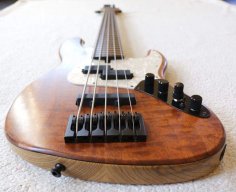
Light strings are mostly for retuning a bass from your normal EADG. You can go sharper than with heavy strings which would put alot of tension on the neck.
i've been playing 40-100 because that's the only guage DR Hellborgs come in. i do not play with a light touch, tho, so i've jacked my action up higher than i've ever had it.
also, as was posted earlier, a lighter gauge string (all else being equal) will provide more fundamental and less harmonics than a thicker gauge string because the lighter string acts more like a string and the heavier string acts more like a metal bar that's clamped on both ends.
also, as was posted earlier, a lighter gauge string (all else being equal) will provide more fundamental and less harmonics than a thicker gauge string because the lighter string acts more like a string and the heavier string acts more like a metal bar that's clamped on both ends.
Can't speak for the artists, but I use light DR hibeams on my Vintage Modified 70's reissue j-bass and its great for slap and pick playing...while still giving it that classic fender tone that has a touch of vintage to it. But I've strung my other basses with standard 45-105 because they all seem more balanced.
I use D'Addario Prosteels a lot and i started using a thin gauge with them sort of by accident(the shop i buy from was out of anything but the sets of .35/.95)I got them anyway even though i was expecting them to be terrible for what i normally do.Put them on and couldnt of been happier with them.
Ive never actually found an issue with string tension with this guage and actually found that (in my head) They drop better. I find i get a much better tone dropping the thinner strings down to BF*BE than the .110 guage strings
Ive never actually found an issue with string tension with this guage and actually found that (in my head) They drop better. I find i get a much better tone dropping the thinner strings down to BF*BE than the .110 guage strings
- Oct 8, 2007
- 970
- 60
- Disclosures
- Former Part-Time, Non-Commission Employee MOOG Audio
Link Removed
Why does every one seem to think that jaco used 45-105 just because that's what Fender puts on his signature bass.
I just found this on a friend's Facebook page looks like RS66LA Extra Light: 85 65 50 30
Why does every one seem to think that jaco used 45-105 just because that's what Fender puts on his signature bass.
I just found this on a friend's Facebook page looks like RS66LA Extra Light: 85 65 50 30
- Oct 8, 2007
- 970
- 60
- Disclosures
- Former Part-Time, Non-Commission Employee MOOG Audio
then again there is this comment under the photo:
"Alan G: if i remember correct ingird had said they sent him this guage to try and he didnt like it, ( super light )"
http://www.facebook.com/photo.php?fbid=10152010178895024&set=t.533296149&type=3&theater
"Alan G: if i remember correct ingird had said they sent him this guage to try and he didnt like it, ( super light )"
http://www.facebook.com/photo.php?fbid=10152010178895024&set=t.533296149&type=3&theater
- Oct 8, 2007
- 970
- 60
- Disclosures
- Former Part-Time, Non-Commission Employee MOOG Audio
ok after searching more it seems the consensus is 45 65 85 105 Roto's but I thought you'd all enjoy the pic!
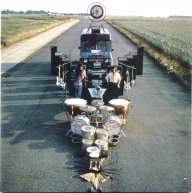
a handful of virtuoso 'featured bass players' are probably not always the best role models for deciding what equipment to use
+1
It's like all the kids playing 13s on guitar just because SRV did

It really is all about personal preference, in tone, feel and playability.
The older I get the lighter my strings have gotten. When I was younger and playing in hard rock bands on a four string...my strings were HEAVY and I used either a pick or my fingers (or both) and I played with higher action and a very heavy hand.
Nowadays, I play a 6 string with extremely low action, an incredibly lighter touch, playing music that requires some soloing, but a lot of chordal work and a whole lot less "thumpin'". Yet, despite using lighter gauge strings and playing with a lighter touch, I'm not only able to play more complex parts, I have lost absolutely NO deep low end. I let my amp and cab deliver what I need. I find no need to use heavy gauge strings for a HEAVY sound if that's what I want. I just dial in more low end from my amp and let my cab produce it and it does, in spades, even with a light touch and light gauge strings.
It's more important to use what works for you. Everyone has their own style, their own way of playing and wanting to impart their own tone. No one way works for everyone, be it choice of bass, strings, amps, cabs or playing techniques. You gotta use what works for you. Trying to emulate others playing or tone is one thing, but using what works for them is an exercise in futility because no matter what they use, it's how they use it that makes them sound that way. They'll sound that way on pretty much anything they get their hands on, just as you will.
The older I get the lighter my strings have gotten. When I was younger and playing in hard rock bands on a four string...my strings were HEAVY and I used either a pick or my fingers (or both) and I played with higher action and a very heavy hand.
Nowadays, I play a 6 string with extremely low action, an incredibly lighter touch, playing music that requires some soloing, but a lot of chordal work and a whole lot less "thumpin'". Yet, despite using lighter gauge strings and playing with a lighter touch, I'm not only able to play more complex parts, I have lost absolutely NO deep low end. I let my amp and cab deliver what I need. I find no need to use heavy gauge strings for a HEAVY sound if that's what I want. I just dial in more low end from my amp and let my cab produce it and it does, in spades, even with a light touch and light gauge strings.
It's more important to use what works for you. Everyone has their own style, their own way of playing and wanting to impart their own tone. No one way works for everyone, be it choice of bass, strings, amps, cabs or playing techniques. You gotta use what works for you. Trying to emulate others playing or tone is one thing, but using what works for them is an exercise in futility because no matter what they use, it's how they use it that makes them sound that way. They'll sound that way on pretty much anything they get their hands on, just as you will.

It's interesting to read that some people were experiencing some aches and pains in their fingers/hands from using thicker, heavier tension strings.
I've encountered the same problem, specificaly with stainless strings vs nickel, of the same gauge. I'm tempted to try 40-100 but suspect I'd need to stick with nickel. I don't really solo but I do play some super fast passages, and found it tougher to do on the stainless strings, they feel 'drier' and tend to grip more, which slows me down.
Would coated strings feel smoother?
I've encountered the same problem, specificaly with stainless strings vs nickel, of the same gauge. I'm tempted to try 40-100 but suspect I'd need to stick with nickel. I don't really solo but I do play some super fast passages, and found it tougher to do on the stainless strings, they feel 'drier' and tend to grip more, which slows me down.
Would coated strings feel smoother?


