I also wonder.
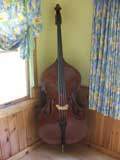
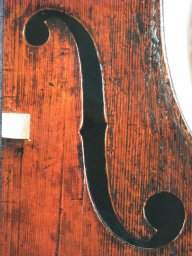
I had a new cheapish Strunal plywood bass at luthier's once, its neck was - when the bridge was 'ideally' set - between D and Eb. We adjusted and tried for D and Eb neck setup, and I came to see that Eb is better for that bass, as the bridge could be closer to the right position in the center of the f-holes, the mensure would be closer to my preferred and the neck heel somehow came better into my hand. I had a feeling that the reason for this bass wanting to have Eb neck comes from manufacturing details - if the neck heel were few milimeters thicker, the bass could have been better set as D neck.
I imagine I could persuade myself to believe that this might have been the reason for D - Eb necks with old time hand carved basses. That it just came out on its own, respecting the demands of wood. But I don't think it would be the same with precise crafting tools of nowadays. (Even though the bass makers tend to be conservative, for fascinating reasons.)
As a player, I found out that the differences in neck shape and stickiness, fingerboard shape and mensure are affecting my intonation much more that whether the neck is Eb or D.
















 confused


