• TalkBass has been independent since 1998. Add your voice.
    Create a free account to reply to discussions, view embedded media, and browse with fewer display ads.
    Join freeLog in
    Want zero display ads or expanded classifieds tools? Compare plans.

Why isn't poplar more popUlar?...

My first experience with Poplar (aka Tulipwood) was with an MTD 535 that I bought new from MTD via LA Bass Exchange (Dave Avenius at the time). And Popular at that time for MTD's were tulipwood bodies complete with Tops or 10 Tops. Typically a figured maple variety or other amazing tops. The bass I settled on had no top, but was FANTASTIC and fulfilled all my needs for a Modern 5 string bass at that time.
It was finished clear, hand rubbed.. Really great bass!

So fast foward many years to me having a blast at my version of "Lutherie", and I find that yes Poplar does have a tendency to finishing green. However, It's an easy wood to work with, carve, cut and this translates into not harsh on tools. Also it isn't breaking the bank.

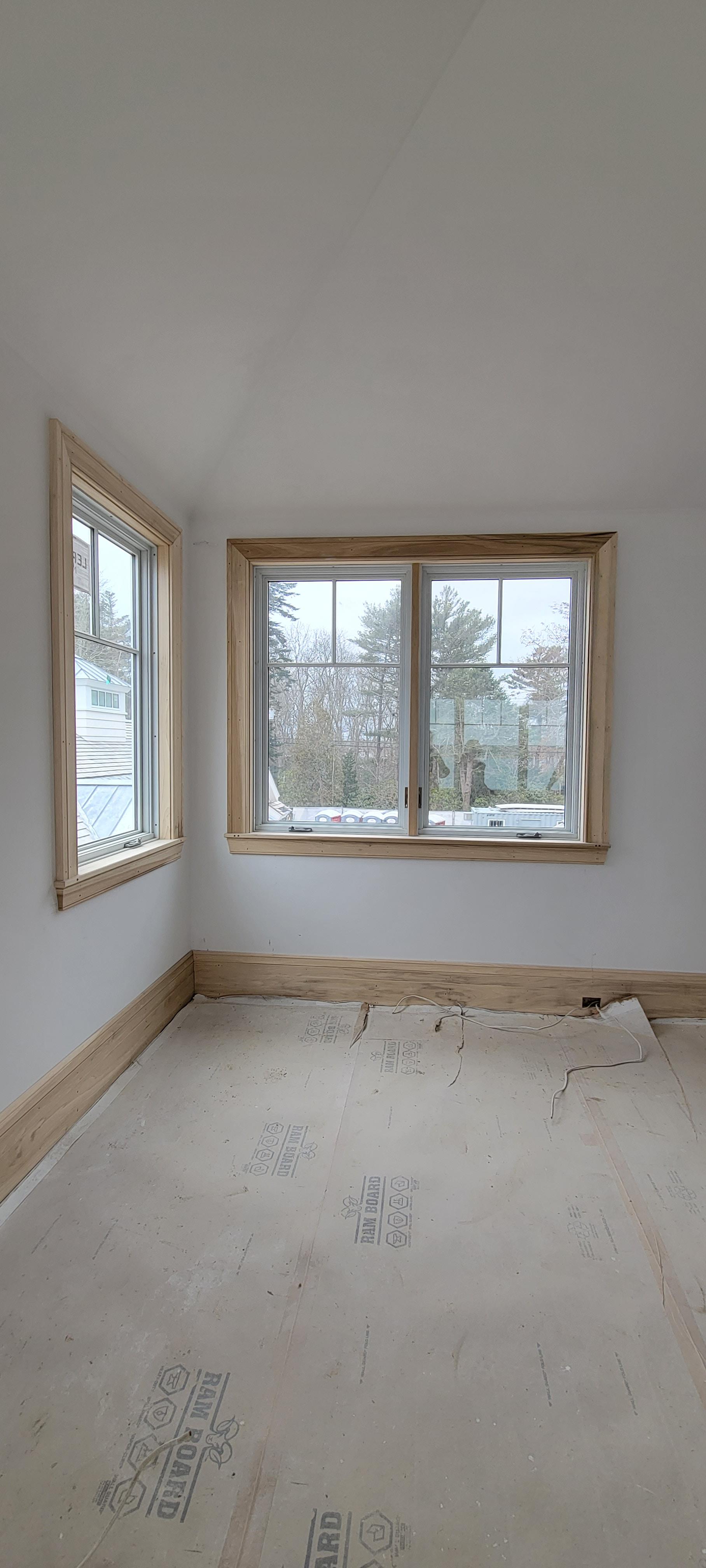
I've made a few poplar bodies either from 4/4 (4 pieces), or coming up next with a nice 8/4 10 foot piece I found a few weeks ago $54. It is harder to find Poplar that you would want for a figured top, but it's attainable. See below (as well as the side rings where it gets more green):

View attachment 4028283
View attachment 4028284
View attachment 4028282

Also of note, I went into my wood source looking for anything light weight and consistent in an 8/4 configuration. Poplar was 3.50 per board foot over 4 for basswood. Maybe thats due to supply/demand, etc...

If you can find it, get it, use it, finish it or paint it. Just another great option in my humble opinion.

Carry on, and have fun!!!
In your opinion what are the tonal characteristics of Tulipwood aka Poplar aka Tulip tree, assuming all three names refer to the same type of wood? I understand that it tend to be soft and can have greenish mineral streaks in it. But is the sound brighter, darker, or somewhere in the middle sounding? Do it have any resonance or 'pop' like Ash? Thanks for chiming in, because this thread is leaving me with more questions than answers.
 
In your opinion what are the tonal characteristics of Tulipwood aka Poplar aka Tulip tree, assuming all three names refer to the same type of wood? I understand that it tend to be soft and can have greenish mineral streaks in it. But is the sound brighter, darker, or somewhere in the middle sounding? Do it have any resonance or 'pop' like Ash? Thanks for chiming in, because this thread is leaving me with more questions than answers.

Tulipwood poplar is a soft light wood, as compared to other hardwood we use for bass bodies. It's softer than most swamp ash, much softer than regular ash or alder, and much, much softer than maple. About the only wood commonly used that's softer than Tulipwood Poplar is Basswood.

If all else is equal, for example, you build identical solid, non-chambered, thick P-bass bodies of different woods, the bass with the Tulipwood Poplar body will sound pretty close to a swamp ash body. Dark, warm, more background coloration. Not bright like harder woods.

But remember, the overall stiffness of the body is what determines the effect on the tone of the bass. You can do things in the design of the body, such as thickness, chambering, stiffeners, harder wood tops, etc., which will override the characteristics of the wood species. You can build a poplar body to be very stiff, and it will be as bright as maple. Or you can build a maple body to be very soft, and it will be as warm as poplar. The wood species does not automatically determine the tone effect. It's just one factor. That's why there's so much confusion and argument about this subject of wood species and tone.
 
This is what I'm used to seeing for unfinished, off the shelf poplar: kinda greenish and streaky. It takes paint beautifully, and is hard enough to hold up to a lot of abuse, but clear finish? Not so much. I suppose if you had access to a pile of poplar, you could cherry-pick out some clear pieces, but most of it is going to look something like this, at least in New England. its relatively heavy too, I think a Fender style body in solid poplar might be into boat-anchor territory.

nyoa29A.jpg
 
  • Like
Reactions: gigetto
Here's one of my AMB-2 Scroll Bass bodies in poplar.

IMG_8014B.jpg


IMG_8031B.jpg


This is the Tulipwood Poplar. It's commonly available around here, inexpensive. I pick boards which are mostly tan streaking, like this one, rather than the greenish streaking. Light weight, soft, easy to cut and rout, but it does have a lot of fuzz around the edges from cutting. I'm doing extensive internal chambering on these bodies.

IMG_8039B.jpg


The poplar body AMB-2's are usually finished in the Classic style, transparent red with black sunburst. The poplar's grain looks nice through the transparent red. It's not as dramatic as ash, but it's more noticeable than alder or maple.

IMG_2154B.jpg
 
One other note about Tulipwood Poplar: Any greenish streaks can be covered up by using an amber-tinted finish. Amber has orange and/or yellow pigment in it, which will mostly "cancel out" green. Finishes with a natural amber tint, such as Tru-Oil and most oil-type finishes, will make the green streaks turn dark brown. You can see that on ChinJazz's examples above.
 
  • Like
Reactions: chinjazz and Beej