I didn't know their pickups and filter were designed to work together. Makes sense then that you can't just slap a filter on a bass. Thanks.As someone who's used filter preamps in one form or another since the early 80's, I'd say there's 3 reasons why they're not more common.
1; they're not all that intuitive to most people and they don't understand how they work or what they're trying to accomplish. So they're written off as a failed experiment.
2: Ron Wickersham designed his PUs to have the natural resonant peak well above the audio band so the PU frequency response is flat, then the filters are wound in to be able to emulate a large variety of PU types by simulating the frequency and bandwidth (Q) of another pickup. They are NOT a general purpose broad shaping filter like on most BMT preamps and because people don't get that sort of response from them, they're not liked.
3: because most aftermarket filter pres are paired with conventional PUs with a natural resonance somewhere within the filter pre's sweep range the filter doesn't work as designed, limiting it's effective range and then potentially adding a strange peak in the final low pass slope which just sounds odd.
Unless you understand how filter pres, and the appropriate PUs work as a system, you're unlikely to be happy with the final result. I also wouldn't ever use a passive VC or V/V or V/B between the PUs and the input of the pre. FPs should be one per PU and directly interfaced.
Honourable mention: because these are 'exotic' or attached to basses like Alembics or Wals that they lust after and may never have had, to many they have an almost otherworldly or magical quality that they think if they're added to some random bass then it'll become the Alembic of their dreams. It won't.

Enjoy the benefits of a premium membership!
Upgrade Account
-
TalkBass has been independent since 1998. Add your voice.
Create a free account to reply to discussions, view embedded media, and browse with fewer display ads.
Join free Log in
Want zero display ads or expanded classifieds tools? Compare plans.
You are using an out of date browser. It may not display this or other websites correctly.
You should upgrade or use an alternative browser.
You should upgrade or use an alternative browser.
Why no filters on most basses?
- Thread starter eweise2
- Start date
More options
Who Replied?
Passinwind
I know nothing.
- Dec 3, 2003
- 23,066
- 45,992
- Disclosures
- Designer/Toaster Tech @ Passinwind Electronics
There are ways of making it work pretty well with certain standard issue pickups, which has been addressed a number of times in some old TB threads. Filters can also work really well with many piezo transducers, IME. But yeah, for best results a carefully integrated system would always be my first choice.I didn't know their pickups and filter were designed to work together. Makes sense then that you can't just slap a filter on a bass. Thanks.

My Audere Pro Z has an RFE in "Hi Z" mode. Problem is that it's harder-than-heck to adjust via the micro (!) trim pots and have a tough time discerning the subtle nuances. Maybe I'll spend some extra time with it but, until then, I'll just use the other 2 modes.
The filter on the Heartfield series was pretty cool, though.
Riis
The filter on the Heartfield series was pretty cool, though.
Riis


I have a filter eq on my Heartfield DR5.I recently bought a Sandberg bass and I really like it. The only thing I wish it had are low pass filters. My Alembic orion has a filter (and q switch) for each pickup, which is really useful for rolling off the highs and getting different tones. I don't feel like dialing down the treble on my Sandberg gives the same effect. Googling, I didn't find many basses that have filters. I guess passive basses have a tone control. Because of active electronics, do people feel like eq controls are better than filters?
I like it but it took a long time for me to be able to hear the tones clearly and to kinda understand what’s going on with the eq.
There’s something about how the filter boosts a varying frequency that makes it harder for my brain to really understand how the tone will fit with a band, whereas a traditional bass, mid, treble eq is more intuitive probably due to familiarity.
The filter eq is fiddly though and once I have the sound I want, I set it and leave it since even small adjustments can really alter the sound significantly.

and the appropriate PUs work as a system
Not necessarily. My bass has it since 1987 Bartolina P and my Jazz with Big Splits since 2021. They do just fine. They are not as hi-fi but they are not in your face Duncans or too vintage sounding. The gain trim knobs on the preamps can change how the filter will act on the signal. 18V or 27v is what I'd recommend to run them on

I'm glad you're content with yours, but my experience is they're not all that great.They do just fine.
Given generic PUs and a BMT type preamp, I'd pick that over a filter almost every time.

A 2-pole filter such as Alembic can only work properly with a full-range pickup such as, well, an Alembic.
Regular passive and active pickups (maybe except EMG X) already form a 2-pole filter with the tone control network or not. Adding another filter will make it overall 4-pole and too dark.
Regular passive and active pickups (maybe except EMG X) already form a 2-pole filter with the tone control network or not. Adding another filter will make it overall 4-pole and too dark.

After a trip down this particular rabbithole, I like not having to deal with batteries in instruments.
Filters in a box are better for me.
Filters in a box are better for me.

I wish all of my basses had the filter EQ... only the Wal does. It never seemed counterintuitive to me, and I generally don't have to recalibrate my brain when I switch to the other basses. I'd love to have them on my Bordwells and Stingrays.

I had Cliff Bordwell build me a bass with Turner multicoils and an underhill preamp that I love so much I am exploring all the filter pres I can get my hands on.
I’m going so far as to put a pair of turners in a project bass, with buffers for the pickups, wiring it to send a stereo signal, and building boxes for several filter pres to be able to see how they compare.
Lusithand, Passinwind, JTEX, Underhill, frequency distiller, F1, SF-2 are what I’ve collected. Trying both voices on the Turner multicoils coils, and possibly a set of the Turner Gordos.
It didn’t take me that long to be able to dial in sounds close enough repeatabley enough. But stuff is a bit sensitive.
I figure if flea can play his Wal tracks on a sting ray or a jazz live, then I can get things close enough from my bass.
I understand why people don’t get them, or feel overwhelmed by them. I had a chance to buy an Alembic in 91 that I regret not buying to this day. The filters were too confusing to me then. But I am surprised that more filter preamp coaching isn’t part of the bass player community tradition to help newbs learn. I wish I knew it was this easy back in the 90s.
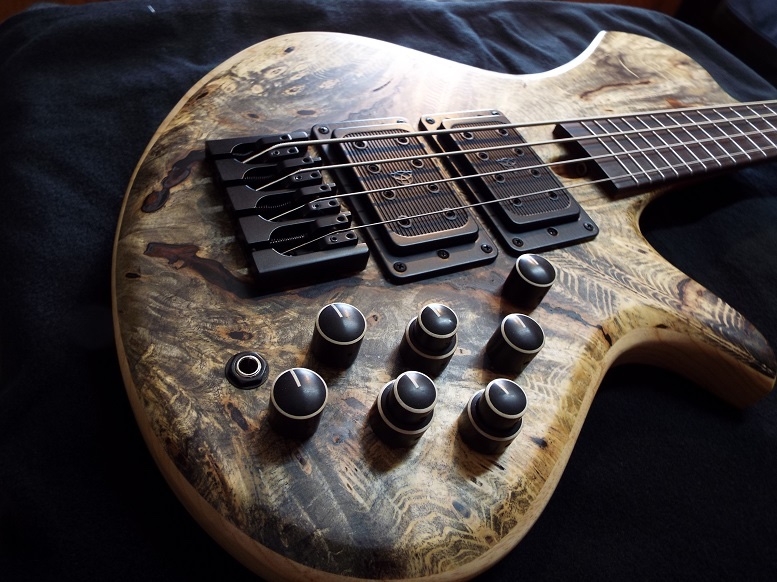
I’m going so far as to put a pair of turners in a project bass, with buffers for the pickups, wiring it to send a stereo signal, and building boxes for several filter pres to be able to see how they compare.
Lusithand, Passinwind, JTEX, Underhill, frequency distiller, F1, SF-2 are what I’ve collected. Trying both voices on the Turner multicoils coils, and possibly a set of the Turner Gordos.
It didn’t take me that long to be able to dial in sounds close enough repeatabley enough. But stuff is a bit sensitive.
I figure if flea can play his Wal tracks on a sting ray or a jazz live, then I can get things close enough from my bass.
I understand why people don’t get them, or feel overwhelmed by them. I had a chance to buy an Alembic in 91 that I regret not buying to this day. The filters were too confusing to me then. But I am surprised that more filter preamp coaching isn’t part of the bass player community tradition to help newbs learn. I wish I knew it was this easy back in the 90s.
Sort of a non-answer: Eq on basses and amps are not great; not enough bands, and more importantly, you can't customize the bands, and often in an awkward place. (E.g. the 10kHz treble control on Stingrays) This is fine in some cases; let the DAW or mixing guys set up the EQ, but it would be nice if basses or amps had customizable frequencies for 4-8 boost/cut filters, e.g. for playing live directly through the amp. (I have heard some amps e.g. by DarkGlass do this via having many bands)
To clarify terms as others have done: "filter" means some place you can boost or cut frequencies; either analog (LC etc) or digital (FIR/IIR; likely one-tap IIR for live playing to keep latency to a minimum), in patterns like band pass/cut, or low/high boost/cut. The filter button you refer to is probably a preset low pass.
To clarify terms as others have done: "filter" means some place you can boost or cut frequencies; either analog (LC etc) or digital (FIR/IIR; likely one-tap IIR for live playing to keep latency to a minimum), in patterns like band pass/cut, or low/high boost/cut. The filter button you refer to is probably a preset low pass.
Last edited:

Indeed, eq controls on active basses also control filters. And every bass, acttive or passive, has a low pass filter (or several) that result from the pickup and how it’s loaded electrically. If you ever heard a bass without a low pass filter, it’d be a scratchy sounding mess - it takes a lot of high frequency rolloff to make a bass or guitar sound “normal”.A passive tone knob is a filter.
After experimenting with external filters including Alembic's I have discovered that they can be extraordinary. But I have also discovered that I often do not want the resonnance peak at the cut-off frequency of the filter.
Also ... just a tone knob is wonderfully easy and no battery problems is also a boon.
I vote filters in boxes.
Also ... just a tone knob is wonderfully easy and no battery problems is also a boon.
I vote filters in boxes.
Last edited:
After experimenting with external filters including Alembic's I have discovered that they can be extraordinary. But I have also discovered that I often do not want the resonnance peak at the cut-off frequency of the filter.
Also ... just a tone knob is wonderfully easy and no battery problems is also a boon.
I volte filters in boxes.
I guess there's a desirable component or outcome but I'm not sure what that is. Here's a generic graph which illustrates what you're describing:

Riis
Passinwind
I know nothing.
- Dec 3, 2003
- 23,066
- 45,992
- Disclosures
- Designer/Toaster Tech @ Passinwind Electronics
Yep, and even a pickup with a very high "natural" resonant frequency can be problematic if not loaded thoughtfully. I've received a lot of pushback on that aspect of my freebie designs, which to me is just part of what open source means. Here's one Spice model I posted in my interminable DIY preamp thread, with the ugliest curve resulting from the more or less default 1 Meg ohm loading scenario:3: because most aftermarket filter pres are paired with conventional PUs with a natural resonance somewhere within the filter pre's sweep range the filter doesn't work as designed, limiting it's effective range and then potentially adding a strange peak in the final low pass slope which just sounds odd.
Those graphs represent a 3dB resonant LPF boost (before loading) at around 4kHz interacting with pickup resonance, over a variety of loading scenarios. And this almost a best case, with the natural resonance well above the filter cutoff.
Last edited:
That’s why I like the treble boost/pick attack options. Dial in your mid range character with your resonant filters, add the lost treble back in if you want it. Clean up the bottom with a VLPF on the pedal board.
Of course, one of my formative albums as a younger player was Blood Sugar Sex Magic, so that wal with pick attack sound is as foundational to me as p bad with flats is to so many others.
Of course, one of my formative albums as a younger player was Blood Sugar Sex Magic, so that wal with pick attack sound is as foundational to me as p bad with flats is to so many others.
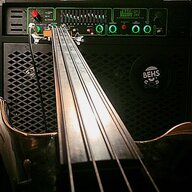
That explains why my Aria LEB sounds so bad in passive mode - there must be no filter there at all.If you ever heard a bass without a low pass filter, it’d be a scratchy sounding mess - it takes a lot of high frequency rolloff to make a bass or guitar sound “normal”.


