• TalkBass has been independent since 1998. Add your voice.
    Create a free account to reply to discussions, view embedded media, and browse with fewer display ads.
    Join freeLog in
    Want zero display ads or expanded classifieds tools? Compare plans.

Why no frequency response plots for bass cabs?

Turns out the equation for relating one to the other only depends on the resonant frequency, and not the other parameters. I'm still digging. If I don't find it, I'll write it up again.
That makes absolutely no sense. Qts is definitely involved, along with a bunch of other parameters - enclosure size, port parameters, etc.
Then we'll find the error together when I get it posted. In the final analysis i'd prefer to know if my equations are right or wrong about this.
 
Not sure what links are allowed, but check out the JBL 4367 measurements on Erin's Audio Corner and measurements of large Genelecs and Neumanns on Audio Science Review. They seem useful for home audio.

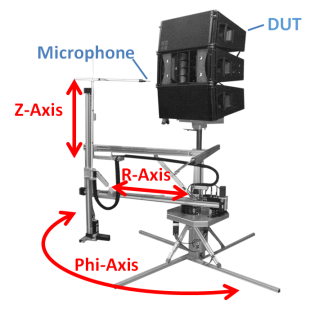
Erin's audio and others on Audio Science Review have Klippel Near Field Scanners (NFS). Klippel NFS is a fraction of the cost to build and maintain compared to a large anechoic chamber. Harman, QSC, and other prime manufacturers are now using NFS in their QC.
Aufbau_320px.png


There's a guide on how to get very close to NFS or Anechoic measurements on the cheap with with REW and VituixCAD
How to make quasi-anechoic speaker measurements/spinoramas with REW and VituixCAD

Here's a site sharing all these kinds of measurements:
A collection of loudspeakers measurements

I'm finding IRs, or multiple IRs, of cabinets do a dandy job of representing what a cabinet is going to sound like. IRs are measurements, and are very popular these days. If you like the IR of a cab as you listen on good headphones or studio monitors, then you might want to go try out the cabinet itself.

IMHO
 
Then we'll find the error together when I get it posted. In the final analysis i'd prefer to know if my equations are right or wrong about this.

There are a whole lot of folks busy designing speakers to work either in ported enclosures or sealed ones - there are a lot of things they do to make it work one way or the other (lower QTS for ported, higher for sealed), which means voice coil and gap geometry has to change quite a bit); I think they'd be really surprised to find out that most of their work is useless. My bet is they are right.
 
  • Like
Reactions: fdeck
IR’s do include the room’s response however, the impact of the room, even with near field micing can be small to significant depending on the room.

One thing to remember is that measurement mics are almost always small diaphragm omnidirectional which is why the room impact can’t be entirely avoided.

In theory, you could take an impulse response of the room at that mic position with the cabinet off and another impulse with the speaker on and subtract the room from the speaker plus room and be left with the room. How practical this is is unknown.