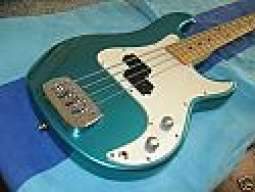
The standard P pickup configuration is that the upper pickup is below the E and A strings, and the lower pickup is below the D and G strings.
We know that putting a pickup closer to the bridge increases treble and decreases bass whilst putting it closer to the neck does the opposite.
That said, the E and A strings naturally have more bass because they are lower notes, and the D and G strings naturally have more treble because they are higher notes.
So why not inverted P?
That's why I've never liked P basses, the EA strings had too much low end and the DG strings had not enough (at least from my experience). Inverted P should theoretically counter the frequencies in order to balance the sound, by giving more treble to EA (PU closer to bridge) and more bass to DG (PU closer to neck).
I'm no expert on P basses, so do you guys know any reasons or explanations? Do you know some videos demonstrating the tonal difference between inverted and standard?
We know that putting a pickup closer to the bridge increases treble and decreases bass whilst putting it closer to the neck does the opposite.
That said, the E and A strings naturally have more bass because they are lower notes, and the D and G strings naturally have more treble because they are higher notes.
So why not inverted P?
That's why I've never liked P basses, the EA strings had too much low end and the DG strings had not enough (at least from my experience). Inverted P should theoretically counter the frequencies in order to balance the sound, by giving more treble to EA (PU closer to bridge) and more bass to DG (PU closer to neck).
I'm no expert on P basses, so do you guys know any reasons or explanations? Do you know some videos demonstrating the tonal difference between inverted and standard?