• TalkBass has been independent since 1998. Add your voice.
    Create a free account to reply to discussions, view embedded media, and browse with fewer display ads.
    Join freeLog in
    Want zero display ads or expanded classifieds tools? Compare plans.

WikiLeaks.

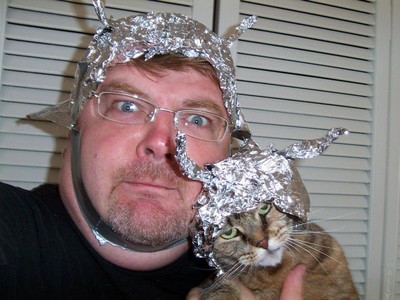
tinfoil_db52b2f10e7fa983f0f9d799a20.jpg


Here's a newsflash--if you want to keep something private, keep it off the internet.

Very good captain obvious, but when phone's can be tapped and other information that can be easily gathered without someone providing this information, pretty soon with all consumer grade electronics, one would have to embrace a time in the future where if someone wants to know what you are doing, they can easily find out. And if its a private company, then I don't think they will worry about warrants.
 
Perhaps 'forced' is too strong a word.... However, if a soldier were to suggest to her superior that her orders were illegal and/or immoral, something tells me that this would not be received warmly. And, having received no success, going higher up in command may be even worse. The military is not the place for freethinkers who think that all authority is fallible and ought to be questioned. There are many forms of coercion which do not employ physical force.

Further to the point, something to bear in mind is that, in free societies, governments are supposed to be accountable to the people (not vice versa). Thus, as our servants, their actions ought to be open to public scrutiny, whenever possible. Oddly, in recent years the trend has been moving in the opposite direction, where increasingly governments are spying on their citizens while simultaneously becoming more secretive and hiding their own actions from public view (a move toward fascism). Organizations like Wikileaks serve to swing this balance somewhat back the other way by providing freedom of information for citizens. A free press is also necessary to facilitate public access to this information. Those who seek to stop this are actually anti-freedom and anti-democracy.

Also, on the claim that people may be harmed by the leaks: This is a red herring which was also used to suppress the Pentagon Papers, but has no supporting evidence whatsoever.

+ 10000000 very good post. So true. I think I may stand up and applaud.
 
And you're still wrong. There are many mechanisms built into the military precisely to combat this very thing. The chain of command is not all powerful in the military. You clearly know nothing about what it is to serve in the US Armed Forces, and I'd suggest to you to stop trying to act like you do - you're wildly off base.


I can't argue with you there - nor would I want to. I'd also been wondering if anyone could bring up a case where American lives had been put at risk specifically due to wikileaks.

I still think 12bass has a strong argument. Pac, have you ever said "no" to an order?
I'm sure it happens, but as an outsider with some personal contacts serving, I would have to think that its suicide to dis-obey an order. I can see the unit turning on you, the command making your life miserable. I would think that it would take a large majority for something like dis-obeying an order taken seriously. Not that I can see many orders being set in place that a serving soldier would question.

I really don't know from personal experience, but you can't discredit my opinion. You can certainly correct me, for I am willing to listen. But I just don't see the army as a group of free thinkers making decisions without considering the implications of dis-obeying an order.

But I think its not just something that occurs in the armed forces. I'm sure someone has had to do something illegal or un-moral in the private field in order to keep their job, or move up the ladder.
 
This speaks to the rest of the privacy question - where do you draw the line between celebrity and 'normal person?" We already know that a lot of our own private lives are being monitored, either by the government or by corporations; do you really want your own interweb browsing history laid out for the entire world to look at? (In my case, it wouldn't bother me that much, but I suspect a lot of people have been surfing through sites they may not want the rest of their families, employers, etc. to know about...even if it's just because you're shopping for Christmas presents online!)

Truth is, if someone wants to know something, anything about you, with the technology currently available, and the technology coming in the near future our entire lives will be traceable and track able.
 
Well, a week in lockup seems a small price to pay for keeping your integrity intact.

I'd agree - but lets not pretend that there aren't costs to be paid to refusing even an illegal order.


Having done Law of Armed Conflict training about 25 times now, this question has come up over and over. It is extremely difficult to come up with a case of "legal but immoral" outside of a classroom.

No, it's exceedingly easy.

Talk to any pacifist sometime.
 
Of course, but not in a naïve way. Neither transparancy nor accountability of the state can be absolute. They will always have to be regulated by law. That law, of course, being the result of democratic processes.


Problem is that historically - that ain't what happens.

Historically what happens is secrecy is deemed too "sensitive" to be under the purview of the democratic process, but broad enough to be real useful to hide government malfeasance and law breaking.
 
Chris,

you argue that people in offcial functions representing the state have the same rights as private people. this is not true: everyone if office is accountable for his or her actions because they work 'for the people' and the 'people' are ultimatley the authority.

Having a free media that can report whatever it wants to keep the government/state in check is a fundamental part of democracy.

This is all very theoretical, but essentially that's how it is.
As an example i would like to bring up the Watergate scandal. It was a case of 'illegal' Whisteleblowing that allowed facts concerning the people of USA to come to light. Strictly speaking, publishing this info was illegal because it was obtained in dubious way, but no of that changes that the person in question could prevent that from happening on the grounds of privacy laws. They are not applicable because the person in question wasn't a private figure but a public one and the leaked information was not of private nature.

You are very right about the principles of a higher level of accountability for state officers, the government working for the people, free press, etc. And yes, it is all very theoretical.

In practice, all of this is subject to rules and laws. With the Watergate scandal you chose an excellent example. The press cannot just publish whatever they choose. Freedom of press, as well as freedom of speech, is limited. We are not allowed to slander, insult, discriminate, instigate crimes or disorder etc. etc. For very good reason.

You know of course that illegally obtained evidence is invalid in court - one of the important rules guarding the privacy of citizens. Why should this be different for the state and its organs?

Freedom is not the right to do as you like. It means that you are allowed to do all that is not prohibited by the law. This means that not only the state but all of us are accountable for our actions. The Watergate publishings were illegal, till the moment they were justified by the fact that they reported Nixon's abuse of office. Nixon may have been a special case, but there are thousands of government officers that aren't public figures. I don't think we'll get anywhere if we make a difference between them and other types of employees. If you find a document proving that f.e. your children's teachers have been abusing their power, I'm sure you will feel justified to make it public just the same.

Also I find it frustrating that some sections of the state seem to function so badly, and we have good reason for mistrust, but if we don''t go by the law, chaos is looming.

Maybe Bob Woodward was a hero. Maybe Julian Assange is a hero too, but we don't know yet. If he wants to become a hero, let him face trial.
 
While I get what you're saying with this, a pacifist in the military strikes me as a vegan working at McDonalds.

I agree - but the idea that finding something that is legal but still immoral is difficult is funny.

Lying to your wife is immoral... but it probably ain't illegal.

Swearing at small children is immoral, but not illegal.

Dishonoring your parents - immoral, not illegal.

Greed - immoral, not illegal.

Racism - immoral, not illegal.

...and on and on and on...
 
I know.

Any suggestions to change that?

Drastic reductions in government power along with concomitant increases in the civil liberties of the individual.

A recognition that individual liberties override those of the collective, and that the government is ALWAYS a subservient servant of the civilian public.


Law breaking by the other side, perhaps?

Whistle blowing isn't necessarily lawbreaking.

I'm happy to let the courts decide whether something qualifies.
 
The press cannot just publish whatever they choose.

Yes, they absolutely can.

Freedom of press, as well as freedom of speech, is limited.

No, it isn't.

One may have to endure a cost for exercising said freedom, but there can be no prior restraint.

We are not allowed to slander,

Yes we are.

You may sue civilly for doing so, but you can't stop me from doing it.

insult, discriminate,

Ummm... not only can the press do those, they're perfectly legal. I mean - look at the Larry Flynt/Jerry Falwell "Campari" advertisement case.

instigate crimes or disorder etc. etc.

Again - they sure can, they just may suffer the consequences of their actions.

You know of course that illegally obtained evidence is invalid in court - one of the important rules guarding the privacy of citizens.

Well, that certainly disagree with years of Supreme Court precedent regarding the "Exclusionary Rule".

"The Court has been reluctant to apply the exclusionary rule to aspects of the criminal trial that are not directly related to the determination of guilt. Thus illegally obtained evidence may be used to impeach a defendant's testimony or to determine the appropriate sentence for a convicted defendant"

"The Court has also established the 'inevitable discovery' exception to the exclusionary rule. This exception, developed in Nix v. Williams, permits the use at trial of evidence illegally obtained by the police they can demonstrate that they would have otherwise discovered the evidence by legal means"

"The Court has consistently refused to apply the exclusionary rule to evidence seized by private parties, if they are not acting in concert with, or at the behest of, the police"

Also see Pennsylvania Board of Probation and Parole v. Scott:

"In Scott, the Court again refused to apply the exclusionary rule to a proceeding other than a criminal trial, even though the illegally seized evidence could be used to re-incarcerate a parolee"
 
I still think 12bass has a strong argument. Pac, have you ever said "no" to an order?
I've questioned orders that I felt to be questionable, yes. Basically clarifying that the person giving the order realized that it wasn't legal. And it worked out fine.

I'm sure it happens, but as an outsider with some personal contacts serving, I would have to think that its suicide to dis-obey an order. I can see the unit turning on you, the command making your life miserable. I would think that it would take a large majority for something like dis-obeying an order taken seriously. Not that I can see many orders being set in place that a serving soldier would question.

I really don't know from personal experience, but you can't discredit my opinion. You can certainly correct me, for I am willing to listen. But I just don't see the army as a group of free thinkers making decisions without considering the implications of dis-obeying an order.

I most certainly *can* discredit what you say - because it is opinion, and not fact. Just because you don't see the army as sometime doesn't make it so. Just as closing your eyes doesn't turn off the lights.

You are correct, however, that not many orders are given that fall into the category we're discussing here.

But I think its not just something that occurs in the armed forces. I'm sure someone has had to do something illegal or un-moral in the private field in order to keep their job, or move up the ladder.

The military and the corporate world are wildly disparate. No comparing the two, especially not in this discussion.
 
I've questioned orders that I felt to be questionable, yes. Basically clarifying that the person giving the order realized that it wasn't legal. And it worked out fine.


I most certainly *can* discredit what you say - because it is opinion, and not fact. Just because you don't see the army as sometime doesn't make it so. Just as closing your eyes doesn't turn off the lights.

You are correct, however, that not many orders are given that fall into the category we're discussing here.


The military and the corporate world are wildly disparate. No comparing the two, especially not in this discussion.


I will take your experience and consider that there are safe nets in place for people serving that I was unaware of. Thanks.
 
Drastic reductions in government power along with concomitant increases in the civil liberties of the individual.

That isn't exactly the flow of history... As society got more and more complex, the state assumed more and more responsibilities. And we shouldn't forget that we need government power to equal the power of other big organisations, like multinational companies.
They're still cleaning up in Louisiana, you know...

A recognition that individual liberties override those of the collective, and that the government is ALWAYS a subservient servant of the civilian public
That is like kicking in an open door. Everybody will support that statement, as long as it stays on this much too general level. But as soon as individual liberties have to be limited, f.e. in order to give everybody decent health care, the picture changes... There will always be cases where solidarity will have to override individual interest. I hope you do pay taxes.
Whistle blowing isn't necessarily lawbreaking..
It is when you use classified material. You break the classification laws. For the benefit of all, perhaps, but illegal, unless a court decides otherwise, so
I'm happy to let the courts decide whether something qualifies.

Me too. That's exactly what I've been saying all the time.
 
That isn't exactly the flow of history... As society got more and more complex, the state assumed more and more responsibilities.

Assumed... Grabbed...

And we shouldn't forget that we need government power to equal the power of other big organisations, like multinational companies.
They're still cleaning up in Louisiana, you know...

The way to do that isn't increasing government power, it is reducing corporate power.

They exist at our whim after all.


That is like kicking in an open door. Everybody will support that statement, as long as it stays on this much too general level. But as soon as individual liberties have to be limited, f.e. in order to give everybody decent health care, the picture changes... There will always be cases where solidarity will have to override individual interest. I hope you do pay taxes.

You don't have any right not to pay taxes, and laying and collecting taxes is perfectly within the powers of the government - as we now grant them to the government.

It is when you use classified material. You break the classification laws. For the benefit of all, perhaps, but illegal, unless a court decides otherwise, so


Me too. That's exactly what I've been saying all the time.

Note - I mean REAL courts... where you get a lawyer, get to see the evidence, a jury of your peers, etc.
 
One may have to endure a cost for exercising said freedom, but there can be no prior restraint.

You may sue civilly for doing so, but you can't stop me from doing it.


Ummm... not only can the press do those, they're perfectly legal. I mean - look at the Larry Flynt/Jerry Falwell "Campari" advertisement case.

Again - they sure can, they just may suffer the consequences of their actions."

Well, that certainly disagree with years of Supreme Court precedent regarding the "Exclusionary Rule".

"The Court has been reluctant to apply the exclusionary rule to aspects of the criminal trial that are not directly related to the determination of guilt. Thus illegally obtained evidence may be used to impeach a defendant's testimony or to determine the appropriate sentence for a convicted defendant"

"The Court has also established the 'inevitable discovery' exception to the exclusionary rule. This exception, developed in Nix v. Williams, permits the use at trial of evidence illegally obtained by the police they can demonstrate that they would have otherwise discovered the evidence by legal means"

"The Court has consistently refused to apply the exclusionary rule to evidence seized by private parties, if they are not acting in concert with, or at the behest of, the police"

Also see Pennsylvania Board of Probation and Parole v. Scott:

"In Scott, the Court again refused to apply the exclusionary rule to a proceeding other than a criminal trial, even though the illegally seized evidence could be used to re-incarcerate a parolee"

Here we are looking at a big difference between the Anglo-Saxon and the European/continental law system. Part of what is dealt with in civil procedures between equal private persons (or companies) in the US, is considered to be an offense over here, and dealth with in criminal trial.

Stealing classified material is an offense also in the US, is it not? So criminal law applies here, does it not?
 
Assumed... Grabbed... .

... and still got re-elected...:D


The way to do that isn't increasing government power, it is reducing corporate power.

They exist at our whim after all..

Wish we could. Ever read Marcuse?


You don't have any right not to pay taxes, and laying and collecting taxes is perfectly within the powers of the government - as we now grant them to the government. ..

... giving up the individual liberty to not pay for what we consider crap.


Note - I mean REAL courts... where you get a lawyer, get to see the evidence, a jury of your peers, etc.

So do I.
 
Chris, to my ears, you have given the best thought out responses/posts in this entire thread.

BTW, I do not even hate the idea of wikileaks and Assange, but I do not see a balance in this and I definitely detect a very biased agenda underneath it all. It does not appear that all of the fuss and revelations is in my best interests at all. I am not connected to any of the subjects uncovered and I am also not at all surprised by what I hear. This doesn't mean I want to see it in print and shared/analyzed in the manner that it has been done.