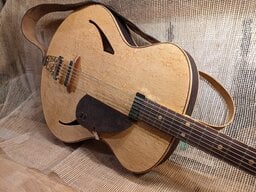
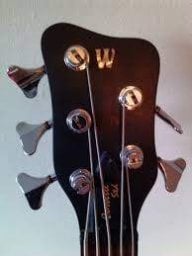
I gave myself a profile gauge for Christmas and put it to work tracing the neck profile from my old King Mortone bass. I chose two sections, one near the nut and one near the heel, and gauged the neck profile from all four directions at each section. You can see where I did the back profile twice just to make sure I wasn't fooling myself by presenting the gauge off-square, but no, it really is that asymmetrical. Or at least I made the same mistake consistently. You can also see I was too lazy to take the strings off.  If I were to do this step again, I'd pull out or mark one pin on each side to indicate where the fingerboard-to-neck joint lies.
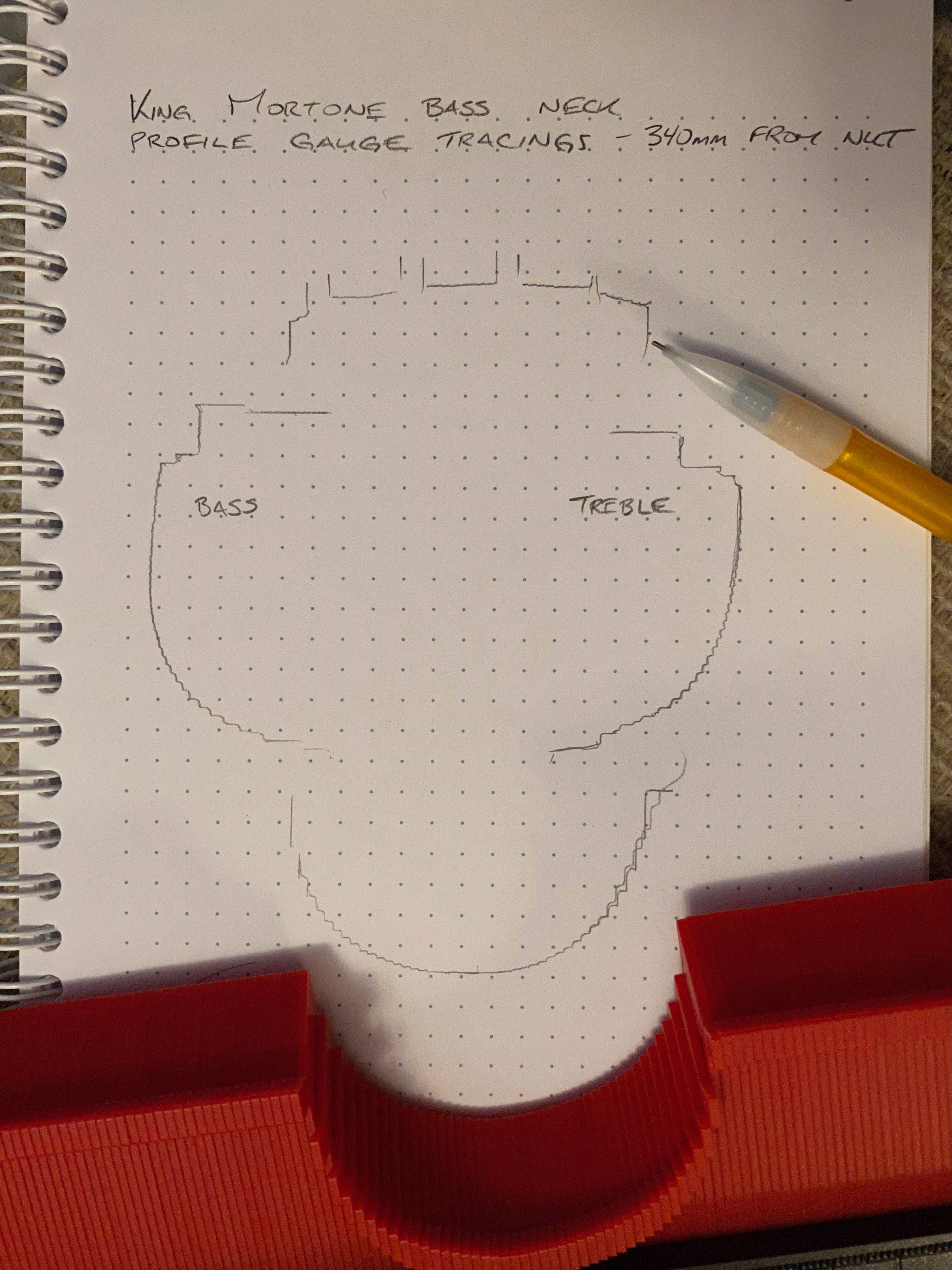
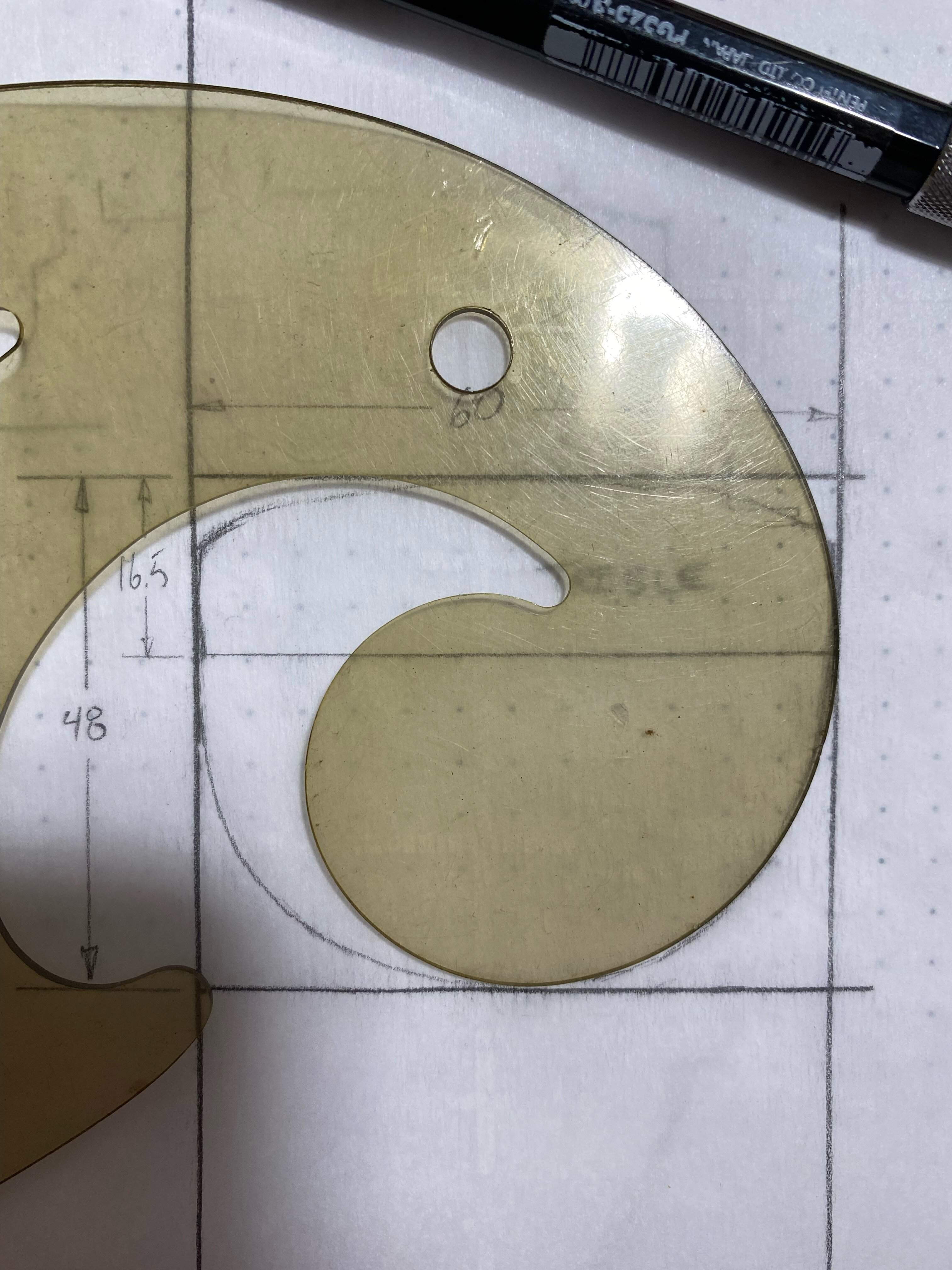
Then, on parchment paper, I marked out a rectangle with the overall width and thickness of the neck at that location and traced the four profiles inside it, aligning them with the rectangle and each other. I may or may not go over it again with my grandfather's french curve and smooth things out a bit more.
I couldn't believe how thick the fingerboard is compared to the neck, but it really is like that. The fingerboard I bought for this bass is even thicker at slightly over 20 mm at that section. It's tempting to thin it down to match, but on the other hand there's a pretty strong argument for leaving it thick so there's room for adjustment later. Speaking of adjustment:
 On the other hand, the straightedge says that my King isn't scooped correctly either and that hasn't bothered me, probably because my action is relatively high. I'm going to leave it alone for now, then we'll see how it looks after the neck is together.
If I were to do this step again, I'd pull out or mark one pin on each side to indicate where the fingerboard-to-neck joint lies.Then, on parchment paper, I marked out a rectangle with the overall width and thickness of the neck at that location and traced the four profiles inside it, aligning them with the rectangle and each other. I may or may not go over it again with my grandfather's french curve and smooth things out a bit more.
I couldn't believe how thick the fingerboard is compared to the neck, but it really is like that. The fingerboard I bought for this bass is even thicker at slightly over 20 mm at that section. It's tempting to thin it down to match, but on the other hand there's a pretty strong argument for leaving it thick so there's room for adjustment later. Speaking of adjustment:
I've heard that too. Putting the board up against a straightedge suggests that unless the right shape is a drunken sine wave, I'll need to figure out the scoop for myself.From what I've heard, upright fingerboards are tricky. They need a certain "scoop" to stop string rattling, and this can take double bass luthiers years to master.
On the other hand, the straightedge says that my King isn't scooped correctly either and that hasn't bothered me, probably because my action is relatively high. I'm going to leave it alone for now, then we'll see how it looks after the neck is together.