
That's akin to world's prettiest aardvark. Or shiniest turd.

TalkBass has been independent since 1998. Add your voice.
Create a free account to reply to discussions, view embedded media, and browse with fewer display ads.
Join free Log in
Want zero display ads or expanded classifieds tools? Compare plans.

What's your opinion of what happened on lap 48?I am Canadian...
What's your opinion of what happened on lap 48?
Canadian GP - Lewis vs. Sebastian.I don't actually know what you're talking about, but I suspect I would just remain polite and profusely apologetic. Sorry (see? There I go again.)
In all honesty, the Raptors have pushed all other sporting events off the map here at the moment.
Canadian GP - Lewis vs. Sebastian.
143 mph in a 1978 (highly modified) Datsun B210 with a 1398 cc engine. Way less cool... but I could drive with all the tires on a city sidewalk. Probably a whole lot scarier than the corvette... and way less of a chick magnet.I'm the world's fastest bassist. I hauled my bass in my Corvette at about 130mph.


I'm the world's fastest bassist. I hauled my bass in my Corvette at about 130mph.

143 mph in a 1978 (highly modified) Datsun B210 with a 1398 cc engine. Way less cool... but I could drive with all the tires on a city sidewalk. Probably a whole lot scarier than the corvette... and way less of a chick magnet.
And I thought I was nuts...143 mph on a 1976 Kawasaki KZ 900...with a gig bag strapped on. What do I win? Back then, I won a trip to the pokey...I hope it's not that...
Hold on...nope - it was 144 mph...


And I thought I was nuts...

When I read the title of the OP, the first player that came to mind was Steve Harris from Iron Maiden. Quite the Olympic athlete that Mr. Harris.

That was actually an informative read, thanks...Here is a biography he published at the International Institute Of Bassists web site:
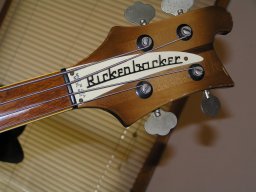
"I was born in England in 1966 and began studying classical guitar at age 12 with the help of big names like Julian Bream, Philip Candelaria, and Paco de Lucia. My private guitar instructor was very into sending his students to master classes where the players of the day made clinic-like performances at music universities and colleges and then instructed members of the group and class. I first started playing bass in high school in North America with the school band because the music we were playing had little or no parts for guitar. We were doing jazz standards like "A Night In Tunisia." In high school, I met a few guys that were putting together a band and needed a bass player. I joined the band and used the school's Fender Precision bass and a big bulky Peavey amp. I used to sign out the bass and amp on nights and weekends when we were rehearsing and performing. The bass was so old and beaten up, and the strings probably hadn't been changed for years. As the summer holidays approached, I needed to really buy a bass for myself, and with every dollar I could obtain, I managed to get my hands on a Rickenbacker 4001, a 1979 or so model. I think I paid about $500.00 for it. That wood grain Ricky stayed by my side for thousands of gigs and had been modified so much with rewiring, Hipshot D-Tuners, an ABM bridge, and a Kleenaxe string damper. I use to play that Ricky until my fingers literally bleed."
"My first real break in music was when I appeared in Mike Varney's spotlight column in April 1988. The Spotlight Column in Guitar Player was the goldmine of publicity for any guitarist or bassist. I literally received hundreds of letters (e-mail had not existed yet) from companies and individuals interested in my playing and music. Together with my good friend and incredible drummer Paul Marangoni, we put together a 10-song bass and drum instrumental demo. It was financed by a studio music grant, and we recorded everything live off the floor with no-overdubs in probably 25 hours (including mixing). I shopped the demo around, and that became my first release, Bass Symphony. Looking back, I probably used only two sets of strings for the whole recording and just one bass. It was a hungry display of two 20-year-old musicians. Lucky for me, the album was well received by Rolling Stone, Guitar World, and Guitar for the Practicing Musician among other music magazines. This allowed me to enter into the world of endorsement and tours/clinics. I recorded three more projects, Mens Rea, Alibi, and Dorian's Mode. Also during that time period, I released an instructional video demonstrating my techniques and wrote music columns for Canadian Musician magazine. I endorsed GHS strings, Laney amplifiers, Ampeg amplifiers and eventually switched over to Lado bass guitars. I ended my music career in 1995 after a personal situation combined with carpal tunnel syndrome made me reflect and re-analyze my life. I have picked up the bass only a few times in the last 10 years, but I have recently spent more time building a music web site for all those interested and a DVD featuring television interviews, live performances, and an instructional segment."

I don’t get why people are impressed by this.What exactly don't you get it ?


