• TalkBass has been independent since 1998. Add your voice.
    Create a free account to reply to discussions, view embedded media, and browse with fewer display ads.
    Join freeLog in
    Want zero display ads or expanded classifieds tools? Compare plans.

Worth buying expensive?

You just need the eyes to look.:thumbsup:

Gotta know what you're looking at. And understanding the gear helps. I've seen people pass on killer basses because the strings were dead. Seriously. Then they're often shocked to see how nice the bass was after a string change.

"I would've bought that $1,000 Corvette except the right front tire was low on air".

That's worse than not recognizing a bad setup.
 
  • Like
Reactions: Dr. Cheese
Of course it is. I made a very easy to understand statement. Nothing complicated, no big words. You then talk about putting a graphite fan-fretted neck on a $200 bass as if it had anything to do with what I was talking about. It didn't. At all. But why let that get in the way?
:D

So here you are, dug in so hard to this that you can't even acknowledge that this is all you. I'm not the least bit surprised. And now you've resorted to name calling, as if it's clever and worse, it'll obscure the fact that you're completely off base.

And here's the silliest thing of all... you didn't spend $1500 on your bass so YOU COULDN'T LOSE $1,500 ON YOUR BASS. Which I'm sure you won't recall was at the root of your ridiculous offbase tangent.

But if it makes you feel better to blame me for your fail, knock yourself out. After all, you could've spent more.
:D

I await yet another incredibly insightful response.

You are right. I should not have resorted to name calling. I completely and sincerely apologize.

I see now that my original point was not expressed clearly as it was not interpreted the way I intended.

There has been much misinterpretation in this dialogue. I hope it was entertaining for the onlookers. I'm out.
 
Gotta know what you're looking at. And understanding the gear helps. I've seen people pass on killer basses because the strings were dead. Seriously. Then they're often shocked to see how nice the bass was after a string change.

"I would've bought that $1,000 Corvette except the right front tire was low on air".

That's worse than not recognizing a bad setup.

I bought a $400 Peavey Cirrus that I played a few years that had a bow in the neck when I first saw it. I asked if I could adjust it. The neck straightened out and I bought it.
 
You are right. I should not have resorted to name calling. I completely and sincerely apologize.

I see now that my original point was not expressed clearly as it was not interpreted the way I intended.

There has been much misinterpretation in this dialogue. I hope it was entertaining for the onlookers. I'm out.

Thanks, completely understood. Take care.
 
Life is short and time runs out fast. I now get that I should have bought and tried more different basses before I bought my second bass, the Prestige Ibanez, 22 years after my first bass. Same goes for cars, motorbikes, computer hardware, fishing rods etc. If you can afford you should try. You can sell the item later but the experience gained and pleasure taken cannot be sold away.
 
  • Like
Reactions: Green Knight
"Most" misses the point IME. The exceptions are what typically appreciate. Try finding a Fender Roscoe Beck for less than it's new price.
No, when we're talking about super vintage Fenders, they all appreciated. That's not going to happen with contemporary mainline basses. Have you seen a 1957 Precision that's not 5 figures? It's not the exceptions that appreciated for '57 Precisions.

In addition, that Roscoe Beck may be worth a bit more than retail, and there may be a few others like it (maybe my Pino CS, one day) but the number of contemporary basses that eventually go for 20 or 30 times their original retail? Sorry.

Maybe I didn't explain myself well.
 
This is only of interest for people who keep flipping their instruments. If you keep and play your high end bass, why would you care about its value in bucks?

Also note that the cheap ones lose their value as quickly, even if (to some) it may not appear to be that much moneywise.

Exactly so. How much my used.. Alembic, for example... will be worth in the future is a problem that I don't worry about. The executor of my estate can deal with that "problem". I won't care how much it's worth - if it's worth anything at all -, 'cause I'll be dead... Just buy what you like, and play it. Take care of it; or not. If your main concern is how much it will be worth in the future? Then, maybe you should find something else to do. I hear stamp collecting is lots of fun...:rolleyes:
 
  • Like
Reactions: Dudley
Most of the basses I bought were used , but there are several I bought new , and there's something to be said for opening a case for the first time . Getting that new bass smell . And setting up a bass for the first time . And years later there's something to be said for knowing exactly how each ding and chip happened . If I buy another bass , it might be new , or it might simply be a bass that has something I like . I don't need any more , but I do have a little disposable cash set aside in case I see something I like .
 
I don't think that people buy those expensive basses think i could buy this 12000 dollar fodera or 100 squier basses.just like someone who wants a rolex doesnt think should i buy a rolex or 1000 timex Watches.... buy what you want and dont buy what you dont .its that simple
 
Being on the lookout for new gear and noticing how quickly high end gear on average looses its value second hand, would it not make more sense to just buy a good low end one every x years?
For example high end Fender Professional / Elite loose about 10-15% first 3 years. Then slowly decreasing and only if in good shape.
For that kind of money I could get me like about 4 good Squiers or nearly new Standard/Player....
Knowing yes that the premium ones have that (little) quality extra.

It remains to be seen if within 20 or 30 years, todays gear will be treasured as much as original 60s/70s gear is today?
IF you gig your basses, they’ll pay for themselves and it really doesn’t matter because you’re getting the tones you like, and some dough for playing live!
Enjoy that and worry less about cost.
 
  • Like
Reactions: msb
My stuff ranges from sub 100.00 "junk" basses, to over 4k.
Would I spend $$$$$$ on a vintage bass just because it's got mojo?
Noooo.
I love each and every Bass I keep.
The price tag serves only to make me be certain I want it badly enough.

For me spending more than a couple hundred, I can only justify it by clearing stuff I want less. :)
 
Last edited:
  • Like
Reactions: MHT75
It's kind of funny . My number one is my cheapest bass , a Dano Longhorn . Made in 98 , still has the factory strings . Has a beautiful deep ,woody , thump . I bought two used basses last year (a vintage Ric, and an Epi Flying V) , did enough gigs on each bass to break even , and then went right back to the Dano . Almost bought another new bass , but decided to hold off because I knew I'd be going right back to the Longhorn after I'd break even .
 
This is only of interest for people who keep flipping their instruments. If you keep and play your high end bass, why would you care about its value in bucks?

Also note that the cheap ones lose their value as quickly, even if (to some) it may not appear to be that much moneywise.
When I played a lot back in the 60's Silvertone, Danelectro and others were considered cheap (price and quality). I subscribe to Vintage Guitar and get the impression they are now sought after and pricy. I think Squires may become collectable in the years to come.
 
No, when we're talking about super vintage Fenders, they all appreciated. That's not going to happen with contemporary mainline basses. Have you seen a 1957 Precision that's not 5 figures? It's not the exceptions that appreciated for '57 Precisions.

In addition, that Roscoe Beck may be worth a bit more than retail, and there may be a few others like it (maybe my Pino CS, one day) but the number of contemporary basses that eventually go for 20 or 30 times their original retail? Sorry.

Maybe I didn't explain myself well.

Most new basses won't appreciate. That should be a given. But some do. The multiple wasn't a factor.
 
I've had a few appreciate a bit, but it's rare and I wouldn't recommend it as even a consideration when purchasing a bass. You can't predict what model will be discontinued and then be in demand because artist X plays it. By used and shoot for even-steven most of the time, keep an eye out for the good buys and have the funds ready to jump when you see it. Others are watching.
 
If you want something that (probably)won't ever lose value, buy gold.

If you want something that will (probably) always go up in price, buy an original-printing copy of Action Comics #1 (first appearance of Superman) or Detective Comics #27 (first appearance of Batman).

Any musical instrument is an investment in yourself, not the instrument. Even Geddy Lee's famous Fender Jazz was just another pawn-shop bass until he found it. (The original owner probably got rid of it because it was "defective" and "sounded wrong".)
 
  • Like
Reactions: LessIsLess
Losing money on resale, whether on new or used instruments, can be seen as an acceptable expense if your long-term goal is to decide which among the many well-regarded basses out there is the right one for you. Not everybody lives in a major metropolitan area with vast used markets that allow them to try before they buy. And not everybody can afford to have two expensive instruments at once. People look down on inveterate flippers, but the motive is not always profit: often, it is a journey, for some a lifelong journey, and all journeys have their expenses en route to the final destination.
Well said! This is how I look at it too. How else can you decide what you like in a bass and what you don’t. You really have to gig with it for a few months to make a good judgement.
 
Last edited:
Short answer, yes. But within reason I say. If I could get my Warwick back I would pay the same amount it cost me ( prices have gone up so I don’t see it as a loss ). Nothing comes close to the sound it had and the way it sat in the mix with my mahogany six string guitar. I sold it as it was a special order 35” five string and I was playing with a band that tuned down often at the time. I cannot play anything over 34” as my nerve issue gets in the way. Anyway, sometime you do have to put up the coin to get a particular tone.
 
B582111A-8670-4205-9D09-903C27EC6791.jpeg
I’ve had instruments that cost $3500 new. They were great but didn’t fit my needs 100%.
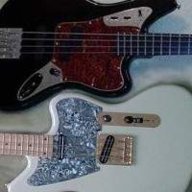
This is where I have currently settled.
This Fender Elite Jazz V was bought used in mint condition. I had it refinished to my liking and changed the pickguard. The Sire V3 was bought new. Cost was under 2K for both basses and the work done.

Sometimes you it’s worth it to spend more, sometimes it isn’t. Only you can be the judge of that.